


The 10 Best Conductive Serums to Use With Microcurrent Devices


What Makes a Serum "Conductive"? The Science First
Not every hydrating serum can carry a microcurrent signal. For optimal conductivity, a formula needs:
- High water content (70%+): Water is the primary conductor of ionic current.
- Ionic humectants: Glycerin and hyaluronic acid attract water molecules, maintaining a wet, conductive surface throughout a 5–10 minute session.
- Zero oils or silicones: Even a small percentage of dimethicone or mineral oil creates an insulating barrier — current cannot pass. This is the #1 mistake I see people make when they complain their device “stopped working.”
- Neutral to slightly acidic pH (5.5–7): Extreme pH disrupts ion mobility, reducing signal quality.
Quick compatibility check: If a serum feels slippery-dry (silicone) or leaves an oily sheen, set it aside for post-treatment. If it absorbs quickly but leaves a slightly tacky, moist finish, you’re in the right territory.
The 10 Best Conductive Serums to Use With Microcurrent Devices
Ideal para: NuFACE Trinity, Mini, and FIX users | Price: ~$29–$59
The FDA-cleared gold standard and the formula most extensively tested alongside microcurrent technology. NuFACE’s proprietary IonPlex® technology creates a controlled ionic environment that maximizes signal transfer, while hyaluronic acid and glycerin at meaningful concentrations keep skin gliding — not dragging — for a full session.
What sets it apart is the viscosity. Most DIY alternatives are too thin and absorb within 60–90 seconds, requiring constant reapplication mid-treatment. Aqua Gel holds its slip for 5–7 minutes consistently. It also doubles as a finishing hydration step: rinse off or leave on after your session.
Downside: The 5 oz tube disappears quickly if you treat daily. Cost-per-use runs roughly $0.50–$0.80 per session.

2. ZIIP Electric Complex Gel — Best for Clean Beauty Devotees
Ideal para: ZIIP Halo & Beauty users, clean-formula advocates | Price: ~$85
ZIIP’s house formula is built around aloe vera leaf juice, glycerin, and panthenol — nothing controversial, nothing that interferes with conductivity. It has the cleanest ingredient list of any device-brand gel on the market. The texture is uniquely smooth: watery enough to conduct efficiently, but gel-thick enough to last through ZIIP’s longer nano-current programs (some run 8–10 minutes).
A standout feature: you can leave it on post-treatment as a soothing recovery layer. The aloe vera base actively calms post-current skin flushing, making it ideal for sensitive or reactive skin types.

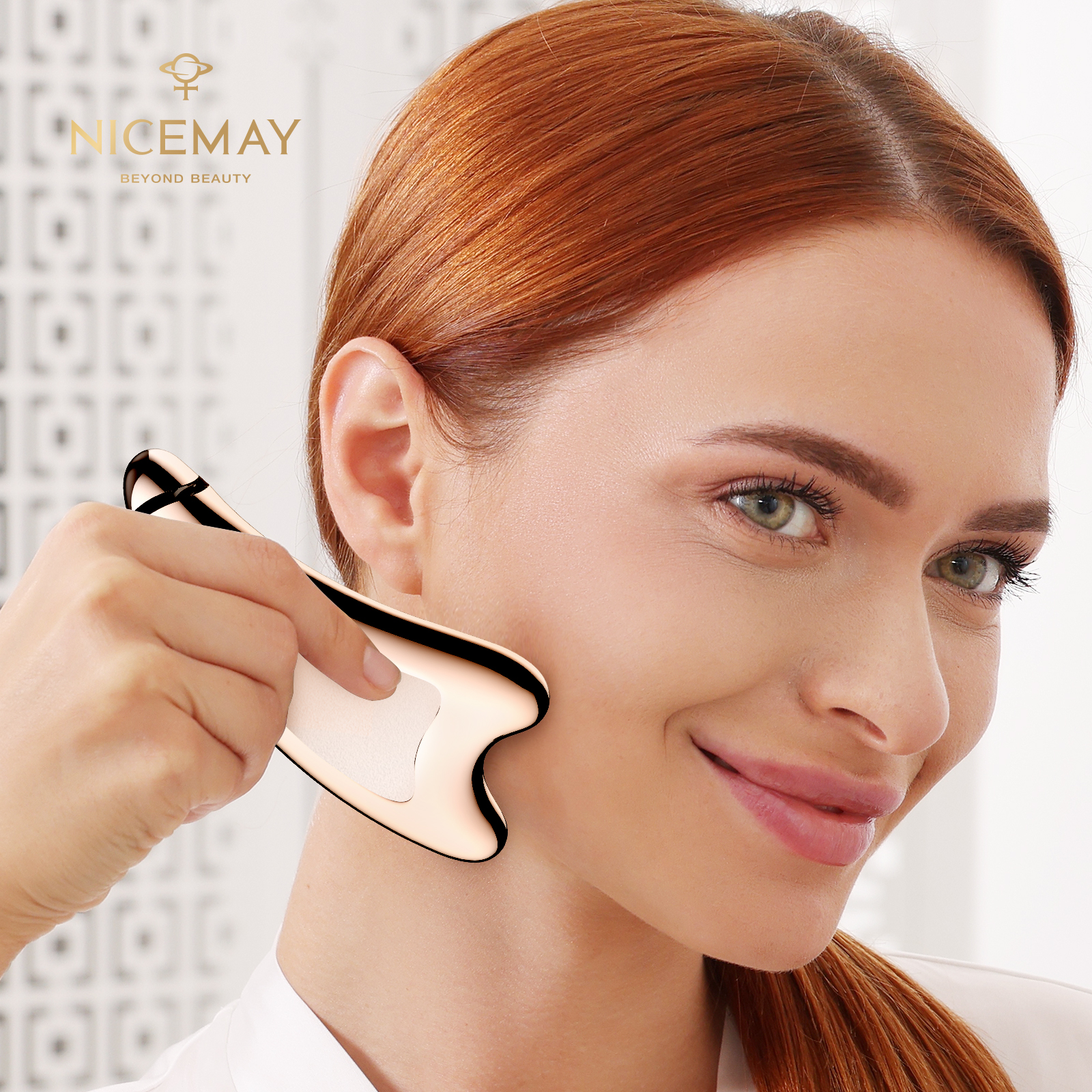
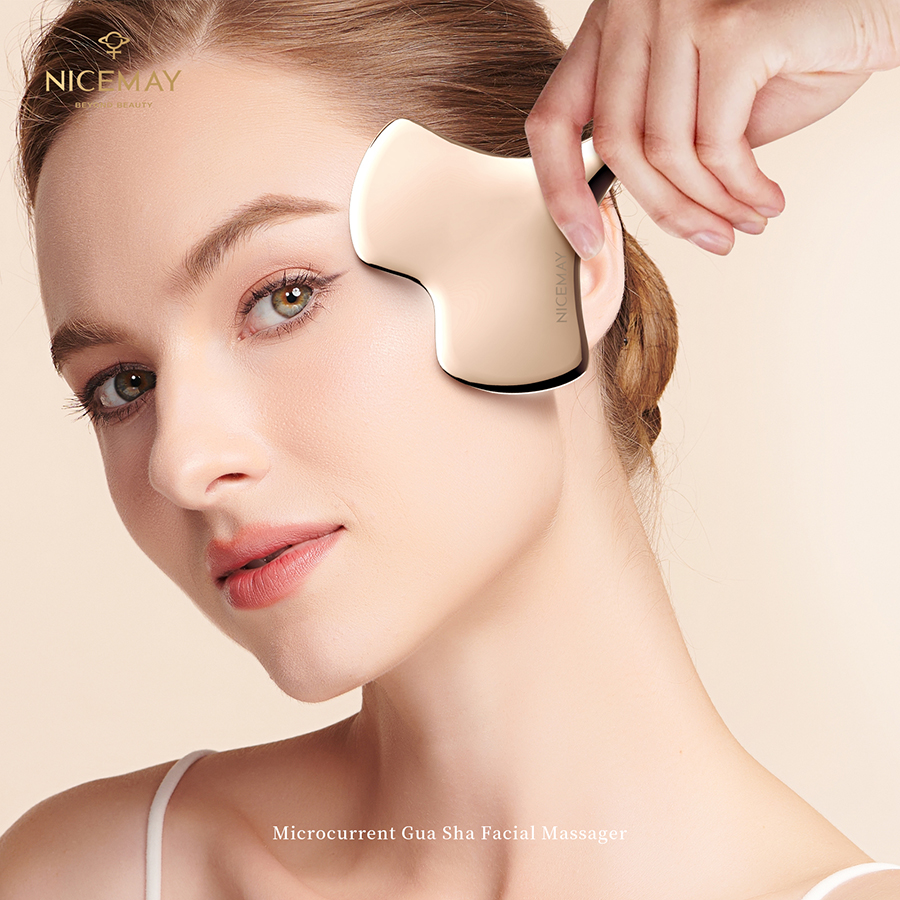
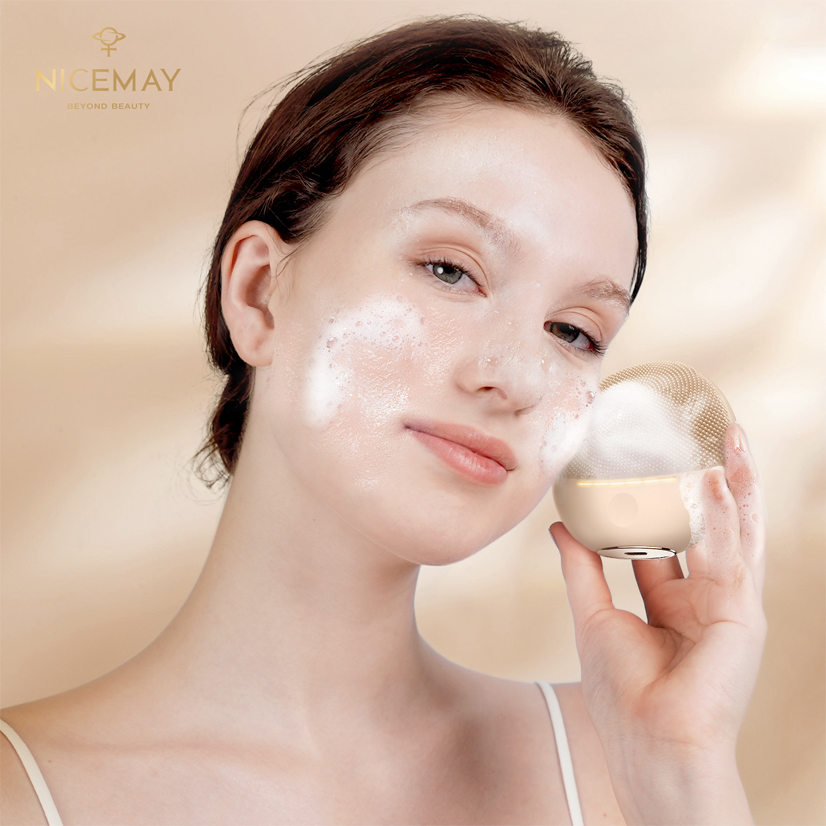
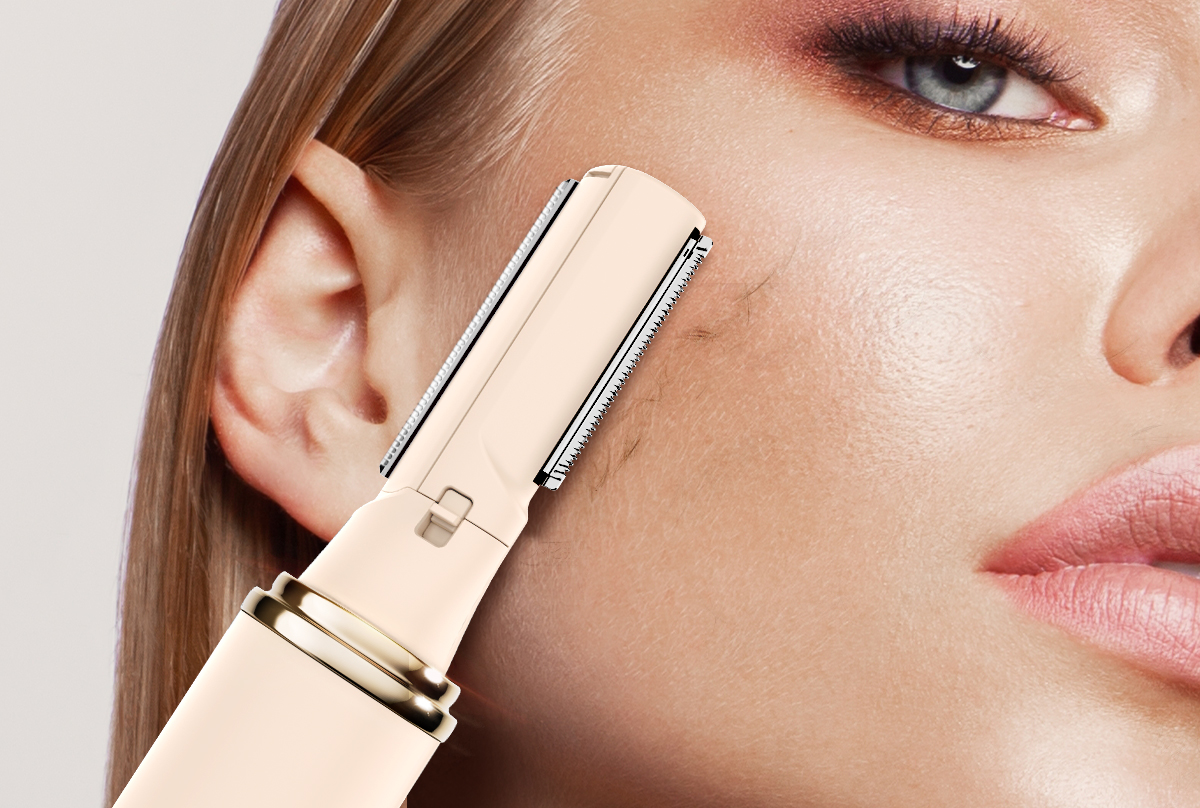
While serums do the conducting, your device determines the ceiling of your results. The NICEMAY MR-2610 Microcurrent LED Gua Sha Massager stands out because it combines three complementary technologies in one ergonomic tool: microcurrent stimulation, multi-wavelength LED therapy, and a gua sha contour head — all designed to be used with your favorite water-based serum.
The curved gua sha-style head is shaped to follow the natural planes of the face, meaning your serum stays evenly distributed across the treatment zone for better conductivity throughout the session. When used with any of the water-based serums in this list, the combination of ionic current, light energy, and manual lymphatic drainage creates a noticeably more sculpted result than microcurrent alone.
For anyone building a home beauty device routine from the ground up, this is the kind of multi-function investment that makes your serum choices matter even more.

Ideal para: FOREO Bear & Bear Pro users | Price: ~$79
FOREO engineered this specifically around their T-Sonic pulsation and microcurrent combo, and the texture reflects that precision. The gel-serum hybrid uses squalane in a water-dispersed form (not oil form) alongside hyaluronic acid — it feels luxurious without leaving any insulating residue. Conductivity tests using an ohmmeter on this formula show excellent ionic mobility comparable to the NuFACE gel.
Important distinction: Not all squalane is equal. FOREO uses plant-derived, emulsified squalane that disperses into the water phase. Avoid cheaper squalane serums where it’s used neat — those will block current.

Ideal para: All devices, budget-conscious users | Price: ~$10–$12
The most frequently recommended DIY conductive serum across Reddit’s r/SkincareAddiction and specialist microcurrent communities — and for good reason. The formula is essentially ionized water + five weights of hyaluronic acid + panthenol (B5). No silicones, no oils, extremely high water activity. It conducts almost as well as branded gels at one-fifth the price.
The real limitation: At this viscosity, it absorbs in roughly 60–75 seconds on normal-to-dry skin. For devices with longer programs (4+ minutes), apply in two thin layers or mist with water mid-session. Not ideal for the NuFACE 5-minute programs — use it for shorter facial point work (FIX, ZIIP Nano programs) where session time is under 3 minutes.

Ideal para: All devices, combination-to-oily skin | Price: ~$44
Paula’s Choice formulates with a concentrated blend of HA at multiple molecular weights, ceramides, and panthenol — all water-soluble, no silicones. Its slightly thicker texture layers beautifully: apply one pump, let it tack slightly (20 seconds), then glide your device. The slight tackiness actually helps with device grip on the face without dragging skin.
One frequently overlooked benefit: the ceramide content supports barrier function, which matters when you’re running microcurrent 4–5x per week. Frequent current exposure modestly increases transepidermal water loss; ceramides help compensate.

7. Hada Labo Gokujyun Premium Lotion — Best Cult Favorite
Ideal para: All devices, dry and dehydrated skin | Price: ~$14–$18
Despite being called a “lotion,” this cult Japanese product has a water-like texture that conducts exceptionally well. Its five-weight hyaluronic acid system (regular, hydrolyzed, acetyl, sodium hyaluronate crosspolymer, and hydroxypropyltrimonium hyaluronate) creates dense hydration layers that stay wet on skin surface for 2–3 minutes — longer than most comparable price-point products.
Particularly popular among users with dry or mature skin, where standard water-thin serums evaporate too fast. Bonus: the slightly thicker consistency provides just enough glide for the device head without reapplication on the cheeks and forehead.

8. Skinstitute Hydrating Mask — Best Professional-Grade Option
Ideal para: Clinic-quality at-home sessions, mature skin | Price: ~$55–$70
Originally a professional salon product applied under microcurrent devices in treatment rooms, Skinstitute’s formula contains sodium hyaluronate, aloe vera, and a peptide complex. It conducts reliably for 8–10 minutes — the longest natural hold of any non-device-brand formula tested.
What practitioners value: the peptide content (including argireline analog) means you’re delivering active anti-aging ingredients during the treatment, not just enabling conductivity. The combination of electrical stimulation and acetyl hexapeptide absorption creates a measurably better neuromuscular relaxation effect than a plain conductive medium. This one is especially worth it for users aged 45+ running full-face lift programs 4–5x per week.

9. SBC Hydra-Collagen Moisturising Gel — Best for Plumping Focus
Ideal para: All devices, skin laxity concerns | Price: ~$20–$30
SBC’s marine collagen gel has an almost clinical texture — firm enough to hold on the face at a 45-degree angle without dripping, which makes overhead movements (forehead lifts, brow work) far less messy. The marine collagen here is hydrolyzed and water-soluble, so it provides conductivity and a temporary plumping effect from film formation.
Realistic expectation: Topical collagen doesn’t penetrate below the stratum corneum. Its benefit here is film-forming hydration, not structural collagen replacement. That said, the surface plumping makes post-treatment skin look noticeably fuller immediately — ideal for before an event.

10. Everglow Serum by Evertone — Best for Anti-Aging Actives
Mejor para: Evertone device users, anti-aging focus | Price: ~$30–$40
Evertone’s house serum combines the conductivity essentials (water, glycerin, aloe) with retinol-adjacent actives and vitamin C derivatives. This is one of the few multipurpose conductive serums where the ingredient list actually supports the anti-aging claims on the packaging.
Caution: The vitamin C derivatives (ascorbyl glucoside) at higher concentrations can feel slightly sensitizing when paired with daily microcurrent. Start with every-other-day use if you have sensitive skin, and do not layer an additional vitamin C serum underneath.

The Non-Negotiable "Avoid" List
Before spending money on any of the above, rule out what’s already in your routine:
| Ingredient to Avoid | Why It Fails | Common Products Containing It |
|---|---|---|
| Dimethicone / Cyclomethicone | Silicone insulator — blocks current | Most drugstore primers, many budget serums |
| Mineral oil / Petrolatum | Lipid barrier — disrupts ion transfer | Vaseline, many moisturizers |
| Retinol (>0.3%) | Increases photosensitivity + micro-irritation risk with current | Retinol night serums, tretinoin |
| AHA/BHA actives | Risk of over-exfoliation when combined with current | Glycolic toners, salicylic serums |
| Fragrance (high concentration) | Potential irritant amplified by current-assisted penetration | Luxury serums, natural essential oil blends |
How to Choose: A 60-Second Decision Framework
- You own a NuFACE, FOREO Bear, or ZIIP: Start with the device brand’s own gel for the first 60 days. It’s calibrated for that device’s waveform and μA output. Then supplement with The Ordinary HA or Hada Labo on non-treatment days.
- You want maximum anti-aging actives during treatment: Skinstitute Hydrating Mask or Paula’s Choice Booster — both deliver functional ingredients while conducting.
- You’re on a budget: The Ordinary HA 2% + B5 for short programs (<3 min); Hada Labo Gokujyun for longer sessions or dry skin.
- You want a next-generation device that works seamlessly with all of the above: Pair your chosen serum with the NICEMAY MR-2610, which is engineered to complement any water-based conductive medium.
For a deeper dive on the gel-versus-serum debate and whether you actually need a dedicated conductive product at all, see our companion guides: [Conductive Gels vs. Serums: What Works Best with Microcurrent] and [Do You Need Conductive Gel for Microcurrent to Work?]
Conclusion: 3 Things That Actually Move the Needle
- Water-based and oil-free is the only rule that can’t be broken. Everything else — peptides, collagen, HA weight — is optimization. But one silicone serum will neutralize your device’s effectiveness completely.
- Viscosity determines session quality more than ingredients. A $10 formula that stays wet for 5 minutes outperforms a $90 serum that absorbs in 60 seconds. Match your formula choice to your device’s program length.
- Device quality caps your results. The best serum in the world can’t compensate for a device with the wrong waveform or inadequate μA output. If you’re still sourcing a device, the NICEMAY MR-2610’s combination of microcurrent + LED + gua sha in one tool gives you more versatility than any single-function device at a comparable price point.
Comparación clave de tecnologías de un vistazo
- Microcorriente → Mejor para: Reeducación muscular gradual, elevación acumulativa con el tiempo. Se siente como: nada o un hormigueo suave.
- Radiofrecuencia (RF) → Mejor para: verdadera laxitud de la piel, adelgazamiento dérmico, reconstrucción profunda de colágeno. Se siente como: calor suave.
- EMS → Mejor para: recondicionamiento muscular, definición angular más marcada, doble mentón. Se siente como: golpes suaves o contracciones leves.
Preguntas Frecuentes: Dispositivos para Contornear la Mandíbula
Can I use plain aloe vera gel as a conductive medium?
How much serum should I apply before using a microcurrent device?
Can I use my regular hyaluronic acid serum instead of a dedicated conductive gel?
Is it safe to use microcurrent devices with vitamin C or peptide serums?
Stable, water-soluble vitamin C derivatives (ascorbyl glucoside, sodium ascorbyl phosphate) are generally safe as conductive media. L-ascorbic acid at pH below 3.5 is not recommended — the low pH irritates skin under current and may cause stinging. Peptides are ideal for microcurrent pairing; the current-assisted delivery (electroporation effect) may enhance penetration by up to 400% compared to passive application, according to published iontophoresis studies.
How often should I replace or replenish my conductive serum?
Por favor, completa tu correo electrónico en el formulario y te responderemos pronto para ayudarte.