


Is a 7-Color LED Mask for Face Better Than a Single-Wavelength Device?

A 7-color LED mask for face is not automatically superior to a single-wavelength device—multi-wavelength (polychromatic) masks excel at versatility for addressing multiple concerns like acne, aging, pigmentation, and redness in one routine, while single-wavelength masks often provide more concentrated, clinically proven results for targeted issues, with research showing combinations can outperform singles for acne but not always for deep anti-aging.
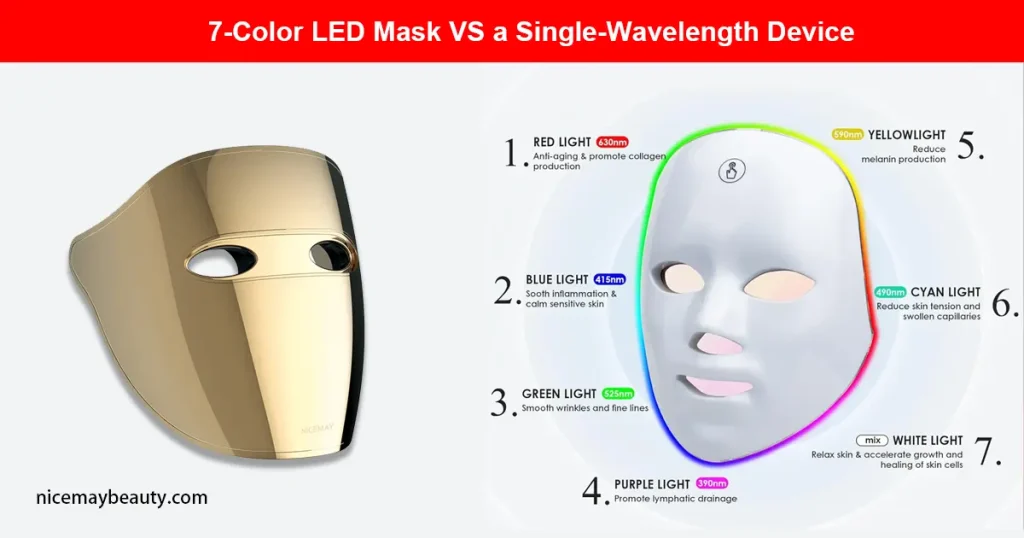
What LED Light Therapy Colors Mean and How They Work ?
LED light therapy colors meaning different wavelengths that penetrate skin at varying depths to trigger photobiomodulation (light-triggered cellular repair). Single-wavelength devices concentrate energy on one optimized color, while multi-wavelength face masks (also called polychromatic LED masks or multi-color LED devices) combine several for broader coverage.
Typical wavelengths in 7-color LED masks include:
- Red (630–660 nm): Stimulates collagen production, reduces fine lines, improves firmness.
- Blue (415–450 nm): Destroys acne-causing bacteria (P. acnes), clears breakouts.
- Green (495–570 nm): Evens skin tone, fades hyperpigmentation (LED mask for pigmentation).
- Yellow (570–600 nm): Calms redness, reduces irritation, supports lymphatic drainage.
- Purple (red + blue mix): Combines anti-aging and acne control for healing and scar improvement.
- Cyan (480–520 nm): Brightens complexion, gently detoxifies, soothes mild inflammation.
- Near-Infrared (NIR, 800–900+ nm): Reaches deeper layers for repair, collagen boost, and recovery.
(Data from PubMed-indexed systematic reviews and clinical summaries on LED wavelengths in dermatology [PMC6099480, 2018 review of 31 RCTs; PMC4479368, 2015 clinical experience].)

Key Differences: Single-Wavelength vs 7-Color LED Masks
The table below summarizes the main differences between single-wavelength and 7-color LED masks:
| Aspect | Single-Wavelength LED Mask | 7-Color LED Mask for Face (Polychromatic / Multi-Wavelength) |
|---|---|---|
| Primary Focus | Deep, targeted treatment for one concern | Versatile for multiple skin issues |
| Wavelength Precision | High—maximum energy on one proven color | Good, but energy per color may be diluted |
| Efficacy Evidence | Strongest for specific goals (e.g., red for collagen) | Supports combinations (e.g., red/blue for acne), but not always superior for rejuvenation |
| Customization | Limited to one mode | Multiple modes/colors for daily adjustments |
| Session Efficiency | Shorter, focused sessions | May require cycling colors, longer total time |
| Best For | Stubborn single issues (severe acne, deep wrinkles) | Multi-concern skin or users wanting variety (best LED mask for multiple concerns) |
(Data synthesized from PubMed RCTs: red/blue combinations reduced acne lesions 24–77% vs. lower with singles [PMC6099480, 2018; PMC4896818, 2016]; polychromatic showed no clear advantage over red-only for wrinkle reduction and collagen density [PMC3926176, 2014 controlled trial].)
Advantages of Single-Wavelength LED Face Masks
Single-wavelength masks deliver focused, reliable performance.
- Focused Power Delivery: All irradiance targets one mechanism—red light frequently achieves 25–30% collagen density increase in clinical studies.
- Strongest Research Backing: Red and blue wavelengths have the largest body of RCTs; blue excels at bacterial reduction, red at inflammation control.
- Simpler and More Consistent: Easier for beginners; ideal when you have one dominant concern.
For a deeper dive into wavelengths, see What Wavelengths Are Used in an LED Mask for Face?
Advantages of Using a 7-Color LED Mask for Versatile Skincare
Multi-color LED devices shine when you want flexibility and broad benefits.
- Holistic Multi-Concern Coverage: Tackle acne (blue), aging (red/NIR), pigmentation (green), redness (yellow), and soothing (purple/cyan) without switching devices.
- Daily Customization: Adjust modes based on your skin’s current needs—e.g., blue/red combo for breakouts or red/green for uneven tone.
- Enhanced Combination Results: Red + blue often superior for acne (up to 76–77% lesion reduction in studies); green/yellow add tone-evening benefits.
For red vs. blue specifically, read Does Red Light or Blue Light Work Better in a Face Mask?
When Multi-Wavelength LED Face Masks Outperform Single-Wavelength Ones ?
Combinations frequently deliver better results in these scenarios:
- Acne Treatment: Blue kills bacteria while red reduces post-inflammatory redness and supports healing—RCTs show combos outperform single blue.
- Rejuvenation + Tone Improvement: Red/NIR for collagen; green/yellow help with pigmentation and radiance, adding value over red alone for mixed concerns.
- Routine Flexibility: Mode switching boosts long-term compliance for users with evolving skin needs.
However, one controlled trial found broadband polychromatic light offered no advantage over focused red light for skin rejuvenation and collagen increase.
Safety & FDA Clearance for LED Face Masks
LED therapy is non-thermal, UV-free, and has an excellent safety profile—mild transient warmth or erythema is rare. FDA-approved LED face masks ensure verified wavelengths, safe irradiance, and proper design. Avoid use if photosensitive, on light-sensitizing medications, or with epilepsy/light-triggered conditions. Always use included eye protection, especially with blue light.
How to Choose Between 7-Color and Single-Wavelength LED Face Masks
- Severe acne or deep wrinkles? Choose a high-irradiance single-wavelength (red/blue focus) for targeted power.
- Mild multi-concern skin or daily maintenance? A 7-color LED mask offers adaptable routines and broader coverage.
- Key checks: Accurate nm ranges, 20–50 mW/cm² irradiance, even LED distribution, FDA clearance.
Buyer’s Checklist Before You Buy
Before purchasing any LED face mask, verify these three essentials:
- Nanometer (nm) Accuracy: Confirm red is 630–660 nm, blue 415–450 nm, etc.—precise wavelengths matter.
- Irradiance Level: Aim for 20–50 mW/cm² at skin contact for effective yet safe home use.
- Light Distribution: Ensure LEDs cover the full face evenly, including jawline and forehead.
FAQ: 7-Color vs Single-Wavelength LED Face Masks
Is a 7-color LED mask better for acne?
Does more colors mean better anti-aging?
Not necessarily—Red and NIR wavelengths alone drive strong collagen production; additional colors add tone and soothing benefits but may not outperform a focused red mask.
Can I use multiple colors in one session?
Yes—most multi-color LED devices allow combinations or sequential modes; studies support red + blue together for enhanced acne clearance.
Is a 7-color LED mask worth the price over a single-color one?
If your skin has multiple concerns (acne + aging + pigmentation), yes—the versatility saves buying separate devices. For one primary issue, a single-wavelength mask may offer better value with stronger focused results.
Final Thoughts
Neither type is universally better—7-color LED masks provide exciting flexibility for multi-concern skincare, while single-wavelength devices often deliver superior targeted results supported by the most robust evidence. Choose based on your main skin goal, prioritize FDA-approved options with 20–50 mW/cm² irradiance and accurate wavelengths, and commit to consistent use (3–5 times per week). Cross-reference claims with peer-reviewed PubMed studies for realistic, effective improvements in clarity, firmness, and glow.
Please fill in your email in the form and we’ll get back to assist you soon!