


페이스 스크럽 브러시가 과색소 침착에 도움이 될 수 있나요?

Yes — a face scrubber brush can meaningfully support hyperpigmentation treatment, but only when used correctly. By accelerating the removal of pigment-laden dead skin cells and enhancing the absorption of brightening actives, a quality cleansing brush becomes a legitimate complement to your dark-spot routine. The catch: improper use can trigger new inflammation and worsen the very discoloration you’re trying to fade.

How a Face Scrubber Brush Affects Hyperpigmentation?
Accelerated Cell Turnover
Mechanical brushing dislodges and removes pigment-rich surface cells, bringing fresher, less-pigmented skin to the surface more quickly than the natural 28–40 day cycle allows.
Enhanced Product Penetration
A cleared stratum corneum allows brightening actives — vitamin C, niacinamide, alpha arbutin — to reach their target depth more effectively, amplifying their efficacy.
Improved Microcirculation
The oscillating or vibrating motion of motorized brushes stimulates blood flow, supporting the delivery of nutrients that encourage healthy, even-toned skin regeneration.
Which Types of Hyperpigmentation Respond Best?
Not all dark spots are equal. Epidermal (surface-level) hyperpigmentation — including many post-inflammatory marks and mild sun spots — responds well to consistent, gentle exfoliation. Deeper dermal pigmentation, such as certain forms of melasma, requires prescription-level treatment; a scrubber brush alone will not resolve it and must be introduced cautiously to avoid further inflammation.


Critical Risks: When a Face Scrubber Brush Can Worsen Dark Spots
The same exfoliation that fades pigmentation can intensify it under the wrong conditions. These are the scenarios that demand the most caution:
Post-Inflammatory Hyperpigmentation (PIH) from Over-Exfoliation
Aggressive or overly frequent brushing disrupts the skin barrier, generating micro-inflammation. Melanocytes respond to any inflammation signal by producing more melanin — precisely the opposite of the intended outcome. This risk is disproportionately high in medium-to-deep skin tones (Fitzpatrick types IV–VI), where PIH forms more readily and fades more slowly.
Key warning: If you experience persistent redness, stinging, or new dark marks after brushing, discontinue use and allow the skin barrier to recover for at least two weeks before reintroducing exfoliation of any kind.
Combining Brush Exfoliation with Chemical Exfoliants
Using a face scrubber brush on the same days as AHAs (glycolic, lactic acid) or BHAs (salicylic acid) doubles the exfoliation load on the skin barrier. Unless directed by a dermatologist, these should be treated as alternating, not complementary, tools in your routine.
Bacterial Contamination and Brush Hygiene
Nylon bristle brush heads harbor bacteria between uses, particularly in humid bathroom environments. Contaminated brushes introduce acne-causing bacteria to the skin, and active breakouts are a leading trigger for PIH. Rinse brush heads thoroughly after every use, air-dry upright, and replace heads every 2–3 months.
Choosing the Right Face Scrubber Brush for Hyperpigmentation-Prone Skin
Brush material and technology directly determine how aggressively it acts on the skin. Here’s how common types compare for users targeting hyperpigmentation:
| 브러시 유형 | ABRASION LEVEL | SUITABLE FOR PIH RISK? | 위생 |
|---|---|---|---|
| Silicone sonic brush | 낮음 | 예 | Non-porous; easy to clean |
| Soft nylon bristle (motorized) | 낮음-중간 | With care | Replace heads regularly |
| Dense nylon bristle (manual) | 중간-높음 | Higher risk | Difficult to dry thoroughly |
| Konjac sponge brush hybrid | 매우 낮음 | 예 | Replace monthly |
Our Recommendation for Hyperpigmentation
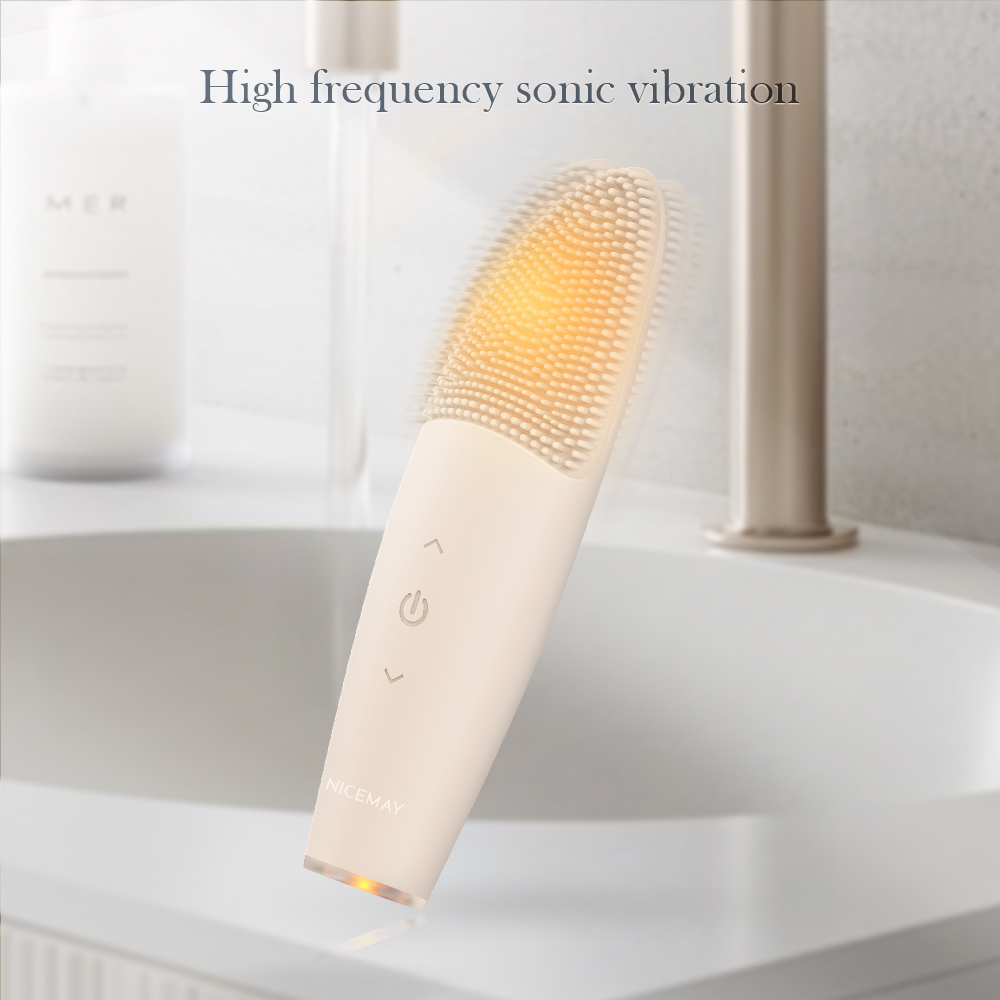
Silicone sonic brushes are the most appropriate starting point for anyone managing hyperpigmentation. Their non-porous surface resists bacterial buildup, and their gentle vibration-based action exfoliates without the micro-tearing risk of stiff bristles.

Safe Protocol: Using a Face Scrubber Brush to Fade Dark Spots
Frequency and Timing
Begin with two sessions per week, in the evening only. Evening use allows irritated skin to recover overnight without simultaneous UV exposure — crucial because freshly exfoliated skin is significantly more photosensitive. Increase to three times per week only after four weeks of tolerance with no adverse reaction.
Step-by-Step Routine for Hyperpigmentation
- Double-cleanse with a gentle oil cleanser first to remove SPF and makeup — never use a brush over makeup or SPF residue.
- Apply a mild, non-foaming cleanser (look for niacinamide or centella asiatica) to the brush head, not directly to dry skin.
- Use light, circular motions for 60 seconds maximum. Let the device do the work; pressing harder does not accelerate results.
- Rinse with lukewarm water, pat dry — do not rub.
- Apply a brightening serum (vitamin C, alpha arbutin, or tranexamic acid) to the freshly prepped skin within two minutes while pores are receptive.
- Follow with a hydrating moisturizer to support barrier recovery.
- Apply broad-spectrum SPF 30+ every morning without exception — exfoliation without sun protection is counterproductive.

Frequently Asked Questions
How long before a face scrubber brush visibly reduces dark spots?
Can I use a face scrubber brush if I have active acne alongside hyperpigmentation?
Is a face scrubber brush safe for dark skin tones with hyperpigmentation?
Should I use a face scrubber brush morning or evening when targeting hyperpigmentation?
Can a face scrubber brush replace professional treatments like chemical peels?

양식에 이메일을 입력해 주시면 곧 도움을 드리겠습니다!