


Medical-Grade LED Mask vs Consumer Devices: Power, Results, and Which One Actually Works

When comparing a medical-grade LED mask vs consumer devices, most people assume higher power automatically means better results—but that’s not always true. The real differences come down to irradiance (light energy output), wavelength precision, skin penetration depth, and realistic outcomes—understanding this can save you hundreds of dollars or prevent wasting time on underpowered gadgets that deliver minimal changes.
Medical-grade options (often FDA-cleared) provide clinically effective doses for faster improvements in wrinkles, acne, and skin firmness, while consumer devices excel at gentle, everyday maintenance and glow without the premium price tag.
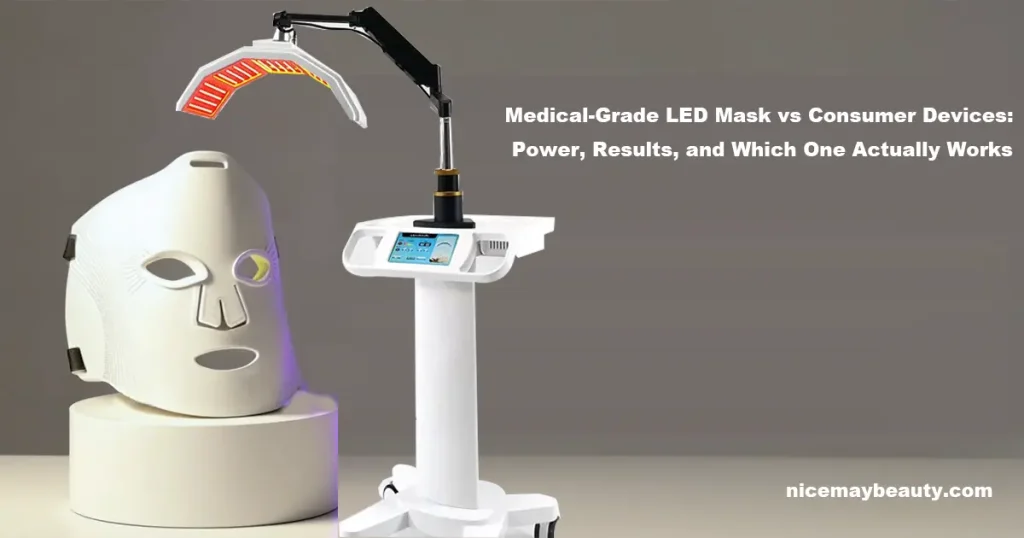
Medical-Grade LED Masks vs Consumer Devices: Key Differences Explained
Medical-grade LED masks are FDA-cleared Class II devices engineered for therapeutic results, featuring higher irradiance and precise wavelengths backed by clinical evidence.
Key features:
- Irradiance: Typically 30–100+ mW/cm² (e.g., Omnilux Contour Face at ~30 mW/cm², Dr. Dennis Gross DRx SpectraLite FaceWare Pro around 60 mW/cm² in reports).
- Wavelengths: Clinically validated like red (630–660 nm) for collagen stimulation, near-infrared (830–850 nm or deeper) for repair, and blue (415–450 nm) for acne.
- Design: Flexible medical-grade silicone for optimal skin contact, uniform light distribution, and built-in safety like eye protection.
These deliver meaningful energy (joules/cm²) to stimulate fibroblasts and drive real cellular changes.
Consumer-Grade LED Mask: What Sets Them Apart
Consumer LED masks prioritize affordability, convenience, and low-risk home use, ranging from budget models to solid mid-tier options.
Typical specs:
- Irradiance: Often 5–40 mW/cm², targeting mostly surface-level benefits.
- Wavelengths: Limited to 1–3 modes (e.g., basic red + blue), with possible output inconsistencies.
- Build: Variable quality—some use basic materials leading to uneven coverage or discomfort.
They’re ideal for beginners, subtle tone enhancements, or consistent upkeep rather than intensive treatment.
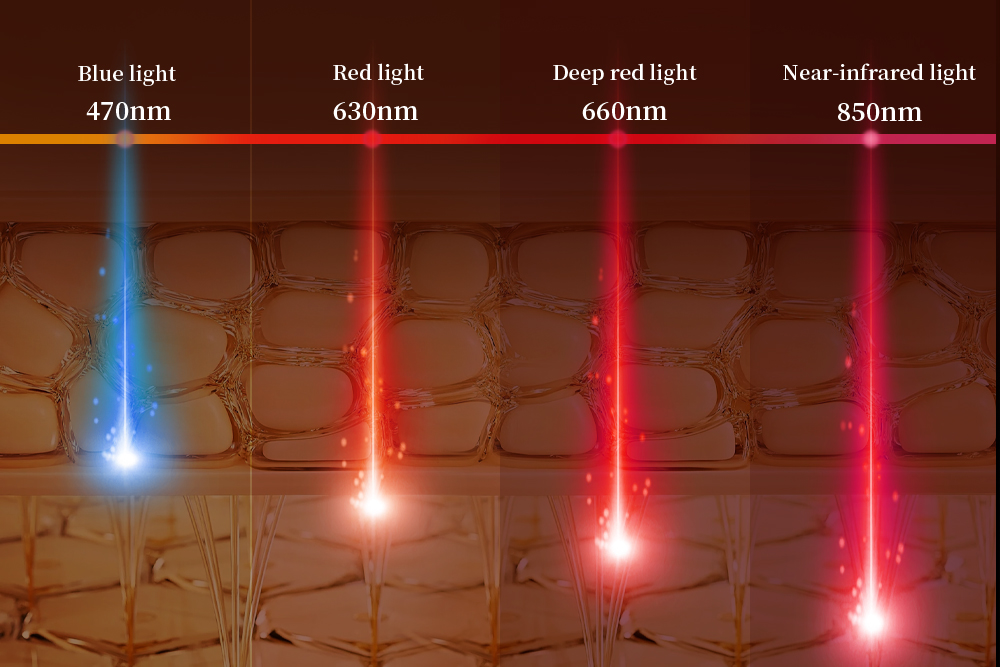
Medical-Grade vs Consumer LED Masks: Side-by-Side Comparison
| Feature | Medical-Grade LED Masks | Consumer LED Masks |
|---|---|---|
| Irradiance | 30–100+ mW/cm² | 5–40 mW/cm² |
| Penetration Depth | Dermis (collagen/elastin stimulation) | Mostly epidermis (surface glow) |
| Results Speed | Faster (visible in 4–8 weeks) | Slower, subtler (8–12+ weeks) |
| Treatment Time | 3–10 min sessions, 3–5x/week | 10–20 min, often more frequent |
| Best For | Targeted concerns (wrinkles, acne, repair) | Maintenance, mild tone/radiance |
| Price Range | ($300–$600+) | (under $100–$300) |
| FDA Clearance | Standard (Class II) | Varies; many lack it |
Higher irradiance in medical-grade masks enables deeper, more effective dosing—crucial for fibroblast activity and collagen production.
For a full explanation of why power levels matter so much, check out how irradiance affects LED mask effectiveness.
Effectiveness for Common Skin Concerns
- Anti-Aging (Wrinkles & Firmness) — Medical-grade masks lead with deeper penetration; according to clinical studies, red light in the 630–660 nm range stimulates fibroblast activity, boosts type I procollagen, and improves skin elasticity when delivered at sufficient energy levels.
- Acne & Inflammation — Stronger blue/red combos in medical-grade clear bacteria and reduce redness more efficiently; consumer options help mildly with daily consistency.
- Skin Glow & Tone — Both enhance radiance, but medical-grade provides longer-term regenerative benefits.
FDA-cleared consumer masks work well for ongoing maintenance, especially post-professional sessions.
Medical-Grade vs Consumer LED Masks: Which One Should You Choose?
Your choice depends on budget, skin concerns, and commitment level:
- Choose medical-grade if you have moderate-to-severe issues (deep lines, persistent acne, or recovery needs)—the higher irradiance and precision justify the investment for quicker, more noticeable results.
- Go consumer for preventive care, subtle enhancements, budget limits, or supplementing clinic treatments—consistent use yields value without excess power.
- Hybrid approach (many experts recommend): Start intensive with medical-grade, then maintain with a quality consumer device.
Consider your skin type, daily routine, and goals—higher isn’t always necessary if your needs are mild.
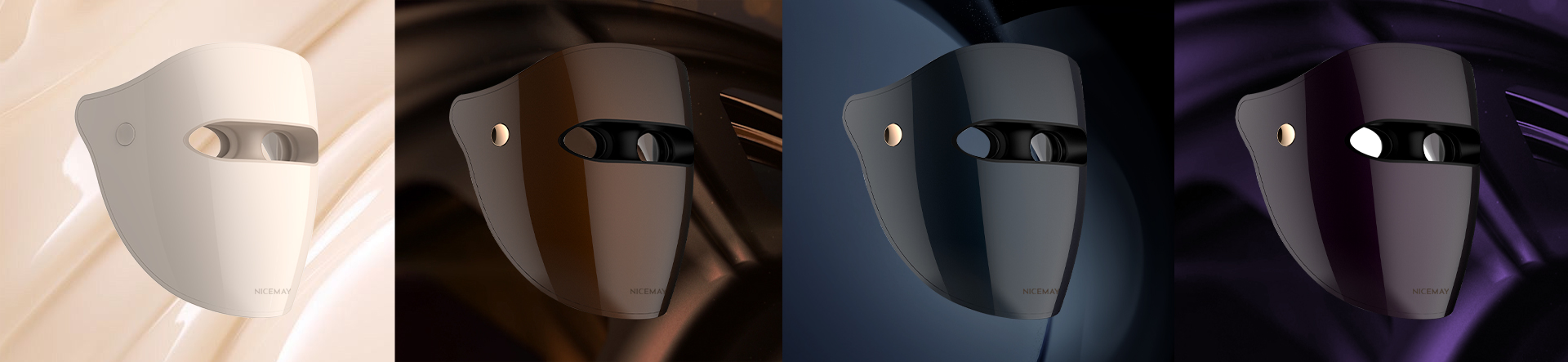
Best Medical-Grade LED Masks to Consider in 2026
Top FDA-cleared picks based on irradiance, reviews, and results:
- Omnilux Contour Face: ~30 mW/cm², flexible silicone, red + near-infrared for anti-aging.
- CurrentBody Skin LED Light Therapy Mask (Series 2): ~30 mW/cm², excellent coverage and wavelength precision.
- Dr. Dennis Gross DRx SpectraLite FaceWare Pro: Higher output (around 50–60 mW/cm² in some reports), multi-mode for wrinkles and acne.
- NICEMAY Advanced Phototherapy LED Mask : ~35–45 mW/cm² clinical-grade irradiance, medical-grade liquid silicone with 120+ high-precision lamp beads, optimized for OEM/ODM scalability and professional-grade anti-aging/acne results.
Safety and Usage Tips
LED therapy remains safe and non-invasive. Medical-grade includes safeguards; follow guidelines and use eye protection. Skip if photosensitive, on sensitizing medications, or with light-triggered conditions—consult a dermatologist first.
Consistency outperforms intensity—stick to recommended schedules.
FAQ: Medical-Grade LED Mask vs Consumer Devices
Do LED masks really work?
Are medical-grade LED masks safe for home?
How often should I use an LED mask?
What’s the best wavelength for anti-aging?
Can a consumer LED mask replace medical-grade?
Ultimately, a medical-grade device is an investment in measurable results. To understand how irradiance, safety certifications, and material longevity define the premium market this year, explore our Ultimate Guide to Red Light Therapy Masks (2026 Edition).
Please fill in your email in the form and we’ll get back to assist you soon!