


Who Should Avoid Using an LED Mask for Face?

People with photosensitive conditions (e.g., lupus, porphyria, or photosensitive epilepsy), those on photosensitizing medications (such as isotretinoin, tetracyclines, or lithium), pregnant or breastfeeding individuals, those with serious eye disorders (like glaucoma, macular degeneration, or inherited retinal diseases), active or recent skin cancer, open wounds/infections, or implanted electronic devices (e.g., pacemakers) should generally avoid LED masks for face. Always seek medical clearance from a dermatologist or specialist first.
LED face masks harness non-invasive photobiomodulation for benefits like collagen stimulation and acne reduction, but specific health profiles can introduce unnecessary risks. Backed by dermatological guidelines, clinical reviews, and regulatory insights, this evidence-focused guide identifies key contraindications to help prioritize safety and informed decisions.
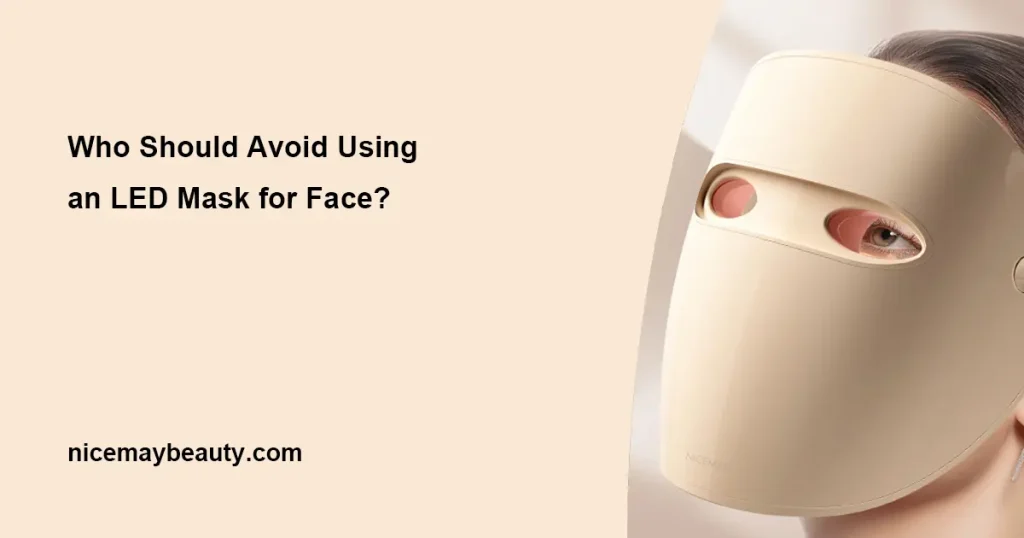
Who Should Not Use an LED Face Mask? (Full List)
Avoid facial LED therapy devices or proceed only under medical supervision if you:
- Have photosensitive autoimmune conditions (e.g., lupus, porphyria, polymorphic light eruption)
- Are taking photosensitizing medications (e.g., isotretinoin, tetracyclines, fluoroquinolones, high-dose NSAIDs, lithium, St. John’s Wort)
- Are pregnant or breastfeeding
- Have serious eye diseases (e.g., glaucoma, macular degeneration, retinitis pigmentosa, inherited retinal disorders)
- Have active skin cancer, recent melanoma history, or are undergoing cancer treatment
- Have open wounds, active skin infections (e.g., herpes outbreaks), or severe inflammatory acne
- Have implanted electronic devices (e.g., pacemakers, neurostimulators)
This list is not exhaustive—individual factors vary. Always discuss with a dermatologist or relevant specialist before starting.
Home-use light therapy devices like red light therapy masks deliver targeted wavelengths for skin rejuvenation, acne control, and anti-aging with an excellent safety profile for the majority of users. However, specific medical histories can elevate risks, even with non-UV, non-ionizing light. Below is an evidence-based breakdown to help you make informed choices.
Photosensitive Conditions: Key Groups to Approach with Caution
Autoimmune and Inflammatory Photosensitivity
Conditions such as systemic lupus erythematosus (SLE), porphyria, and polymorphic light eruption can lead to flares—rashes, joint pain, or systemic symptoms—when exposed to certain wavelengths. Clinical reviews note that photosensitive patients are frequently excluded from LED trials due to potential symptom worsening.
Most experts recommend avoidance unless under strict dermatological supervision.
Sources: American Academy of Dermatology (AAD) guidance on red light therapy safety; 2021 review in Photodermatology, Photoimmunology & Photomedicine (PubMed 33449490).

Photosensitive Epilepsy
Flickering or pulsing LEDs (even at therapeutic levels) may trigger seizures in a small subset of people with photosensitive epilepsy (estimated 3–5% of epilepsy cases).
Avoid at-home use; only consider supervised clinical application if approved by a neurologist.
Sources: Epilepsy Foundation position on photogenic triggers; 2020 study in Epilepsy & Behavior (PMC7266490).
Photosensitizing Medications: When to Pause LED Mask Use
Medications that increase light sensitivity can cause exaggerated reactions—redness, burning, or hyperpigmentation—even with short sessions.
Common examples include oral retinoids (isotretinoin), tetracyclines, fluoroquinolones, certain NSAIDs, lithium, and herbal agents like St. John’s Wort. Pharmacovigilance analyses link 40–50% of reported photosensitivity cases to these classes.
Temporarily discontinue red light therapy masks during treatment and for 1–2 weeks afterward; consult your prescribing doctor.
Sources: Cleveland Clinic LED therapy contraindications; 2019 meta-analysis in Journal of Clinical Medicine (PMC6685712).

Pregnancy and Breastfeeding: Recommended Caution
Hormonal changes can make skin more reactive, and large-scale human safety data for cosmetic LED use during pregnancy/breastfeeding remain limited—no direct harm has been proven, but evidence is insufficient to confirm complete safety.
Dermatologists and obstetric guidelines typically advise deferring non-essential light therapies until after this period.
Sources: AAD statements on cosmetic procedures in pregnancy; 2022 review in Obstetrics & Gynecology (PubMed 35015922).

Serious Eye Conditions: Glaucoma, Macular Degeneration, Retinal Disorders
Close-range exposure raises theoretical concerns for retinal stress or progression in already compromised eyes, even when protective features are used.
Ophthalmologists often recommend avoidance or very cautious use only with explicit approval.
Sources: American Optometric Association (AOA) light therapy guidelines; 2017 study in Investigative Ophthalmology & Visual Science (PMC5648371).

Cancer History or Active Disease
Active skin cancers, recent melanoma, or ongoing oncologic therapy generally contraindicate at-home LED light therapy masks—preclinical data suggest possible influence on abnormal cell behavior, though human evidence is limited and not conclusive.
Oncologist clearance is mandatory before any consideration.
Sources: National Cancer Institute advisories on photobiomodulation; 2012 study in Photomedicine and Laser Surgery (PMC3423866).
Active Skin Compromises and Other Situations
Open wounds, active infections (herpes, severe cystic acne), or recent invasive procedures increase risks of bacterial spread or delayed healing.
Darker skin tones (Fitzpatrick IV–VI) have a small but documented risk of post-inflammatory hyperpigmentation (PIH) from melanin interaction—incidence remains low (<5% in most trials).
Patch test and heal completely before resuming.
Sources: AAD wound-healing recommendations; 2019 clinical trial data (PMC8887049).
Can These Groups Ever Use LED Masks Under Medical Supervision?
In some cases—yes, but usually not at home.
- Clinical-grade, low-dose, short-duration sessions under dermatologist or specialist monitoring
- Modified protocols (e.g., lower irradiance, shorter times, specific wavelengths only)
- Continuous oversight to detect early adverse responses
Home-use devices lack this level of control, so avoidance remains the safest default for high-risk individuals.
FAQ: LED Mask Contraindications
Is red light therapy safe for lupus?
Can I use an LED mask while on isotretinoin?
Is LED light therapy safe during pregnancy?
Are LED masks safe for people with glaucoma?
Can LED masks trigger seizures?
Final Thoughts
For the vast majority of healthy adults, facial LED therapy devices offer a low-risk, effective addition to skincare routines when used correctly. Identifying contraindications is simply a way to ensure that people with specific medical conditions can protect themselves and proceed safely—or choose suitable alternatives.
If any of the above applies to you, consult a board-certified dermatologist or relevant specialist before trying an LED mask for face. Prioritizing professional guidance gives you both peace of mind and the best path to healthy, glowing skin.
Please fill in your email in the form and we’ll get back to assist you soon!