


Picking a beauty gadget shouldn’t feel like decoding a lab manual. Below are the common technical terms you’ll see on product pages, written for real people — what each one measures, why it matters, what typical values mean, and quick tips for choosing the right setting for your skin.
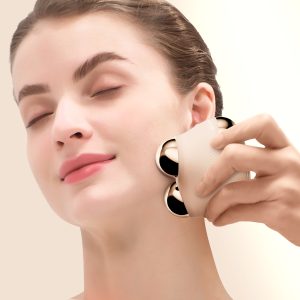
μA — Microampere (microcurrent intensity)
What it is: μA measures electrical current on a very small scale. In beauty tools, it tells you the intensity of microcurrent delivered to skin and facial muscles.
Why it matters: Microcurrent mimics the body’s natural electrical signals; the μA range determines how strong the stimulation is.
~50–200 μA: Very gentle — good for beginners and sensitive skin.
~200–400 μA: Typical at-home “toning” range — visible but comfortable for most people.
>400 μA: Professional-strength; more powerful effects but more chance of tingling.
How to use it: Start on the lowest setting, especially on delicate areas (under eye, neck). If you feel sharp pain or prolonged tingling, stop and lower the intensity.
Hz — Hertz (frequency / rhythm)
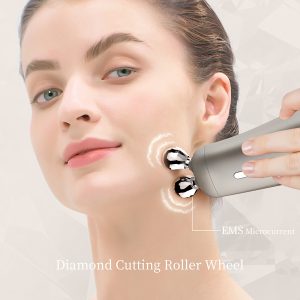
What it is: Hz measures how many pulses or cycles happen per second. Many devices use Hz when they pulse electrical current (EMS/microcurrent) or lights.
Why it matters: The rhythm changes the feel and the effect:
Low Hz (1–10 Hz): Slow, relaxing pulses that can support lymphatic drainage.
Mid Hz (10–100 Hz): Activates muscles and circulation — often used for toning.
High Hz (100+ Hz): Fast stimulation — more intense and sometimes used in deeper therapies.
How to choose: If you want a relaxing session, pick lower Hz; for a firmer, more “awake” feeling, use mid-range Hz.
KHz / MHz — Ultrasonic & Radiofrequency (depth & type of action)
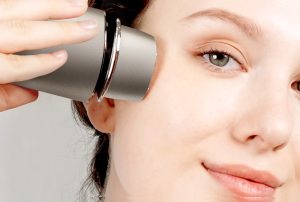
kHz (kilohertz) is often used for ultrasonic devices (exfoliation, cleanser spatulas). Example: 25 kHz is common for sonic skin scrubbers.
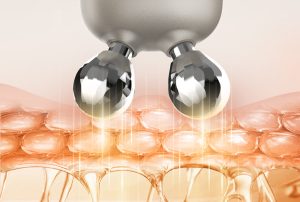
MHz (megahertz) is the unit for radiofrequency (RF), which gently heats deeper skin layers to encourage collagen remodeling.
Why it matters: kHz tends to do surface work (loosen debris, help product penetration). MHz reaches deeper tissues (firming and tightening).
Ultrasonic (~20–40 kHz): Cleans, vibrates dirt out of pores.
RF (0.3–6 MHz typical): Produces thermal effect in dermis — long-term firmness over multiple sessions.
Safety note: RF and high-power ultrasonics should be used per instructions; avoid on broken skin or if you have certain medical implants.
nm — Nanometers (LED light color / wavelength)
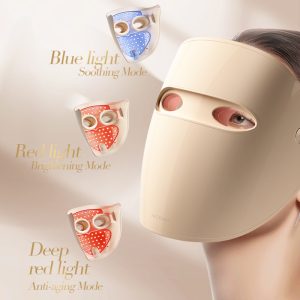
What it is: nm measures light wavelength. Different wavelengths have different skin targets.
Common ranges & benefits:
Blue ~415–460 nm: Antibacterial — useful for acne-prone skin.
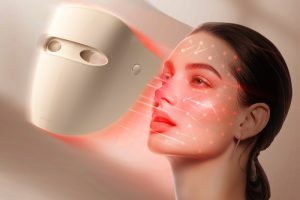
Red ~620–660 nm: Stimulates fibroblasts for collagen — anti-aging.
Amber ~590 nm: Soothing, brightening.
Near-infrared ~800–940 nm: Penetrates deeper for repair and circulation.
What to check: Don’t just look for “red light” — a displayed nm value tells you the precise wavelength and expected effect.
mW/cm² — Irradiance (LED power density)
What it is: Milliwatts per square centimeter tells you how much light energy is reaching the skin. It matters more than color alone.
Why it matters: Two masks both advertising “red light” can vary hugely in power; higher irradiance generally gives faster effects but needs proper safety controls.
Practical tip: For home masks, moderate irradiance is typical — higher power should be paired with clear safety guidance and recommended session times.
RPM / Vibrations per minute — Sonic & mechanical motion
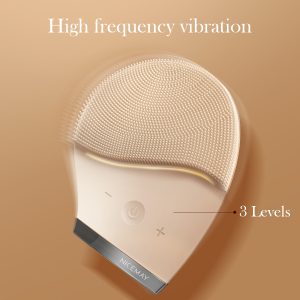
What it is: How fast a brush head spins (RPM) or vibrates (vibrations/min). Used for cleansing brushes and sonic devices.
Why it matters: Higher counts can clean more efficiently but may be too abrasive for sensitive skin if paired with stiff bristles.
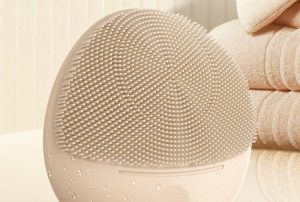
Example & tip: Your MR-2385 智能聲波面部刷 runs at about 7,500–8,000 vibrations per minute with super-fine silicone bristles and 12 speed levels — meaning you can dial it down for sensitive cheeks and turn it up for a deeper T-zone clean.
mAh — Battery capacity & charging
What it is: mAh (milliampere-hour) measures battery capacity — how long a device runs on a single charge.
What to expect:
~400–1000 mAh for compact handhelds — typically enough for multiple uses.
Devices with higher mAh are better for travel and for users who don’t want to recharge frequently.
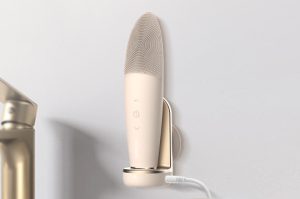
Charging note: Type-C USB is the current convenience standard (faster, reversible). Always dry device ports before charging.
IPX — Waterproof rating
What it is: IPX rating shows water resistance.
IPX5: Splash/shower-safe to some extent.
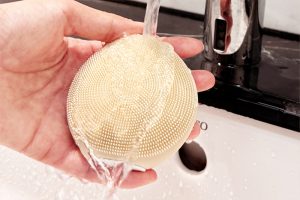
IPX7: Can be submerged briefly — best for rinse-and-go devices.
Why it matters: For cleansing brushes and devices used at the sink or shower, IPX7 means less worry about durability and cleaning.
Materials — What contacts your skin
Common materials & why they matter:
Medical-grade silicone: Non-porous, soft, hygienic for brush heads.
Stainless steel / gold-plated heads: Good conductivity for microcurrent or ultrasonic spatulas.
ABS / PC plastics: Durable casings.
Porous materials or cheap coatings can trap bacteria; non-porous silicone or sealed metal surfaces are easier to clean and safer long term.
Timer, Memory & Safety features
Timers auto-shutoff at recommended session lengths (e.g., 2, 6, 10 minutes).
記憶功能 saves last setting so you don’t accidentally restart at a high level.
Safety features (overheat protection, locked modes) protect skin and device.
These small features prevent overuse and make devices easier and safer to integrate into daily routines.
Quick Buyer/User Checklist
If you have sensitive skin: favor lower μA, softer bristles, lower vibration, and IPX7-rated silicone brushes.
If you want tightening / anti-aging: look for devices with RF in the MHz range or consistent mid-range μA microcurrent plus red/near-IR LED.
If you travel: choose higher mAh battery and Type-C charging.
Hygiene tip: choose non-porous silicone or metal heads; clean after each use and air-dry.
Knowing what the numbers mean makes you a smarter shopper and a safer user. You don’t need to memorize every unit — just remember the basic relationships (μA = strength for microcurrent; KHz = sonic speed; MHz = RF depth; nm = LED color; IPX = waterproof level). That’s enough to pick a device that fits your skin, your routine, and your comfort level.