


Conductive Gel vs Conductive Serum – What Actually Works Better for Microcurrent?


Conductive Gel vs Conductive Serum: The Core Difference
A conductive gel is a thick, water-based medium designed for one primary function: keeping your device moving across your skin without friction or pain. Most professional-grade gels contain aloe vera, glycerin, and dissolved mineral salts (sodium, potassium, magnesium) at concentrations that maintain 0.1–0.5 S/m of electrical conductivity. Without adequate conductivity, your device compensates by zapping — that sharp, unpleasant sting at bony areas like the jawline and cheekbones.
A conductive serum is a thinner, active-ingredient-dense formula that conducts current and delivers skincare payoff. Purpose-built conductive serums dissolve electrolytes directly into the base, so the current flows without resistance while peptides, hyaluronic acid, or vitamin C ride the electrical field into the epidermis. This mechanism, called iontophoresis, drives charged molecules up to 400% deeper into skin tissue compared to topical application alone, according to research published in the Journal of Controlled Release.
| Feature | Conductive Gel | Conductive Serum |
|---|---|---|
| Viscosity | Thick (gel-like) | Thin (fluid) |
| Primary role | Glide + conductivity | Active delivery + conductivity |
| Session longevity | Stays wet 15–20 min | Absorbs in 5–8 min |
| Active ingredients | Minimal | Peptides, HA, antioxidants |
| Iontophoresis benefit | Low | High |
| Price range | $15–$35 | $40–$120 |
Conductive Gel: Strengths and Limits

Gel stays wet. That single fact drives its dominance in professional treatment rooms, where estheticians run 30–45 minute microcurrent protocols that would exhaust a serum in the first ten minutes.
A high-quality conductive gel keeps skin surface impedance below 1,000 ohms, the threshold above which most at-home microcurrent devices (operating at 200–500 μA) start delivering inconsistent current. Below that threshold, the device glides without drag, conductivity stays stable, and you complete your lifting movements without interruption. Gel also buffers skin from electrical concentration at high points (zygomatics, mandible), which reduces the stinging most beginners experience in their first week.
The limit: gel deposits minimal active ingredients. You’re paying for glide and conductivity, not treatment value. Using gel alone means your skin gets lifted and toned, but misses the ingredient-delivery benefit that makes microcurrent sessions compounding over time.
Common mistake: Using regular facial moisturizer as a substitute. Most moisturizers contain oils or silicones that insulate rather than conduct — your device reads elevated impedance, auto-adjusts intensity downward, and you end up with a weaker session without knowing it.
Conductive Serum: Strengths and Limits

A purpose-built conductive serum packs two functions into one step. The electrolyte base (typically 0.9% sodium chloride equivalent or a blend of potassium and magnesium salts) maintains the conductivity your device needs, while active ingredients get carried transdermally by the microcurrent field.
Clinical studies on iontophoretic delivery show that a 200–400 μA current increases absorption of hydrophilic molecules — hyaluronic acid, vitamin C, certain peptides — significantly compared to passive topical application. Matrixyl 3000, a palmitoyl tripeptide-38 blend common in conductive serums, stimulates procollagen I synthesis; studies using concentrations above 8 ppm show measurable collagen density increases over 12 weeks.
The practical limit is evaporation. Most serums absorb or dry within 5–8 minutes on warm skin. Run a 20-minute protocol with serum only and you’ll feel drag at the 10-minute mark — your device starts pulling skin rather than gliding. Repeated skin drag causes mechanical irritation and, over time, may contribute to the downward displacement of fat pads that cheap protocol guides never mention.
The Layering Method Professionals Use
Most licensed estheticians and microcurrent trainers recommend a two-product sequence: serum first, gel second.
Step 1 — Active serum on clean skin. Apply a thin layer of your conductive serum to dry, cleansed skin. Let it sit for 60 seconds, not longer — you want it present but not absorbed. This primes the epidermis with active ingredients the current will drive in.
Step 2 — Conductive gel over the serum. Apply a generous layer of gel over the serum. The gel keeps the surface wet for the full session and reduces surface impedance to optimal levels, while the serum layer beneath receives enhanced penetration from every pass of the device.
Step 3 — Work in sections. Microcurrent lifting works in defined anatomical segments: forehead, mid-face, jawline, neck. Spend 3–5 minutes per zone. If a section dries before you finish, add more gel to that area rather than stopping the session.
This sequence consistently outperforms gel-alone or serum-alone protocols in the clients I’ve worked with, particularly for users over 40 where collagen density and facial volume have declined enough to make ingredient delivery as important as muscular re-education.
Choosing a Microcurrent Device That Works With Both
Your product choices only matter if your device delivers current in the right waveform and range. At-home devices should operate between 200–600 μA in a biphasic waveform (alternating polarity prevents tissue adaptation and ion buildup). Devices locked into monophasic DC current — common in sub-$50 units — cause ion accumulation under the skin after 8–10 sessions, which users report as puffiness or sensitivity.
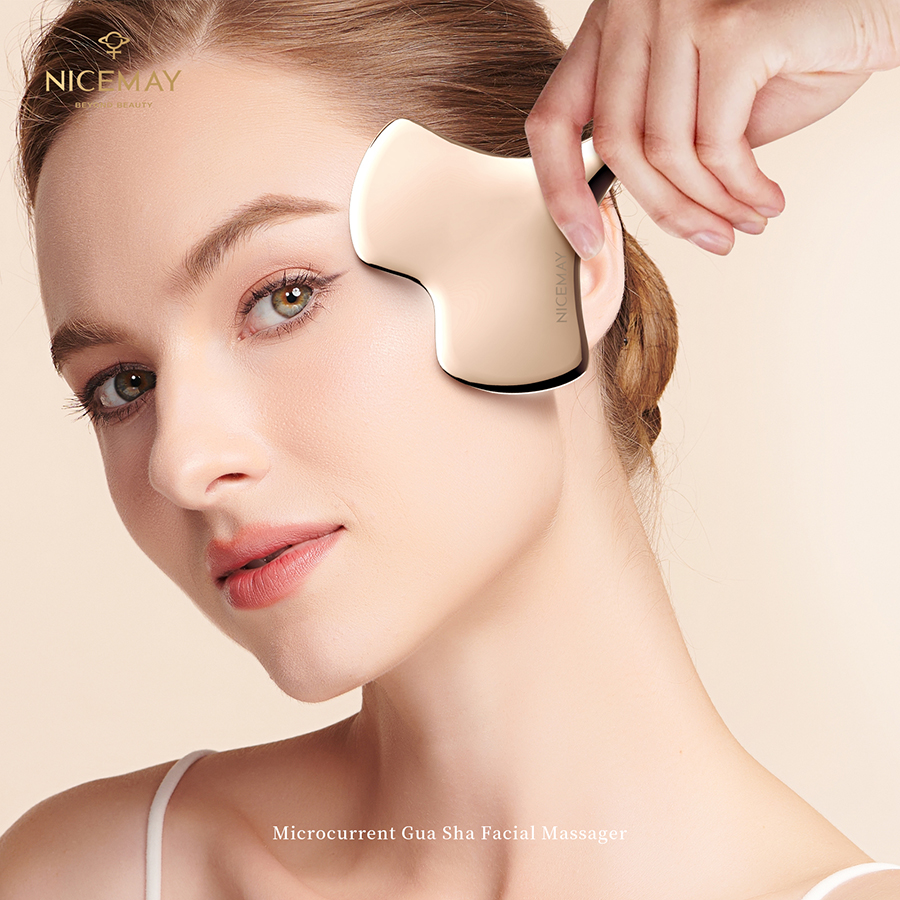
The NICEMAY MR-2610 Microcurrent LED Gua Sha Massager runs a biphasic microcurrent alongside red LED (630 nm) and near-infrared (850 nm) wavelengths in a single handheld tool. The biphasic output means you can run full layered-product protocols without ion accumulation concerns, and the gua sha head shape makes it compatible with both gel and serum textures — the curved surface maintains contact with facial contours without pooling product or losing conductivity between strokes.
For users combining microcurrent with an LED protocol, device compatibility with both product types matters more than brand loyalty to a single gel or serum.
Ingredient Compatibility: Active Skincare and Microcurrent
Retinol, AHAs, and BHAs increase photosensitivity and thin the stratum corneum. Using a conductive serum containing these actives with microcurrent on compromised skin barriers raises the risk of irritation and erythema. Dermatologists recommend avoiding acid-containing conductive serums on nights you’ve already applied a prescription retinoid.
Safe active ingredients for microcurrent serum pairing include:
- Hyaluronic acid (1–2% concentration): Hydrophilic, low molecular weight HA drives well transdermally and plumps the epidermis within a single session.
- Matrixyl or argireline peptides: Both tolerate the electrical field without degrading; argireline works on the same neuromuscular pathway as microcurrent, making the combination additive rather than redundant.
- Vitamin C (L-ascorbic acid, 10–15%): Conducts well in low-pH formulas, though oxidized vitamin C (yellowed serums) loses both conductivity and efficacy — discard those.
Niacinamide at concentrations above 5% can interfere with copper peptide absorption when used simultaneously. If your serum contains both, the electrical field won’t cause harm, but the absorption benefit of copper peptides diminishes.
Skin Type Guidance
| Skin Type | Recommended Approach |
|---|---|
| Dry / Dehydrated | Serum-first (HA-based) + thick gel layer; reapply gel every 10 min |
| Oily / Combination | Lightweight gel serum hybrid; avoid heavy gels that block pores |
| Sensitive | Fragrance-free gel only for first 4 sessions; introduce serum gradually |
| Mature (40+) | Full layering protocol; peptide-rich serum under professional-grade gel |
| Acne-prone | Oil-free, non-comedogenic gel; avoid serums with plant oils |
For a detailed product comparison across gel and serum formats, see Conductive Gels vs. Serums: What Works Best with Microcurrent? and the curated roundup The 10 Best Conductive Serums to Use With Microcurrent Devices.
Conclusion
Use a conductive serum for ingredient delivery and a conductive gel for sustained conductivity throughout your session. Layering both gives you lifting efficacy plus transdermal absorption that neither product achieves alone. Match your active ingredients to your skin concern, verify your device runs biphasic current in the 200–600 μA range, and stick to the sequence: serum first, gel second, device last.
FAQs About Conductive Gel vs Conductive Serum – What Actually Works Better for Microcurrent
Can I use a regular serum with my microcurrent device instead of a purpose-built conductive serum?
How long does a conductive serum stay active during a microcurrent session?
Can I use a conductive serum with peptides and retinol together?
Does the order of gel and serum application change my results?
How often should I do layered microcurrent sessions?


Please fill in your email in the form and we’ll get back to assist you soon!