


Die 10 besten Microcurrent-Geräte für Männer im Jahr 2026

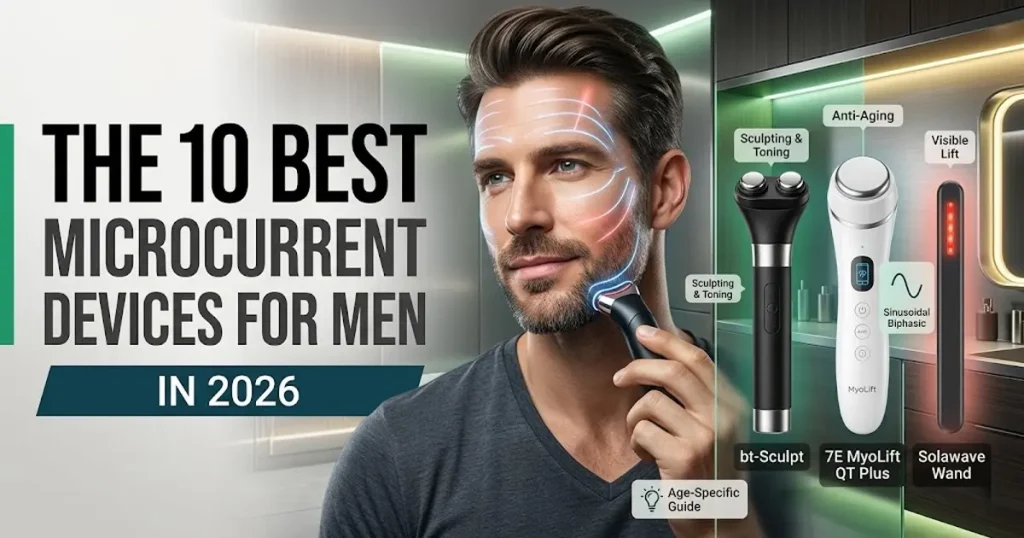
Die Haut von Männern ist physiologisch anders — bis zu 25% dicker Dermis, dichtere Kollagenarchitektur und höhere Sebumausgabe — was bedeutet, dass ein Microcurrent-Gerät, das bei weiblicher Haut hervorragend funktioniert, bei männlicher Haut enttäuschende Ergebnisse liefern kann. Die richtigen Geräte für Männer liefern höhere Ausgangsströme (typischerweise 400–600 µA im Vergleich zu den 200–300 µA Standard), verfügen über größere Behandlungsaufsätze, die die breitere männliche Kieferlinie in weniger Durchgängen abdecken, und bieten idealerweise einstellbare Wellenform-Einstellungen, um den dichteren Gesichtstextur auszugleichen. Dieser Leitfaden durchdringt den Lärm, um die Geräte zu identifizieren, die tatsächlich Ergebnisse für Männer liefern.
Die Top 10 Microcurrent-Geräte von 2026 — Vollständige Rangliste für alle Hauttypen
Warum wirkt Microcurrent bei männlicher Haut anders?
Microcurrent-Therapie — die Übertragung von niederfrequenten elektrischen Strömen im Bereich von 10–600 µA — funktioniert, indem sie das bioelektrische Feld des Körpers nachahmt, um Gesichtsmuskeln neu zu trainieren und zu stimulieren ATP (Adenosintriphosphat)-Produktion. ATP-Synthese ist der Mechanismus hinter dem kollagensteigernden Effekt; eine wegweisende Studie, veröffentlicht im Journal of Clinical and Aesthetic Dermatology, fand heraus, dass Microcurrent die ATP-Produktion um bis zu 500% erhöht in behandeltem Gewebe, mit gleichzeitigen Zuwächsen bei Aminosäureaufnahme und Proteinsynthese.
Für Männer ändern zwei Variablen die Gleichung. Erstens ist die durchschnittliche männliche Dermis 1,5–2× dicker als weibliche Haut, was bedeutet, dass der Strom weiter reisen muss, um den Motorpunkt des Zielmuskels zu erreichen. Geräte mit einer maximalen Ausgangsleistung unter 350 µA sättigen oft die Epidermis, bevor sie eine bedeutende Stimulation des darunterliegenden Platysma oder Masseters liefern. Zweitens sind die Gesichtsknochen von Männern im Allgemeinen breiter — ein Kieferlinien-Behandlungsaufsatz, der für das schmalere weibliche Kiefergelenk entwickelt wurde, deckt pro Durchgang ungefähr 60TP3T des männlichen Gegenstücks ab, was die doppelte Zeit für den gleichen Effekt erfordert.
Experteneinschätzung
Bei meiner Arbeit mit der Bewertung von Schönheits-Technologien für zu Hause sehe ich immer wieder einen Fehler: Männer kaufen ein Gerät, das für “alle Hauttypen” bewertet ist, und verwenden es ab dem ersten Tag mit maximaler Intensität. Da männliche Haut langsamer reagiert, ist der Instinkt, den Strom zu erhöhen — aber das kann vorübergehende Muskelermüdung verursachen, wenn der Strom ohne automatische Abschaltung 600 µA übersteigt. Die besten Geräte für Männer verfügen über eine progressive Intensitätssteigerung, typischerweise über 5 Stufen, anstatt eines binären Low/High-Schalters.
Die effektivsten Wellenformen für männliches Gesichtstissue sind biphasische Rechteckwellen (verhindern Ladungsansammlungen und Hautschäden) mit einer Frequenz zwischen 0,1 Hz und 300 Hz. Geräte, die rein monophasischen Gleichstrom verwenden — üblich bei günstigeren Geräten unter $50 — riskieren bei längerer Anwendung auf dicker, ölige männliche Haut leichte galvanische Verbrennungen.
Die Top 10 Microcurrent-Geräte für Männer im Jahr 2026 — Rangliste
1. Therabody TheraFace Pro
Kein anderes Gerät auf dieser Liste leistet in einem einzigen Formfaktor mehr. Das TheraFace Pro kombiniert Microcurrent mit percussiver Massage, Rotlichttherapie (Wellenlänge 630nm) und Kälte-/Wärmetherapie — alles in einem Gerät, das seine DNA mit der Percussive-Therapie-Reihe von Theragun teilt. Für Männer ist das herausragende Merkmal die percussive Massage-Aufsatz: Er zielt auf den Masseter und den Kiefergelenkbereich (TMJ) mit der gleichen Amplitude und Frequenz ab, die Theragun bei größeren Muskelgruppen effektiv macht.
Der Mikrostrom-Ringaufsatz liefert angeblich 0,03 mA (30 µA) — niedriger als der Trinity+ — aber die Kombination mit percussiver Stimulation erzeugt einen kumulativen Effekt auf die Durchblutung und den Lymphabfluss. In der Praxis bedeutet dies schnellere sichtbare Abschwellungsergebnisse, insbesondere um die Augen und im Mittelgesicht. Der wiederaufladbare Akku des Geräts hält etwa 120 Minuten Dauerbetrieb, und der ergonomische Griff — entlehnt aus der Percussion-Reihe von Theragun — passt sich natürlich größeren männlichen Händen an.

Mikrostrom-Ausgang
~30 µA
Rotes Licht
630 nm
Akkulaufzeit
~120 Min
Eigenschaften
4-in-1
Preisspanne
$299–$349
Wasserfest
Ja (IPX4)
2. NuFACE Trinity+
Der NuFACE Trinity+ bleibt im Jahr 2026 die Benchmark für Mikrostrom zu Hause, und er belegt den Spitzenplatz auf dieser Liste speziell wegen seiner Architektur: ein doppelkugeliger, titanbeschichteter Behandlungsaufsatz mit 60 mm Durchmesser, der bis zu 335 µA bei einer biphasischen Wellenform bei 1 Hz liefert. biphasische Wellenform bei 1 Hz. Für Männer, die die Kinnlinie bis zur Kieferlinie anheben möchten, ist die Geometrie des Aufsatzes besonders geeignet — er umfasst den männlichen Kieferwinkel in einem einzigen Durchgang, anstatt die mehrfach überlappenden Strokes zu benötigen, die kleinere Geräte erfordern.
Der “Boost”-Knopf des Geräts liefert einen 1-sekündigen Impuls mit erhöhtem Strom für hartnäckige Bereiche — besonders nützlich für den schwereren Masseter- und Platysma-Muskel, die bei Männern häufig vorkommen. Klinische Daten von NuFACE zeigen eine messbare Verbesserung der Gesichtskontur bei 90% der Nutzer nach 60 Tagen täglicher 5-Minuten-Sitzungen, wobei die Wartung danach nur noch 2–3 Sitzungen pro Woche erfordert.

Aktueller Ausgang
Bis zu 335 µA
Wellenform
Biphasisch, 1 Hz
Kopfgöße
60 mm Doppel-Kugel
FDA-Status
510(k) Genehmigt
Preisspanne
$339–$379
Sitzungsdauer
5–20 Min.
- FDA-genehmigt mit klinischen Studien
- Großer Kopf perfekt für männliches Kiefergelenk
- Austauschbares Befestigungssystem
- Bewährte Langzeitergebnisse
- Erfordert NuFACE Gel Primer
- Höhere Anfangskosten
- Keine App-Konnektivität
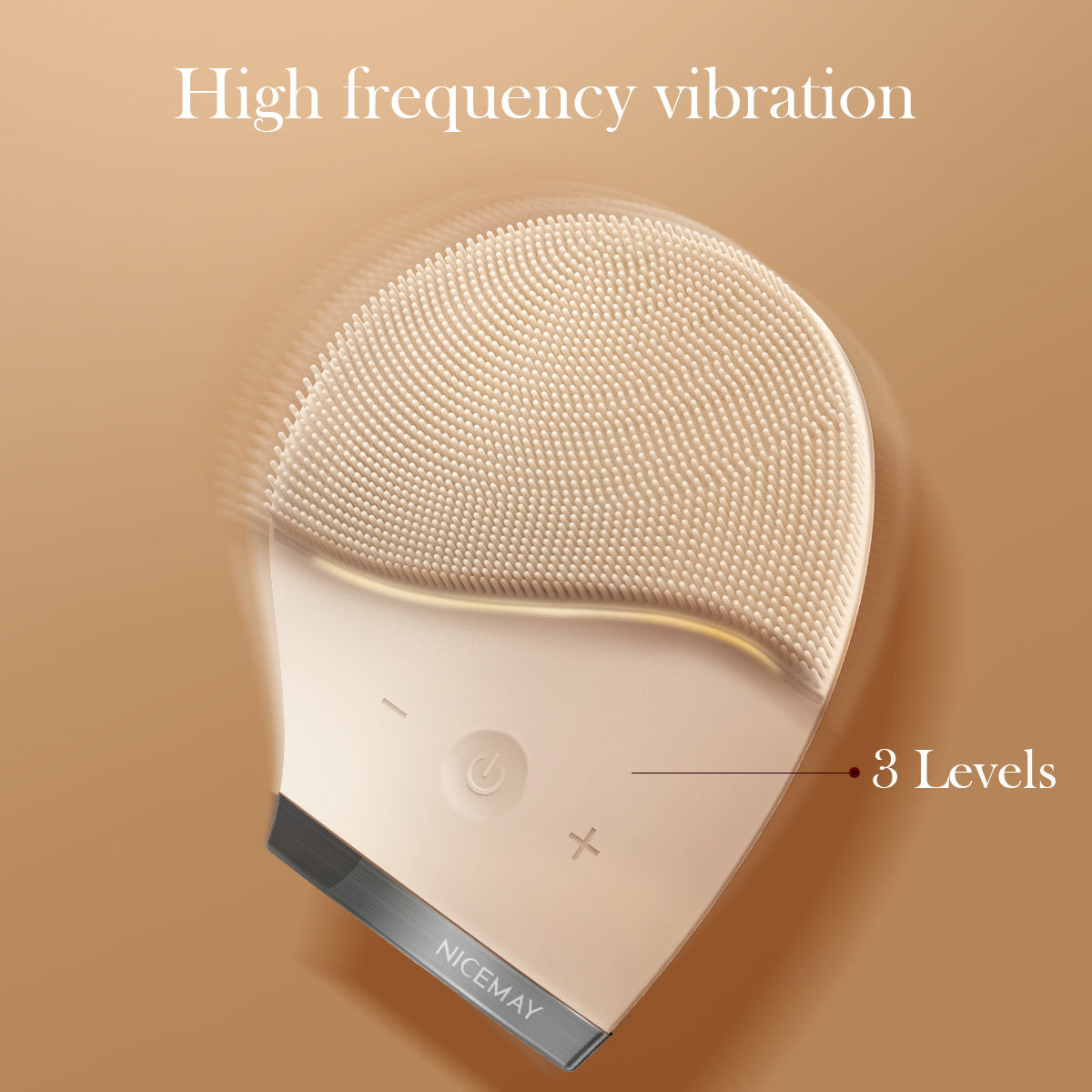
Der NICEMAY MR-2370 erreicht seinen dritten Platz, indem er ein Problem löst, das die meisten Geräte in dieser Preisklasse ignorieren: die echte multimodale Behandlung in einem einzigen Gerät, das auf die männliche Gesichtsanatomie ausgelegt ist. Im Gegensatz zu Einzelfunktions-Mikrocurrent-Stäben kombiniert der MR-2370 einstellbare Mikrocurrent-Stimulation mit gezielter LED-Lichttherapie (mit rotem Licht zur Kollagensimulation und Nahinfrarot für tiefere Gewebepenetration) sowie EMS (elektrische Muskelstimulation) — eine wichtige Unterscheidung für Männer, da EMS bei höheren Frequenzen (1–150 Hz) arbeitet, die besonders effektiv für die dichteren, größeren Gesichtsmuskeln wie den Masseter und den Sternocleidomastoideus sind.
Was dieses Gerät für männliche Nutzer auszeichnet, ist sein Zweipol-Behandlungskopf, der gleichzeitig Kontakt mit einer größeren Oberfläche herstellt. Dies ist entscheidend bei der Arbeit am männlichen Hals und Kieferlinie, wo der Haut-Kopf-Kontaktbereich oft durch Bartstoppel beeinträchtigt ist — die leitfähige Oberfläche des MR-2370 sorgt für eine konstante Mikrocurrent-Übertragung, selbst bei strukturierter Haut. Die LED-Wellenlängen (630nm Rot / 850nm Nahinfrarot) sind klinisch validierte Bereiche für Kollageninduktion und zelluläre ATP-Stimulation in Tiefen von 5–10 mm, was bedeutet, dass die Nahinfrarot-Komponente die subdermale Schicht erreicht, in der männliche Kollagenfasern liegen.

Technologie
Mikrocurrent + LED + EMS
LED-Wellenlängen
630nm + 850nm
EMS-Frequenz
1–150 Hz
Behandlungsmodi
Mehrere
Laden
USB-C
Design
Ergonomischer Griff
- Dreimodus: Mikrostrom + LED + EMS
- Nah-Infrarot erreicht die tiefe Kollagenschicht
- Funktioniert über Bartstoppeln
- Ausgezeichnetes Preis-Leistungs-Verhältnis im Vergleich zu Einzelmodus-Konkurrenten
- USB-C aufladbar
- Benötigt leitfähiges Gel für beste Ergebnisse
- Lernkurve bei Mehrfachmodus-Einstellungen
4. 7E Wellness MyoLift QT Plus
7E Wellness liefert professionellen Mikrostrom-Technologie für medizinische Spas und dermatologische Praxen, was den MyoLift QT Plus zu einem ungewöhnlichen Angebot macht: Es ist ein Spa-gerät in Klinikqualität, das für den Heimgebrauch skaliert wurde. Der QT Plus liefert echten Mikrostrom im Bereich von 0–500 µA über eine proprietäre Wellenform, die die Ausgabe ihrer professionellen Geräte widerspiegelt — eine Unterscheidung, die zählt, da viele “Heim”-Geräte vereinfachte Rechteckwellen verwenden, während der QT Plus eine sinusförmige biphasische Wellenform nutzt, die den bioelektrischen Signalen des Körpers näher kommt.
Die Begleit-App bietet granulare Steuerung, die analytisch orientierte Männer ansprechen wird: Nutzer können Frequenz (0,1–300 Hz), Intensität (in 5 µA-Schritten) und Sitzungsdauer unabhängig für jede Behandlungszone einstellen. Für Männer mit ausgeprägten Nasolabialfalten oder signifikanter Schlaffheit im Kieferbereich ist die Möglichkeit, eine 400 µA-Sitzung im unteren Gesichtsteil durchzuführen, während die Behandlung im Augenbereich bei 150 µA bleibt, ein bedeutender klinischer Vorteil gegenüber Einheitsgeräten.

Ausgangsbereich
0–500 µA
Wellenform
Sinusförmige biphasische Wellenform
Häufigkeit
0,1–300 Hz
Preisspanne
$349–$399
5. ZIIP Halo
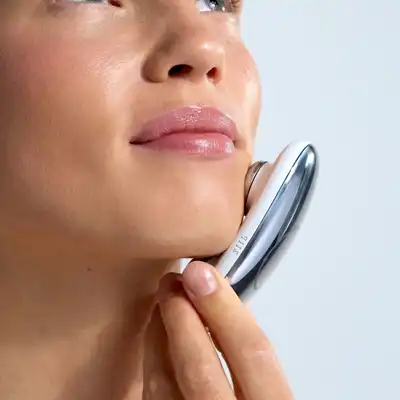
Der ZIIP Halo ist das einzige Gerät in dieser Kategorie, das sowohl Mikrostrom (zur Muskelarbeit) als auch Nanostrom (zur Zellschicht bei 0,001–1 µA) gleichzeitig liefert. Für Männer adressiert die Nanostrom-Komponente eine Lücke, die reiner Mikrostrom nicht abdeckt: die zelluläre Kollagensynthese und die Beschleunigung der Wundheilung, was besonders wertvoll ist für Männer, die tägliches Rasieren mit Mikrotraumen erleben. Die ZIIP-App (iOS und Android) bietet spezielle Behandlungsprogramme für männliche Haut, einschließlich “Kieferkontur” und “Hals & Dekolleté” — bemerkenswert, weil die meisten Apps standardmäßig auf weibliche Gesichtszuordnungen setzen.
Klinische Studien, die Nanokurrent unterstützen, berichten von einer 45%-Verbesserung der Hautfeuchtigkeit und einem messbaren Anstieg der Fibroblastenaktivität nach 8 Wochen konsequenter Anwendung. Das ZIIP Halo liefert diese Nanoströme durch vergoldete Leiter bei präzise kontrollierten Frequenzen. Die app-gesteuerte Natur bedeutet, dass Protokolle die Intensität automatisch an den Behandlungsbereich anpassen — wodurch das Rätselraten für Männer, die neu in der Mikrostromtechnik sind und den empfindlichen Augenbereich sonst mit Currents, die für den Kiefer kalibriert sind, überbehandeln könnten, entfällt.
Technologie
Nano + Mikrostrom
App-Steuerung
iOS + Android
Leiter
Vergoldet
Preisspanne
$495–$545
6. Foreo Bear 2

Design
Silicone, IPX7
Anti-Schock
Automatisch anpassend
Körpervariante
Verfügbar
Preisspanne
$229–$279
7. Bio-Therapeutic bt-Sculpt

Verarbeitungsqualität
Professionelle Qualität
Frequenzbereich
0,1–10 Hz optimiert
Ziel
Langsam zuckende Muskeln
Preisspanne
$425–$475
8. Medicube Age-R Booster Pro

Preisspanne
$199–$249
Feldstärke
~1.000 V/cm
Am besten geeignet für
After-Shave-Seren
Preisspanne
$425–$475
9. Solawave 4-in-1 Strahlende Erneuerungskosmetikstab
Der Solawave-Stab nimmt eine eigenständige Position ein: Er ist wie ein Elektrorasierer geformt, was ihn zum intuitivsten Gerät auf dieser Liste für Männer macht, die noch nie zuvor ein Hautpflegegerät benutzt haben. Das vertraute Formfaktor entfernt die psychologische Barriere für die tägliche Anwendung — ein entscheidender Faktor, da die Ergebnisse der Mikrostromtherapie fast ausschließlich von der Konsistenz der Anwendung abhängen (mindestens 5 Tage pro Woche in den ersten 60 Tagen). Er kombiniert Mikrostrom mit 660 nm roter Lichttherapie und therapeutischer Wärme (im Bereich von 42–45°C, genau innerhalb der sicheren Schwelle für dermale Stimulation), und schafft so einen dreifachen Ansatz zur Reduzierung von Schwellungen und Verbesserung der Durchblutung, der eher für die Erhaltung als für intensives Anheben wirksam ist.

Rotes Licht
660 nm
Wärme-Temperatur
42–45°C
Formfaktor
Rasierer-ähnlich
Preisspanne
$149–$169
10. Skin Gym Mikrostrom-Stab

Stromquelle
Batterie
Anwendungsfall
Präventiv, gegen Schwellungen
App erforderlich
No
Preisspanne
$39–$59
So wählen Sie das richtige Mikrostromgerät: Ein Rahmen für Männer
1. Stimmen Sie die Stromstärke auf Ihre Hautdichte ab
Männer mit dicker Haut, ausgeprägter Knochenstruktur oder signifikanter Kieferlaxheit sollten Geräte mit mindestens 300 µA priorisieren. Männer in den 20ern–30ern, die Mikrostrom präventiv verwenden, können mit Geräten im Bereich von 100–250 µA hervorragende Ergebnisse erzielen, da ihr Ziel die Durchblutung und frühe Kollagenstimulation ist, nicht die Muskelneugewinnung. Als Benchmark: professionell eingesetzte Mikrostrom-Gesichtsmasken in klinischen Umgebungen arbeiten typischerweise bei 200–800 µA, abhängig von der Behandlungsphase, daher sollten Geräte für den Heimgebrauch, die professionelle Ergebnisse nachahmen wollen, unter 100 µA skeptisch betrachtet werden.| Alter / Bedenken | Empfohlene Ausgabe | Prioritätsmerkmal | Top-Auswahl |
|---|---|---|---|
| 20er–30er, präventiv | 100–250 µA | Rotes Licht + Wärme | Solawave Stab |
| 30er–40er, frühe Erschlaffung | 250–400 µA | Biphasische Wellenform + großer Kopf | NICEMAY MR-2370 / NuFACE Trinity+ |
| 40er–50er, sichtbare Erschlaffung | 350–500 µA | Sinusförmige biphasische Wellenform + App-Steuerung | 7E MyoLift QT Plus |
| 50er+, erhebliche Erschlaffung | 400–600 µA | Profi-Wellenform + Niedrigfrequenz | bt-Sculpt |
2. Wellenform-Sicherheit: Biphasisch vs. Monophasisch
Dies ist das am wenigsten geschätzte technische Kriterium. Ein monophasischer (direkter) Strom schiebt kontinuierlich Ladung in eine Richtung, was zu Ionenansammlungen und Mikroverbrennungen in Talgfollikeln führen kann — häufiger bei Männern aufgrund höherer Follikel-Dichte. Eine biphasische Wellenform wechselt die Richtung und verhindert so die Ladungsansammlung. Jedes Gerät, das in den Top 8 dieser Liste rangiert, verwendet biphasischen Strom. Budgetgeräte unter $75 verzichten oft auf diese Spezifikation im Marketing — wenn die Wellenform nicht angegeben ist, nehmen Sie an, dass sie monophasisch ist, und berücksichtigen Sie dies bei Ihrer Risikobewertung.4. Bartkompatibilität
Etwa 60% der Männer, die Heim-Pflegegeräte verwenden, haben einen gewissen Bartwuchs. Stoppel bildet eine physische Lücke zwischen der leitfähigen Oberfläche des Geräts und der Haut — der elektrische Strom überspringt diese Lücke ungleichmäßig, was die Wirksamkeit verringert und gelegentlich Hot Spots verursacht. Geräte, die bei Stoppel am besten funktionieren, teilen zwei Eigenschaften: eine größere leitfähige Oberfläche (um den Prozentsatz der Lücke zu minimieren) und einen niedrigeren inneren Widerstand im Stromkreis, was die Stromlieferung trotz erhöhter Hautresistenz aufrechterhält. Das NICEMAY MR-2370 und das NuFACE Trinity+ schneiden bei diesem Kriterium aufgrund ihrer größeren Behandlungsaufsätze gut ab.Wie man Mikrostrom effektiv nutzt: Ein Protokoll speziell für Männer?
Der häufigste Grund, warum Männer Mikrostromgeräte nach 30 Tagen aufgeben, ist nicht die Wirksamkeit — es ist ein fehlerhaftes Protokoll. Was ich konsequent beobachte, ist, dass Männer zu viel Druck ausüben, unzureichendes leitfähiges Medium verwenden und keinen progressiven Intensitätsplan haben. Hier ist ein auf die männliche Gesichtsanatomie abgestimmtes Protokoll.
Phase 1: Fundament (Wochen 1–4) — Täglich 5–10 Minuten
Beginnen Sie bei 40–50% der maximalen Intensität. Tragen Sie eine großzügige Schicht leitfähiges Gel auf (etwa 2 mL pro Behandlungszone) — wasserbasierte Hyaluronsäure-Seren sind eine Alternative. Verwenden Sie langsame, nach oben und nach außen gerichtete Strokes: drei Durchgänge vom Kinn zum Wangenknochen, drei vom Kieferwinkel zum Schläfen. Ziehen Sie das Gerät niemals schnell über die Haut; der Muskel benötigt 3–5 Sekunden Kontakt pro Durchgang, um die Stimulation zu registrieren. Gesamtdauer der Sitzung: 5 Minuten.
Phase 2: Intensivierung (Wochen 5–8) — Täglich 10–15 Minuten
Steigern Sie die Intensität auf 70–80%. Fügen Sie Hals und Dekolleté hinzu — zwei Zonen, die von Männern oft vernachlässigt werden, obwohl sie primäre Indikatoren für Alterung sind. Verwenden Sie vertikale Aufwärtsstrokes am Hals mit besonderer Aufmerksamkeit auf die Platysma-Bänder. Introduzieren Sie die “Boost”-Funktion (verfügbar bei NuFACE Trinity+ und ähnlichen) für die Kieferbereich: 5 Boost-Pulse pro Seite. Sitzung: 10–15 Minuten.
Phase 3: Wartung (Woche 9+) — 3×/Woche, 5–10 Minuten
Sobald Ergebnisse sichtbar sind (typischerweise ab Woche 8), reduzieren Sie die Frequenz auf 3 Sitzungen pro Woche. Ergebnisse aufrechtzuerhalten erfordert deutlich weniger Aufwand als sie zu erzielen — dies ist eine biologische Eigenschaft des Muskelgedächtnisses. Ein häufiger Fehler in dieser Phase ist, die Intensität zu erhöhen, um “die Ergebnisse aufrechtzuerhalten”, was zu Muskelanpassung und Plateaus führen kann. Halten Sie die Intensität konstant bei 70–80% und variieren Sie die Behandlungszonen leicht, um eine Anpassung zu vermeiden.
Sicherheit, Nebenwirkungen & Was Männer Besonders Vermeiden Müssen
Heim-Mikrostromgeräte haben ein ausgezeichnetes Sicherheitsprofil, wenn sie korrekt verwendet werden — aber geschlechtsspezifische Nutzungsmuster bei Männern schaffen eine besondere Risikolandschaft. Drei Ausfallmodi treten bei Männern überproportional auf.
Ausfallmodus 1: Übermäßige Nutzung bei Barthaut
Bartstoppel erhöht die Hautimpedanz im Vergleich zu glattrasierten Haut um 200–400%. Wenn ein Gerät auf hohe Impedanz trifft, reduziert es entweder die effektive Stromlieferung (was die Sitzung unwirksam macht) oder, bei schlecht gestalteten Schaltungen, erhöht die Spannung, um auszugleichen — was den Strom durch den Weg des geringsten Widerstands treibt, was ein einzelner Follikel sein kann, anstatt auf die Behandlungsfläche verteilt zu werden. Anzeichen dieses Problems: lokalisiertes Stechen, rote Flecken um die Follikel nach der Behandlung. Die Lösung: entweder unmittelbar nach der Rasur behandeln oder ein höherviskoses leitfähiges Gel verwenden, das die Lücken um den Bart besser überbrückt.
Ausfallmodus 2: Falsche Verwendung aktiver Inhaltsstoffe
Retinol (Retinoide) und AHAs/BHAs dünnen die Hornschicht, reduzieren die Barriere zwischen Gerät und tieferem Dermisgewebe. Die Verwendung von Mikrostrom auf vorbehandelter Haut mit Retinol innerhalb von 24 Stunden kann zu erhöhter Stromdurchdringung über die beabsichtigte Tiefe hinaus führen — was temporäres Muskelzucken oder Mikroentzündungen verursacht. Das Protokoll: Mikrostrom vor der Anwendung aktiver Inhaltsstoffe (nicht danach) nur mit leitfähigem Gel oder reinem Hyaluronsäuremedium verwenden. Retinol und aktive Substanzen nach der Sitzung auftragen, sobald der Strom abgeklungen ist.
Ausfallmodus 3: Erwartung von Botox-Äquivalenten Ergebnissen
Mikrostrom und Botox behandeln das Altern durch gegensätzliche Mechanismen. Botox lähmt Muskeln (Reduzierung der Bewegung = Verringerung von Falten); Mikrostrom bildet Muskeln neu aus und strafft sie (Erhöhung des Tonus = Anheben und Konturierung). Bei Männern mit tiefen dynamischen Falten durch habitualen Ausdruck verbessert Mikrostrom die Hautqualität und Kontur, wird aber keine Ausdruckslinien so eliminieren wie Neuromodulatoren. Das Management dieser Erwartungshaltung verhindert die Frustration, die sonst effektive Protokolle entgleisen lässt. Die Stärke des Mikrostroms liegt in einer progressiven, kumulativen Verbesserung der Gesichtstruktur — nicht in sofortiger Faltenentfernung.
Vergleich der Schlüsseltechnologien auf einen Blick
- Mikrostrom → Am besten für: Allmähliches Muskeltraining, kumulative Hebung im Laufe der Zeit. Fühlt sich an wie: nichts oder leichtes Kribbeln.
- Radiofrequenz (RF) → Am besten für: Echte Hauterschlaffung, dermale Dünnerwerden, tiefgehende Kollagenneubildung. Fühlt sich an wie: sanfte Wärme.
- EMS → Am besten für: Muskeltraining, schärfere eckige Kontur, Doppelkinn. Fühlt sich an wie: sanftes Klopfen oder leichte Kontraktionen.
Häufig gestellte Fragen zu den besten Mikrostromgeräten für Männer
Funktionieren Mikrocurrent-Geräte tatsächlich bei Männer mit dickerer Haut?
Kann ich ein Mikrostromgerät über einen Bart verwenden?
Wie schnell werde ich Ergebnisse sehen?
Was ist das beste Mikrostromgerät für Männer über 50?
Ist Mikrostrom sicher für den täglichen Gebrauch?
Brauche ich ein leitfähiges Gel oder kann ich meine normale Feuchtigkeitscreme verwenden?
Kann Mikrostrom professionelle Behandlungen ersetzen?
Bitte füllen Sie Ihre E-Mail im Formular aus, und wir werden uns bald bei Ihnen melden, um Ihnen zu helfen!