


Les 10 meilleurs appareils de beauté pour le rajeunissement de la peau en 2026

En 2026, le marché des appareils de beauté à domicile s'est orienté vers des outils de qualité clinique capables de produire des changements mesurables au niveau tissulaire, à condition de choisir la bonne technologie pour vos préoccupations spécifiques de la peau. Mon expérience de dix ans dans l’évaluation des équipements est révélatrice : la véritable différence ne réside pas dans le prix, mais dans l’intégrité technique des formes d’onde, la pénétration des LED et la puissance de sortie par rapport à un simple emballage haut de gamme. Ce guide démystifie le bruit marketing pour offrir une évaluation honnête et basée sur des preuves des 10 meilleurs appareils de rajeunissement cutané, vous aidant à investir dans des solutions techniquement solides qui donnent de vrais résultats plutôt que dans des gadgets coûteux et inefficaces.
Vous cherchez une technologie spécifique au laser ? Consultez notre analyse détaillée : Top 10 des meilleurs appareils de rajeunissement de la peau à domicile en 2026 — couvrant les options de laser non fractionné, fractionné et au froid avec des preuves cliniques pour chaque catégorie.
Pourquoi les spécifications technologiques sont-elles plus importantes que les noms de marque ?
Entrez dans n’importe quel forum de soins de la peau en 2026, et vous trouverez des débats passionnés sur la fidélité à une marque — NuFACE versus ZIIP, masque LED A versus masque LED B. Ce que vous trouverez rarement, c’est une discussion sur les paramètres réels qui déterminent si un appareil produit des résultats cliniques ou crée simplement un placebo de soins coûteux. Corrigeons cela.
1. Amplitude du courant et forme d’onde (Appareils microcourant)
Le véritable microcourant fonctionne entre 10–600 microampères (μA), en utilisant un forme d’onde biphasique qui alterne la polarité. Cela imite les propres signaux bioélectriques du corps, c’est pourquoi il produit une synthèse cumulative d’ATP (adénosine triphosphate) — la monnaie énergétique cellulaire qui stimule la production de collagène et d’élastine. Les appareils délivrant un courant continu (monophasique) ou des courants supérieurs à 1 000 μA ne sont pas du microcourant — ce sont des appareils TENS ou galvanique, qui produisent une stimulation musculaire plutôt qu’une reprogrammation cellulaire. Un mode de défaillance courant que je constate : des utilisateurs achetant des baguettes “ microcourant ” $40 qui délivrent un courant monophasique non contrôlé, puis signalant un affaissement du visage après trois mois. Cela se produit parce qu’un courant uniphasique puissant fatigue les unités nerveuses motrices sans produire l’avantage de l’ATP. Vérifiez toujours le type de forme d’onde avant d’acheter.
2. Précision de la longueur d’onde des LED (Appareils de luminothérapie)
L’efficacité des LED dépend entièrement de la longueur d’onde. La lumière rouge à 630–660nm active les fibroblastes dans le derme supérieur pour stimuler la production de collagène — efficace contre les ridules et la texture. La lumière proche infrarouge à 810–850nm pénètre 5 à 10 mm plus profondément, atteignant le derme réticulaire et même le tissu sous-cutané, ce qui en fait la longueur d’onde de choix pour les rides profondes, la réduction de l’inflammation et l’accélération de la cicatrisation. La lumière bleue à 415–430nm cible les porphyrines dans la bactérie Cutibacterium acnes, faisant de cette méthode la référence clinique pour la gestion de l'acné. Le problème critique : de nombreux masques LED bon marché émettent une lumière à large spectre sans contrôle précis de la longueur d'onde, ce qui réduit l'irradiance aux fréquences thérapeutiques. La densité d'énergie (mesurée en J/cm²) doit atteindre 3–45 J/cm² par séance pour déclencher une photobiomodulation significative — tout ce qui est en dessous de 3 J/cm² est sous-thérapeutique.
3. Profondeur thermique par radiofréquence & Contrôle de la température
Les dispositifs de radiofréquence (RF) fonctionnent en délivrant une énergie électromagnétique oscillante (typiquement 1–10 MHz) pour chauffer les fibres de collagène dermique à 40–45°C. À cette plage de température, le collagène existant se contracte (provoquant un resserrement immédiat) et les fibroblastes sont stimulés à produire du nouveau collagène au cours des 3 à 6 mois suivants. Dépasser 47°C cause des dommages dermiques, des cicatrices et une perte de graisse dans la couche sous-cutanée. Les systèmes RF professionnels incluent des capteurs thermiques en temps réel. Les dispositifs RF de qualité pour une utilisation à domicile utilisent des mécanismes d'arrêt automatique et une délivrance d'énergie fixe qui préviennent les blessures thermiques. Vérifiez toujours si votre appareil indique la température maximale de la surface de la peau — si ce n’est pas le cas, c’est un signal d’alarme.
Les 10 meilleurs appareils de beauté pour le rajeunissement de la peau en 2026 — Classés & Critiqués
Chaque appareil ci-dessous a été évalué selon la qualité de la technologie, les preuves cliniques, le profil de sécurité, la facilité d’utilisation, le coût total de possession, et un calendrier réaliste des résultats. Le classement reflète l’équilibre de tous ces facteurs — pas le prix, le prestige de la marque ou le budget marketing
1. Medicube Age-R Booster Pro
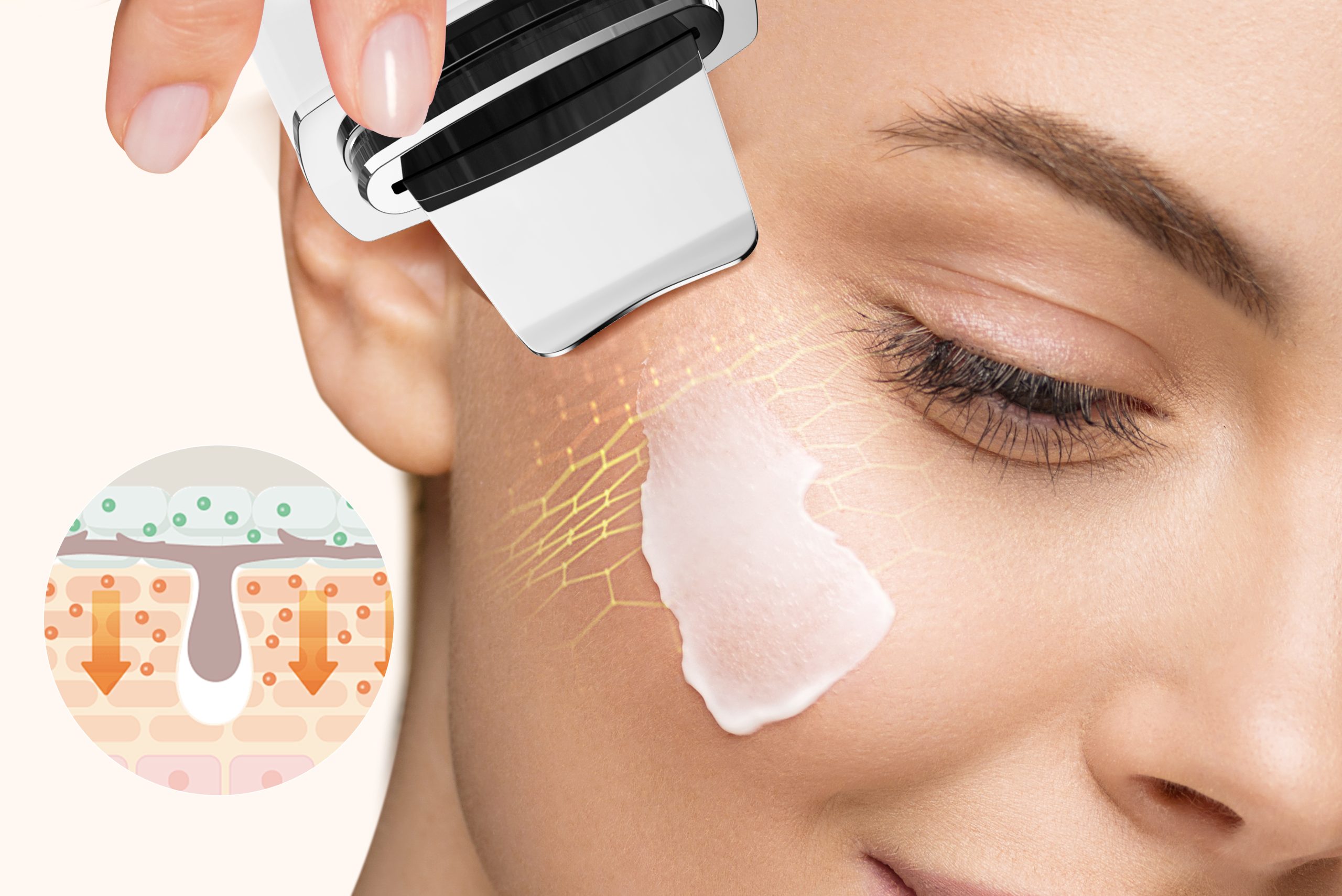
Le Medicube Age-R Booster Pro occupe la première place de notre classement 2026 pour une raison que aucune autre catégorie d’appareils ne traite aussi directement : il amplifie de manière spectaculaire l’efficacité de votre routine de soins de la peau existante. En utilisant l’électroporation — des champs électriques pulsés qui créent temporairement des canaux aqueux (pores) dans la bicouche lipidique des membranes cellulaires de la peau — il augmente l’absorption transdermique des ingrédients actifs jusqu’à 20 fois plus qu’une application topique passive, selon des recherches par électroporation évaluées par des pairs publiées dans des revues de dermatologie.
Le mécanisme est précis : l’appareil délivre de courtes impulsions à haute tension (d’une durée de microsecondes à millisecondes) qui perturbent transientement l’intégrité de la membrane sans causer de dommages thermiques. Cela crée une fenêtre — généralement 30 à 60 secondes par zone de traitement — où l’acide hyaluronique, les peptides, la vitamine C et les facteurs de croissance pénètrent dans l’épiderme viable et le derme superficiel plutôt que de rester sur le stratum corneum.

Technologie
Électroporation + Microcourant + LED
Idéal pour
Absorption du sérum, peau de verre, éclat
Temps de session
5–10 minutes
Échéancier des résultats
Visible en 2–4 semaines
Points forts
- Multiplie considérablement l'investissement dans les soins de la peau
- Trois technologies en un seul protocole
- Courbe d'apprentissage technique minimale
- Compatible avec tous les tons de peau
Limitations
- À éviter avec un rétinol actif (l'électroporation + rétinol peut provoquer une irritation)
- Nécessite des sérums compatibles pour des résultats optimaux
- Pas idéal en tant que dispositif anti-âge autonome
Note de compatibilité : Ne pas utiliser l'électroporation immédiatement après l'application d'AHA, BHA ou rétinol. Une pénétration accrue de ces acides peut provoquer une irritation importante. Utiliser avec des sérums à l'acide hyaluronique, à la niacinamide ou aux peptides pour de meilleurs résultats.
2. ZIIP HALO 2.0
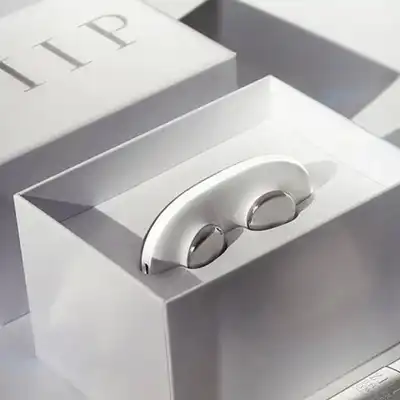
Le ZIIP HALO 2.0 est l'un des appareils grand public les plus sophistiqués sur le marché car il délivre nanocourant — courants mesurés en milliardièmes d'ampère (nA) — en plus du microcourant standard (μA). Le nanocourant agit au niveau cellulaire, en dessous du seuil de stimulation neuromusculaire, ce qui signifie qu'il ne produit aucune sensation de contraction musculaire tout en influençant directement l'activité des fibroblastes et la fonction mitochondriale. Cette approche à double courant est ce qui différencie le ZIIP de la plupart de ses concurrents : il entraîne les muscles (microcourant) tout en rechargeant simultanément les systèmes énergétiques cellulaires (nanocourant).
Le HALO 2.0 se connecte à l'application ZIIP, qui propose des “ séquences ” électriques — des protocoles d'ondes préprogrammés conçus par des esthéticiennes pour des préoccupations spécifiques : définition de la mâchoire, lifting du contour des yeux, élévation des sourcils et réduction des plis nasogéniens. Ce n'est pas une simple astuce ; varier la fréquence, la largeur d'impulsion et la polarité du microcourant durant une séance est la façon dont les esthéticiennes professionnelles adaptent les traitements, et ZIIP digitalise cette expertise.
Technologie Unique
Double mode Nanocourant + Microcourant
Contrôlé par application
Oui — séquences de l'application ZIIP
Idéal pour
Ligne de la mâchoire, ridules, raffermissement
Échéancier des résultats
4 à 8 semaines d'utilisation constante
Un point clé à considérer : le HALO 2.0 nécessite un gel conducteur, et ZIIP vend ses propres formulations. Les gels tiers avec la bonne viscosité et conductivité fonctionnent tout aussi bien — l'appareil ne vous lie pas électroniquement à des produits propriétaires.
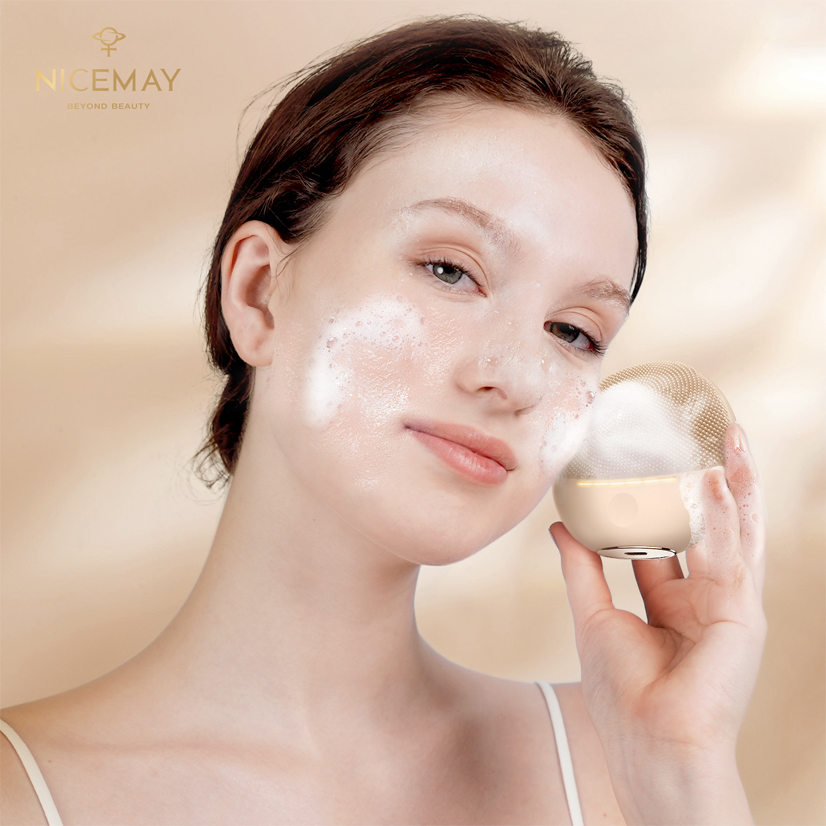
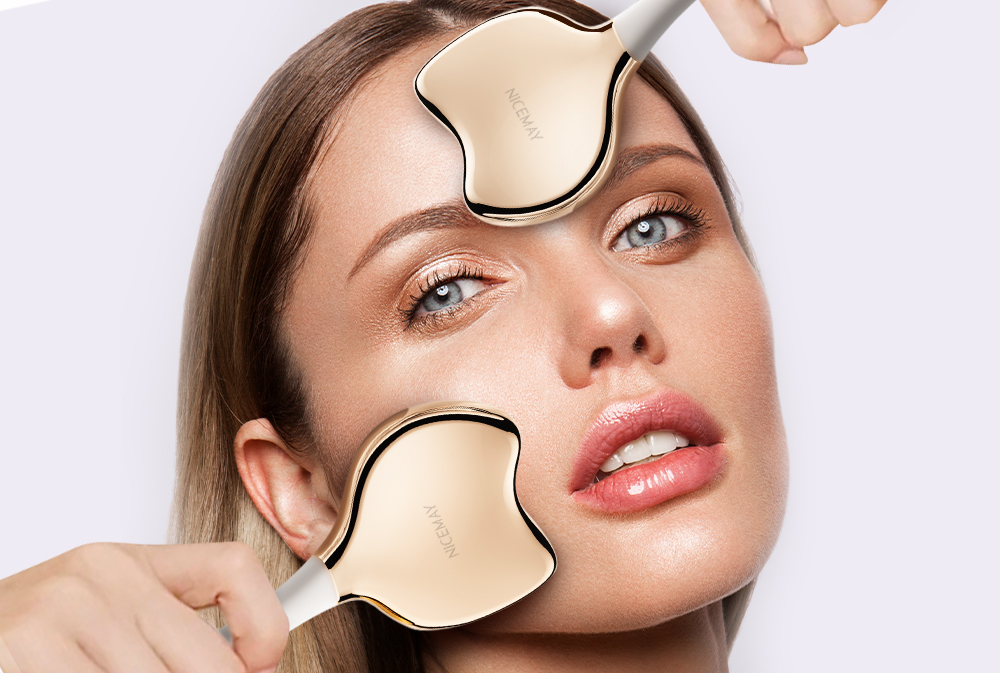
La troisième place de notre classement 2026 revient au NICEMAY MR-2319 Appareil de tonification faciale à microcourant doré — et il mérite cette position en offrant une véritable technologie de microcourant de qualité clinique dans un format et à un prix qui démocratisent l'accès à l'une des technologies les plus prouvées des soins de la peau. Dans une catégorie encombrée d'appareils qui utilisent à tort le terme “ microcourant ”, le MR-2319 se distingue par son respect de la véritable diffusion de forme d'onde biphasique et sa conception multimodale réfléchie.
La technologie derrière le MR-2319
Le NICEMAY MR-2319 délivre des microcourants de faible intensité à une fréquence et une amplitude soigneusement calibrées conçus pour stimuler les fibres nerveuses motrices des muscles faciaux sans les surstimuler. Cela produit un effet de rééducation progressive — le même principe utilisé par les physiothérapeutes du sport pour rééduquer les muscles atrophiés — appliqué aux 43 muscles du visage. Sur un cycle de traitement constant, les utilisateurs rapportent des améliorations mesurables du contour facial, de la définition de la mâchoire, du lifting des joues et de la réduction de la profondeur des plis nasogéniens.
L'appareil intègre EMS (Stimulation Électrique Musculaire) en plus des microcourants, ce qui est une distinction importante : l'EMS produit des contractions musculaires visibles pour un contouring immédiat et une meilleure circulation, tandis que le composant microcourant agit au niveau cellulaire pour reconstituer les réserves d'ATP et encourager la synthèse de collagène à long terme. La synergie entre ces deux modalités — chacune fonctionnant à différentes intensités de courant — est ce qui confère au MR-2319 son approche complète du rajeunissement facial.
Un mode intégré de thérapie par LED ajoute la photobiomodulation au protocole, permettant aux utilisateurs de suivre leur séance de sculpture par microcourant avec une luminothérapie pour améliorer le remodelage du collagène et réduire l'inflammation post-stimulation. Ce protocole trois-en-un reflète le séquençage utilisé dans les cliniques esthétiques professionnelles, où les microcourants sont fréquemment suivis par des LED pour amplifier la récupération cellulaire.

Technologie
Microcourant + EMS + LED
Forme d'onde
Biphasique (cliniquement correct)
Idéal pour
Lifting, contouring, peau flasque
Temps de session
5–15 minutes
Échéancier des résultats
Lifting visible à 4 semaines ; cumulatif à 12 semaines
Types de peau
Toutes carnations ; éviter les poussées actives
Justification clinique & résultats attendus
Études cliniques sur le microcourant biphasique — notamment la recherche publiée dans le Journal de la dermatologie clinique et esthétique — montrent des améliorations mesurables du tonus musculaire facial après 5 semaines de séances bi-hebdomadaires. Le protocole du MR-2319 s'aligne avec cette base de preuves : séances courtes et régulières de 10 à 15 minutes par zone, utilisant un gel conducteur, avec une augmentation progressive de l'intensité au cours des deux premières semaines.
Ce que j'observe systématiquement chez les utilisateurs à long terme de dispositifs microcourants bien conçus : le premier changement notable est une amélioration de la “ rebond ” de la peau et de la luminosité vers 3-4 semaines, suivi par un repositionnement visible des muscles (définition accrue des pommettes, réduction de la lourdeur de la mâchoire) entre les semaines 6 et 10. À 12 semaines, la plupart des utilisateurs âgés de 30 à 50 ans présentent des résultats comparables à une séance de microcourant professionnel par mois.
4. Kit de démarrage NuFACE Trinity+
Le NuFACE Trinity+ reste la référence en matière de microcourant — l’appareil contre lequel tous les autres sont mesurés. Son homologation par la FDA (dispositif médical de classe II) pour améliorer le contour du visage et réduire l’apparence des ridules et rides est une certification clinique importante : cela signifie que les revendications d’efficacité de NuFACE ont été examinées et validées par une autorité réglementaire, et pas seulement par des équipes marketing. Le Trinity+ fonctionne à 335μA à 0,4Hz — une sortie précisément réglée dont des études cliniques ont montré qu’elle produit des améliorations statistiquement significatives du contour des joues et du cou après 60 jours d’utilisation selon le protocole.
La principale limitation du Trinity+ par rapport à ses concurrents ZIIP et NICEMAY est la livraison en mode mono-modalité — c’est uniquement un appareil microcourant. Cela en fait l’option la plus profonde et la plus affinée en termes de protocole pour les utilisateurs dont la principale préoccupation est le lifting et le tonus du visage, mais cela signifie que vous aurez besoin d’appareils séparés pour la thérapie LED ou l’électroporation. À son prix (environ $300+), cette focalisation mono-modalité doit être prise en compte dans votre décision d’achat.

Sortie actuelle
335μA à 0,4Hz
Dégagement
Homologation FDA de classe II
Idéal pour
Protocole dédié au lifting facial
Échéancier des résultats
Protocole de 60 jours, 5 fois par semaine au début
5. Omnilux Contour Face
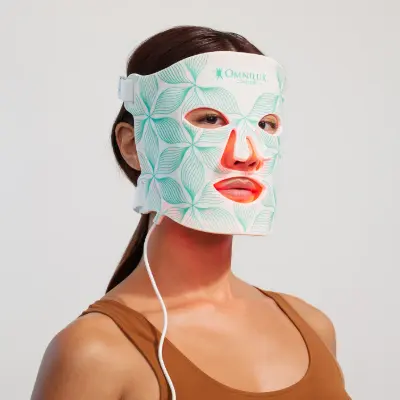
L’Omnilux Contour Face est le masque LED avec la base de preuves cliniques la plus solide sur le marché grand public. Il délivre la lumière à précisément 633nm (rouge) et 830nm (infrarouge proche) — les deux longueurs d’onde avec les recherches en photobiomodulation les plus robustes. La longueur d’onde de 633nm stimule les fibroblastes pour augmenter la synthèse de collagène et d’élastine dans le derme supérieur, tandis que celle de 830nm pénètre jusqu’au derme réticulaire et à l’hypoderme superficiel, réduisant les cytokines inflammatoires et accélérant la réparation cellulaire.
De manière cruciale, Omnilux est approuvé par la FDA pour le traitement des rides péribuccales — une autorisation spécifique, étayée par des preuves, qui le distingue de la vague de masques LED revendiquant des effets anti-âge sans soutien réglementaire. Avec une puissance calibrée pour délivrer 30+ J/cm² par séance de 10 minutes, il atteint le seuil minimum pour une photobiomodulation significative établie dans la littérature évaluée par des pairs. La construction en silicone flexible assure un contact complet avec le visage, ce qui est essentiel — les masques qui ne s’adaptent pas à la topographie faciale délivrent une irradiance incohérente.
6. Therabody TheraFace PRO
Le TheraFace PRO justifie sa place en résolvant un problème que la plupart des appareils de beauté ignorent : la tension musculaire faciale. Une tension chronique dans les muscles masséter, temporalis et frontalis contribue directement aux lignes d’expression, aux douleurs mandibulaires et à une mauvaise drainage lymphatique — aucun de ces aspects n’est traité par la LED ou la microcourant traditionnelle. L’accessoire de thérapie percussive de Therabody délivre 1 750 à 2 400 PPM (percussions par minute) avec une amplitude contrôlée de 2,5 mm aux muscles du visage, produisant une libération myofasciale qui dégonfle visiblement et adoucit les lignes de tension en une seule séance.
Les accessoires en microcourant et en anneau LED permettent ensuite aux utilisateurs de passer du relâchement de tension à la stimulation anti-âge avec le même appareil — une séquence de protocole qui reflète ce qu’un thérapeute facial expérimenté concevrait. Le TheraFace PRO est particulièrement efficace pour les utilisateurs de plus de 40 ans souffrant de grincements de dents habituels, de maux de tête de tension chronique ou de problèmes liés à l’ATM.

7. Shark Beauty FacialPro Glow
Le FacialPro Glow occupe une catégorie technologique distincte du reste de cette liste : il s’agit fondamentalement d’un système de préparation de la peau et de livraison d’hydratation plutôt que d’un dispositif de stimulation du collagène. Son approche à 10 modes — combinant extraction par aspiration à niveaux de succion réglables, livraison de sérum par hydro-infusion, thérapie chaude (42°C pour l’ouverture des pores et la pénétration du produit), et thérapie froide (8°C pour la vasoconstriction, la dégonflement et la fixation du sérum) — traite la qualité de la peau au niveau de la surface et des pores.
En termes d’analyse clinique de la peau, cet appareil excelle à améliorer l’aspect des filaments sébacés, la réduction des comédons, la profondeur d’hydratation et la luminosité immédiate. Il ne stimule pas la synthèse de collagène ni ne produit de remodelage au niveau tissulaire. Cela en fait un appareil complémentaire excellent lorsqu’il est combiné avec un outil microcourant ou RF, mais il ne doit pas être considéré comme un investissement anti-âge autonome si votre principale préoccupation concerne les rides profondes ou un relâchement important.

8. Masque de luminothérapie LED pour le visage CurrentBody Skin
Le masque LED CurrentBody Skin bénéficie de recommandations solides de la part de dermatologues pour une raison précise : une précision de longueur d’onde de niveau clinique à un prix relativement accessible. Sa sortie de lumière rouge à 633 nm est bien dans la fenêtre thérapeutique pour la stimulation des fibroblastes, et la construction en silicone médical flexible permet une conformité faciale nécessaire pour une irradiance cohérente sur les joues, le front et le menton — zones où les masques rigides sous-performent systématiquement.
La principale limitation est la délivrance d’une seule longueur d’onde. Sans la composante infrarouge proche à 830 nm présente dans l’Omnilux, sa profondeur de pénétration est limitée au derme superficiel. Pour les utilisateurs de moins de 35 ans avec des premières ridules et des préoccupations de texture, cela suffit entièrement. Pour les utilisateurs de plus de 40 ans avec des rides plus profondes et un photoaging important, il est conseillé d’associer ce masque à un outil infrarouge proche ou de passer à l’Omnilux. À 10 minutes par séance, 3 à 5 fois par semaine, les utilisateurs constatent généralement une amélioration mesurable de la texture dans 6 à 8 semaines basé sur les données d’études cliniques financées par CurrentBody et des essais indépendants.

9. NIRA Pro Laser Anti-Âge
Le NIRA Pro déploie un laser diode non-fractionné de 1440 nm — une longueur d’onde spécifiquement absorbée par les molécules d’eau dans le tissu dermique. Cette absorption produit un chauffage contrôlé et diffus du derme qui déclenche la cascade de cicatrisation : le collagène existant se contracte (serrage immédiat) et les fibroblastes sont recrutés pour produire du nouveau collagène sur 60 à 90 jours. Contrairement aux lasers fractionnés, qui ablatent des colonnes de tissu, la livraison non fractionnée chauffe le tissu de manière uniforme, ce qui signifie zéro temps d’arrêt et aucune disruption de la surface — mais cela nécessite également plus de séances pour obtenir des résultats équivalents à un traitement en clinique.
NIRA recommande des séances quotidiennes de 3 minutes par zone de traitement — un protocole exceptionnellement fréquent qui reflète la fluence plus faible (énergie par unité de surface) d’un laser domestique sûr par rapport à un appareil clinique. Le respect de ce protocole quotidien est non négociable : les utilisateurs qui traitent 3 à 4 fois par semaine plutôt que quotidiennement rapportent systématiquement des résultats décevants car la dose de chaleur cumulative n’atteint jamais le seuil pour une synthèse significative de nouveau collagène. Voir notre revue dédiée : Top 10 des meilleurs appareils de rajeunissement de la peau à domicile en 2026 pour une analyse complète de la catégorie laser.

10. LYMA Laser PRO
Le LYMA Laser PRO est l’appareil domestique le plus ambitieux techniquement de cette liste, et son prix supérieur à 2000 £ reflète à la fois son ingénierie et sa niche. Il délivre 500 mW de lumière laser cohérente infrarouge proche de 1064 nm via une pointe de diffusion brevetée qui convertit le faisceau cohérent en photons sûrs et dispersés — éliminant le risque d’ablation tissulaire d’un laser focalisé tout en conservant l’avantage de pénétration profonde. À 1064 nm, la lumière pénètre au-delà du derme dans l’hypoderme, stimulant les fibroblastes, les adipocytes et les cellules immunitaires à une profondeur qu’aucun dispositif LED ne peut atteindre.
La thérapie au laser de faible niveau (LLLT) à cette longueur d’onde a été étudiée dans plus de 4 000 articles évalués par des pairs dans les domaines de la cicatrisation, de la réduction de l’inflammation et de la synthèse de collagène. Le LYMA représente le premier appareil grand public à apporter la lumière cohérente de 1064 nm à usage domestique dans un format sûr, enregistré par la FDA. Pour les utilisateurs souffrant de vieillissement structurel profond, de perte significative de collagène ou de besoins de réparation cutanée post-procédure, le LYMA Laser PRO est unique en son genre. Pour ceux dont la préoccupation concerne la texture de surface ou les lignes légères, des options LED à coût inférieur offrent des résultats équivalents à cette profondeur tissulaire.

Les 5 technologies clés expliquées — avec paramètres cliniques
Comprendre la physique et la biologie derrière chaque technologie fait la différence entre un achat stratégique et des conjectures coûteuses. Voici les cinq technologies représentées dans cette liste, avec les paramètres techniques qui différencient une mise en œuvre efficace d’une mise en œuvre inefficace.
| TECHNOLOGIE | MÉCANISME | PARAMÈTRE CLINIQUE CLÉ | DÉLAI DES RÉSULTATS ATTENDUS | SIGNAUX D’ALERTE |
|---|---|---|---|---|
| Microcourant | Synthèse d’ATP, rééducation musculaire via stimulation bioélectrique | 10–600µA, forme d’onde biphasique requise | 4–12 semaines, 3–5 fois/semaine | Courant monophasique ; aucune spécification de forme d'onde |
| LED Rouge/NIR | Photobiomodulation, activation des fibroblastes, synthèse de collagène | 630–660nm (rouge), 830nm (NIR) ; dose ≥3 J/cm² | 6–12 semaines, 3–5 fois/semaine | LED à large spectre ; aucune longueur d'onde spécifiée |
| Électroporation | Perturbation transitoire de la membrane cellulaire pour la pénétration des ingrédients | Impulsions haute tension en microsecondes, gel requis | Stimulation immédiate du sérum ; cumulative à 8 semaines | Utilisation avec rétinol/acides sans guidance |
| Laser (LLLT/Non-frac) | Distribution cohérente de photons pour le remodelage profond des tissus | 1064nm (LLLT) ou 1440nm (non-frac) ; calibration de la fluence | 8–16 semaines selon le protocole | Aucune inscription à la FDA ; aucune puissance de sortie indiquée |
| Percussif / Thermique | Libération myofasciale, stimulation lymphatique, conductance thermique | Amplitude de 2–3mm, maximum 42°C chaud / 8°C froid | Décongestion immédiate ; tonification à 4–6 semaines | Extrêmes de température au-dessus de 45°C à la surface de la peau |
Pour les utilisateurs principalement préoccupés par les signes de vieillissement — peau flasque, rides profondes et perte de fermeté — notre guide complet couvre des solutions éprouvées pour tous les groupes d'âge : Meilleurs appareils anti-âge à domicile de 2026.
Comment choisir le bon appareil pour votre problème de peau ?
L'erreur d'achat la plus courante que je vois est l'achat d'un appareil basé sur la reconnaissance de la marque plutôt que sur l'adéquation de la technologie au problème biologique spécifique à traiter. Utilisez ce cadre de décision pour identifier la catégorie d'appareil — ou la combinaison — qui correspond à votre situation.
Préoccupation principale : Flétrissement et perte de définition
La microcourant est votre technologie de base. Commencez avec le NICEMAY MR-2319 ou NuFACE Trinity+ pour la rééducation musculaire. Ajoutez une LED infrarouge après 8 semaines pour un soutien plus profond du collagène
Préoccupation principale : Rides fines et texture
La lumière rouge LED (633nm) est le premier choix basé sur des preuves. Omnilux Contour ou CurrentBody Skin Mask. Combinez avec l'électroporation pour une livraison de sérum ultra-efficace après le nettoyage.
Préoccupation principale : Peau terne et absorption
L'électroporation est votre priorité — le Medicube Age-R Booster Pro maximise chaque investissement en sérum. Ajoutez une LED 2 à 3 fois par semaine pour un soutien continu du collagène.
Préoccupation principale : Rides profondes (40+)
La technologie laser ou infrarouge proche (830nm) est nécessaire pour la profondeur de pénétration que votre problème exige. LYMA Laser PRO pour une profondeur maximale ; NIRA Pro pour une entrée laser économique.
Préoccupation principale : Acné + Vieillissement
Le Dr. Dennis Gross SpectraLite FaceWare Pro est la seule option à double usage certifiée FDA. La lumière bleue cible les bactéries ; la lumière rouge cible le collagène en une même séance de 3 minutes.
Protocole complet offrant le meilleur rapport qualité-prix
NICEMAY MR-2319 (microcourant + EMS + LED) offre trois modalités pour le prix d'un seul appareil à technologie unique — le meilleur rapport technologie-prix de cette liste.
Cadre de sécurité : Ce qu'il faut savoir avant d'acheter un appareil de beauté
La FDA réglemente les appareils de soin de la peau électriques comme des dispositifs médicaux — mais le niveau de contrôle varie énormément selon la classe de l'appareil. Comprendre ce cadre vous protège d'acheter des appareils avec des revendications d'efficacité non validées ou de véritables risques pour la sécurité.
Classification des dispositifs FDA pour les appareils de beauté
Classe I : Contrôles généraux uniquement (par exemple, massagers cosmétiques de base). Surveillance réglementaire minimale. Classe II: Contrôles spéciaux requis — cela inclut la plupart des masques LED, des dispositifs à microcourant et des appareils laser avec une efficacité démontrée. La validation 510(k) de la FDA signifie que l'appareil a été examiné pour une équivalence substantielle à un appareil précédemment homologué. Classe III : Approbation préalable à la commercialisation (PMA) — le niveau le plus élevé, réservé aux dispositifs présentant le risque le plus important. Recherchez les numéros d'homologation 510(k) de la FDA dans les spécifications de l'appareil, en particulier pour tout dispositif laser ou RF.
Compatibilité des ingrédients : La matrice que la plupart des guides manquent
L'interaction entre les ingrédients actifs des soins de la peau et les technologies des appareils est l'un des sujets de sécurité les moins rapportés dans le domaine de la beauté à domicile. Un cadre de compatibilité succinct :
Microcourant + Rétinol : Sûr lorsque le rétinol est appliqué après la séance de microcourant, pas avant. Le rétinol augmente la sensibilité cellulaire ; utiliser le microcourant après l'application de rétinol amplifie le potentiel d'irritation. Toujours faire le microcourant sur une peau propre avec uniquement du gel conducteur, puis appliquer le rétinol après la séance. LED + Tous les actifs : Le LED est la technologie la plus compatible — il n'augmente pas la pénétration des actifs mais peut amplifier la sensibilité de la peau aux ingrédients photosensibilisants (rétinoïdes, AHA) s'il est utilisé immédiatement après le LED sans laisser la peau se calmer. Électroporation + Acides : C'est la combinaison dangereuse à éviter. L'électroporation augmente considérablement la pénétration — les AHA et BHA délivrés à une profondeur doublée peuvent causer des brûlures chimiques chez les utilisateurs sensibles. N'utiliser l'électroporation qu'avec des sérums apaisants et hydratants (acide hyaluronique, niacinamide, peptides).
FAQ sur les 10 meilleurs appareils de beauté pour le rajeunissement de la peau en 2026
Puis-je utiliser mon appareil de beauté avec du rétinol dans ma routine de soins ?
Quelle est la différence entre microcourant, EMS et TENS — et lequel est le mieux pour le visage ?
Les masques faciaux à LED sont-ils réellement efficaces ou s'agit-il d'une simple stratégie marketing ?
Comment savoir si un dispositif de beauté est sûr et légitime ?
Puis-je utiliser plusieurs dispositifs de beauté en combinaison ?
Veuillez remplir votre adresse e-mail dans le formulaire et nous reviendrons vers vous pour vous aider rapidement !