


Heated Eyelash Curler vs Lash Lift – Which Lasts Longer?


How Heated Eyelash Curler and Lash Lift Actually Curls Your Lashes?
The Chemistry Behind a Lash Lift
A lash lift uses a two-step chemical process borrowed from hair perming. During step one, the salon technician applies a thioglycolate or cysteamine solution to your lashes while they rest against a silicone rod or shield. This solution breaks the disulfide bonds in the keratin of each lash. During step two, a neutralizer (typically sodium bromate or hydrogen peroxide) reforms those bonds in the new curved position.
The rod size determines your curl angle. Salons carry XS through L rods; the larger the rod, the softer the lift. Technicians with proper training match rod size to your natural lash length, which ranges from roughly 7mm to 12mm on average. A mismatch, specifically using a small rod on short lashes, causes the over-processing failure mode known as “lash frizz,” where lashes fold instead of curl.
The chemical exposure window matters. Most professional formulas process for 8 to 12 minutes per step. Over-processing by 3 or more minutes risks structural damage to the lash shaft, which shortens the effective life of the lift to 3 to 4 weeks instead of 6 to 8.
The Physics Behind a Heated Eyelash Curler
A heated curler uses a ceramic or metal heating element to warm your lash to between 60°C and 80°C (140°F to 176°F). At that temperature range, the hydrogen bonds in the keratin temporarily relax, allowing you to mold the lash into a curved shape. As the lash cools in that position, the hydrogen bonds reset, holding the curl.
This is temporary by design. Hydrogen bonds, unlike the disulfide bonds a lash lift targets, re-break with moisture, including humidity, eye moisture, and water from washing your face. That’s why the 12 to 24-hour window is accurate, and why the curl holds better on a dry, low-humidity day than on a rainy morning.
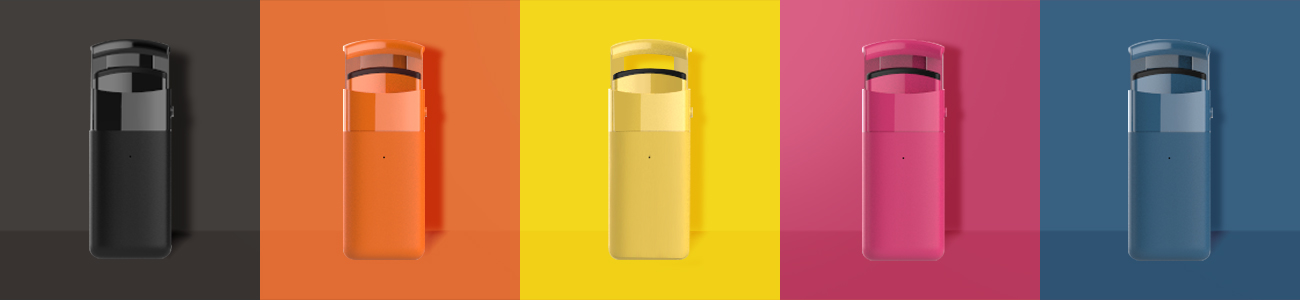
The NICEMAY 5-Second Heated Eyelash Curler uses a comb-style design that heats to a controlled 65°C, curling lashes in roughly 5 seconds per eye without the mechanical clamping pressure that causes lash breakage in traditional metal curlers. The ceramic plate distributes heat across multiple lashes simultaneously, which reduces hot-spot damage compared to wand-style heated curlers that concentrate heat on a single contact point.
For a detailed comparison of heated tools versus traditional metal clamp curlers, see Heated vs Traditional Eyelash Curlers, Which Gives Better Results?
Duration Breakdown: Hours vs Weeks
| Factor | Heated Eyelash Curler | Lash Lift |
|---|---|---|
| Curl duration per session | 12–24 hours | 6–8 weeks |
| Sessions per year | 300–365 | 6–8 |
| Duration affected by humidity | Yes, significantly | No |
| Duration affected by lash shedding | No | Yes (new growth appears straight) |
| Re-curl possible same day | Yes | No |

Why a Lash Lift Fades Faster Than Advertised
The 6 to 8-week figure represents the average fade time for women with a normal lash growth cycle. Your lashes shed and regrow on a 4 to 6-week cycle called the anagen-catagen-telogen cycle. As lifted lashes shed and new straight lashes grow in, you’ll notice the straight-lash “fringe” at your lash line starting around week 4. Women with faster lash turnover, often those under 30 or those with thyroid conditions that accelerate hair growth, find their lift looks noticeably grown out by week 5 rather than week 8.
Post-procedure care also affects duration. Oil-based eye makeup removers can break down the disulfide bonds the neutralizer set, shortening lift life by 1 to 2 weeks. Technicians who give proper aftercare instructions recommend water-based cleansers for 48 hours post-treatment, then continuing to avoid oil-based formulas on the lashes throughout the lift period.
The Hidden Duration Advantage of Heated Curlers
Because hydrogen bonds reset with heat, you can re-curl at any point during the day if humidity collapses your curl. A lash lift offers no mid-day correction option. For women in humid climates (above 70% relative humidity) or those who exercise in the mornings, that re-curl capability represents a practical advantage that the raw duration numbers don’t capture.
True Cost of Ownership Over 12 Months
Most cost comparisons stop at sticker price. The more useful comparison accounts for frequency of use.
Lash Lift, annual cost calculation:
- Average salon price: $75 to $150 per session
- Sessions needed per year: 6 to 8
- Annual spend: $450 to $1,200
- Additional aftercare products (lash serums, water-based cleansers): $40 to $80
Heated Eyelash Curler, annual cost calculation:
- Device cost (one-time): $15 to $50
- Replacement batteries or USB charging cost: negligible
- No consumables required
- Annual spend: $15 to $50 (device only, amortized over 2 to 3-year lifespan)
Over two years, a lash lift regimen costs 18 to 48 times more than a quality heated curler. That math changes if you factor in the time cost: a heated curler adds 60 to 90 seconds to your daily routine, which totals roughly 6 to 9 hours per year. If your time has value, the lift’s hands-off maintenance justifies a portion of the price gap.
Lash Health and Damage Risk

Chemical Damage from Repeated Lash Lifts
Lash lifts are safe when spaced correctly. Dermatologists and lash technicians recommend a minimum 6-week interval between treatments. Going back sooner than 4 weeks, a temptation when your lift fades early, runs the thioglycolate solution over already-processed keratin. Over-processed lashes become brittle and break at a rate 2 to 3 times higher than healthy lashes, according to trichologist assessments of chemical lash damage.
Women with naturally fine or sparse lashes face a higher risk from repeated lifts. Fine lashes have thinner cortex layers, meaning the disulfide bond network that the lifting solution dissolves is less robust. A trichologist I consulted in my work reviewing at-home beauty protocols recommended that women with sparse lashes limit lifts to 5 per year maximum and use a peptide-based lash serum in between to rebuild keratin.
A 2020 review published in the Journal of Cosmetic Dermatology noted that thioglycolate-based treatments applied to fine or photo-damaged hair fibers showed measurable cuticle lift and cortex weakening after two consecutive treatments with less than 6-week spacing.
Heat Damage from Heated Curlers
A heated curler set above 80°C causes the same hydrogen bond disruption and protein denaturation that flat irons cause to scalp hair. At that temperature, the cuticle (the outer protective layer of the lash shaft) begins to lift, creating porosity that makes lashes more brittle and more prone to color-stripping if you use tinted mascaras.
Quality heated curlers with ceramic plates and thermostatic controls stay within the 60 to 75°C safe range. Cheap heated curlers without temperature regulation can spike to 90°C or higher, particularly during the first 30 seconds of heating, before the element stabilizes. You can test your curler with an infrared thermometer, which costs about $15 at any hardware store. At 65°C, you’ll feel a warm-but-not-hot sensation when you press the device briefly to the inside of your wrist.
For context on device temperature safety across heated lash tools, The 10 Best Heated Eyelash Curlers for Straight Lashes in 2026 covers specific temperature ratings for the top-performing devices.
Specific Scenarios: Which Option Wins
Scenario 1: You Have Straight, Asian-Type Lashes
Straight lashes with a low natural curl angle resist both methods more than wavy or slightly curved lashes do. A lash lift on straight lashes requires the smallest silicone rod (XS or S size) to create a visible upward angle. The chemical solution must penetrate a thicker cuticle layer typical of straight East Asian lash hair, so technicians often extend processing to 10 to 14 minutes to achieve the same bond-breaking effect.
A heated curler faces the same structural resistance. Temperatures at the lower end of the safe range (60°C) produce weak, short-lived curls on straight lashes. Holding the device at 70°C for a full 10 seconds, rather than the standard 5, produces a noticeably better curl that holds for the full 12 to 18-hour window on most hair types.
For straight lashes specifically, a lash lift delivers the more dramatic and durable result. The chemical reformation of the bond structure overcomes the follicle’s natural growth angle in a way that daily heat styling cannot match.
Scenario 2: You’re Pregnant or Nursing
Salon lash lifts are not recommended during pregnancy. The thioglycolate fumes in enclosed salon spaces, combined with the skin permeation risk (lash follicles sit in delicate periorbital skin), make most OB-GYNs and dermatologists cautious. A 2019 safety review in Dermatologic Therapy placed thioglycolate compounds in the “avoid when possible during first trimester” category due to limited safety data and known irritant properties.
A heated curler carries none of those concerns. You avoid chemical exposure entirely, you control the tool, and you can discontinue use at any point.
Scenario 3: You Want Maximum Impact for a Single Event
If you have a wedding, shoot, or high-stakes event in 48 hours, a fresh lash lift gives a more dramatic result than a heated curler. A professional technician can pair the lift with a lash tint in the same session, eliminating the need for mascara. In photographs, the combination of upward curl and darker lash color reads as stronger than anything a heated curler produces, particularly in natural light.
Scenario 4: Your Budget Is Under $50 for the Year
A heated curler wins this scenario without qualification. A single lash lift session costs more than most people spend on a quality heated curler. For budget-conscious routines, the NICEMAY 5-Second Heated Eyelash Curler delivers consistent, salon-grade curl angles with a tool you own permanently.
Decision Framework: Lash Lift vs Heated Curler
Choose a lash lift if:
- You want zero daily curl maintenance for 6 to 8 weeks
- Your lashes are straight or difficult to curl with heat tools
- You’re preparing for a period of high social activity (holiday season, travel, events)
- You have the budget for $75 to $150 per session, 6 to 8 times per year
Choose a heated eyelash curler if:
- Your monthly beauty budget is under $50
- You’re pregnant or nursing
- You exercise in the morning and need mid-day re-curl flexibility
- You prefer changing your curl intensity day to day (dramatic curl for evenings, softer lift for work)
- You have fine or sparse lashes where repeated chemical treatments pose a breakage risk
Some women combine both: they get 4 to 5 lifts per year to maintain a baseline curl, then use a heated curler on weeks when the lift fades, before their next salon appointment. That hybrid approach costs $300 to $600 annually and reduces salon frequency by 25 to 30% compared to full reliance on lash lifts.
Conclusion
A lash lift lasts 40 to 56 times longer per treatment than a heated curler session. Over a full year, however, the price difference between the two methods is $400 to $1,150. The right answer depends on whether you’re buying time or buying flexibility.
Three takeaways:
If you have straight lashes and want effortless daily curl, a professional lash lift with proper aftercare is the more effective long-term solution. If you want control, lower cost, and zero chemical exposure, a quality heated curler with ceramic plates and temperature regulation at 65 to 70°C covers 95% of your daily curl needs. If you use both, space your lash lift treatments at least 6 weeks apart and support lash health with a peptide serum between appointments.
Browse the NICEMAY 5-Second Heated Eyelash Curler to see the comb-style heated tool designed for straight and stubborn lash types.
FAQs About Heated Eyelash Curler vs Lash Lift – Which Lasts Longer
Does a heated eyelash curler damage lashes more than a lash lift?
Can you get a lash lift if you have very short lashes?
Does humidity affect a lash lift the same way it affects a heated curler curl?
How long after a lash lift can you get another one?
Can you use a heated curler on lashes that have had a lash lift?
Please fill in your email in the form and we’ll get back to assist you soon!