


How Does a Facial Cleansing Brush Work?

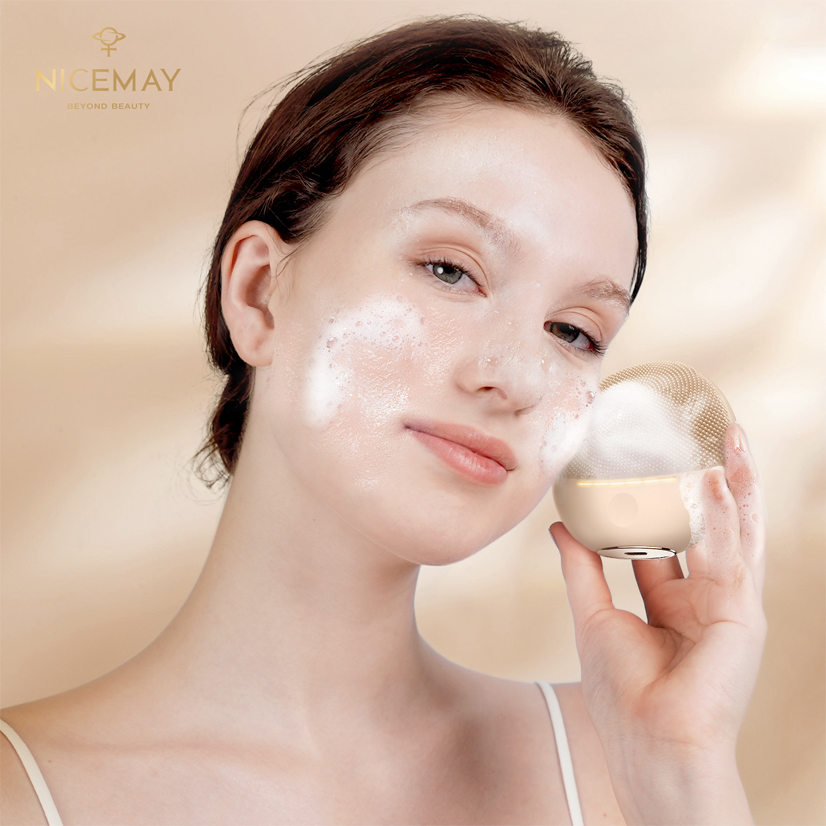
A facial cleansing brush works by using mechanical motion—whether sonic vibrations, rotational movement, or oscillating pulsations—to dislodge dirt, excess oil, and dead skin cells far more effectively than manual cleansing alone. The controlled friction created by bristles or silicone touchpoints gently exfoliates the skin’s surface, clears congested pores, and boosts circulation for a visibly brighter, healthier complexion.

The Core Science: How a Facial Cleansing Brush Actually Cleanses
Mechanical Exfoliation: Removing the Invisible Buildup
The primary mechanism behind any facial cleansing brush is mechanical exfoliation. The brush head—whether fitted with soft nylon bristles or silicone nubs—creates a controlled friction force across the stratum corneum (the outermost skin layer). This friction works in two important ways:
- Physical lift: The motion physically lifts and sweeps away corneocytes—dead skin cells that accumulate on the surface and contribute to dullness, rough texture, and clogged pores.
- Cohesion disruption: Dead cells are held together by intercellular lipids. The repetitive mechanical action helps break those bonds more thoroughly than fingertip rubbing, which typically lacks consistent pressure and direction.
The result is accelerated cell turnover, which supports a smoother skin texture and a more even tone over time.
Deep Pore Cleansing: Reaching Where Hands Cannot
Human pores are, on average, between 0.02–0.05 mm in diameter. Fingertips are incapable of generating the localized, focused pressure needed to dislodge the mixture of sebum, environmental pollutants, and cosmetic residue that settles within them. A facial cleansing brush addresses this limitation through two mechanisms:
- Directional fluid dynamics: The motion of bristles or silicone tips draws cleanser down into pore openings and back out again, flushing trapped debris in a way that static cleansing cannot replicate.
- Emulsification support: Mechanical agitation helps the surfactants in your cleanser bind more efficiently to oil-based impurities, including stubborn makeup and sunscreen, before rinsing.
Microcirculation Stimulation: The Glow Factor
Beyond cleansing, the massaging action of a powered brush stimulates superficial blood flow. Improved microcirculation delivers oxygen and nutrients to skin cells more efficiently, which can reduce puffiness, lend the skin a natural flush, and support overall cellular health. This is why regular use of a facial cleansing brush is often associated with a brighter, more luminous complexion—it isn’t just about surface cleanliness, but about activating the skin’s own regenerative processes.

Facial Cleansing Brush Technologies Explained
Sonic Vibration
Generates 200–300+ micro-pulses per second. The rapid oscillations loosen debris without aggressive scrubbing—ideal for sensitive skin types.
Rotational Motion
The brush head spins continuously in one direction. Effective for thorough mechanical exfoliation; best suited for normal to oily, non-reactive skin.
Oscillation
The brush alternates between clockwise and counter-clockwise rotation. Reduces net friction, making it gentler while still delivering a thorough cleanse.
Pulsation + Vibration
Combines rhythmic pulsing with sonic vibrations for a dual-action clean. Found in premium models targeting both surface exfoliation and pore flushing simultaneously.
Sonic Technology: The Most Clinically Studied Approach
Facial Cleansing Brush Head Types: Bristle vs. Silicone
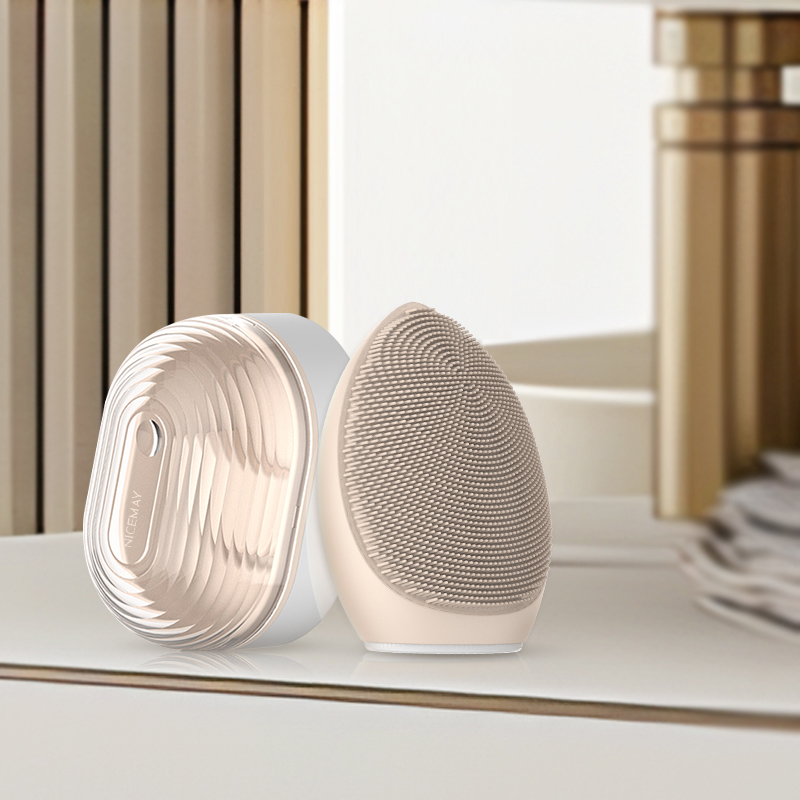
The material and design of the brush head fundamentally changes how a device interacts with skin. Both bristle and silicone heads have distinct mechanical properties that affect cleansing depth, hygiene, durability, and suitability for different skin types.
| Feature | Bristle Head | Silicone Head |
|---|---|---|
| Primary Motion | Rotation or oscillation | Sonic vibration / pulsation |
| Exfoliation Depth | Moderate to deep | Gentle to moderate |
| Hygiene | Requires regular replacement; harbors bacteria over time | Non-porous; easily sanitized; longer lifespan |
| Best Skin Types | Normal, combination, oily | Sensitive, reactive, acne-prone |
| Skin Barrier Impact | Higher risk if overused | Lower risk; generally barrier-safe with correct use |
| Product Integration | Works with most cleansers | Works with most cleansers; especially effective with gel formulas |
Choosing between these two brush head types is one of the most important decisions when selecting a device. For a detailed, evidence-based breakdown of each option and expert guidance on which is right for your skin, read our comprehensive guide: Silicone vs. Bristle Facial Cleansing Brush: Which Is Better?
MR-2369

MR-2631

MR-2269
What Happens to Your Skin During and After Each Use?
Understanding the physiological sequence during a cleansing brush session helps contextualize why correct technique and frequency matter so much.
Phase 1: Emulsification (0–30 Seconds)
As the brush begins moving across skin loaded with cleanser, the mechanical agitation immediately begins breaking down the surface film of sebum, SPF, and environmental particulates. The brush motion accelerates the emulsification process—transforming oil-based impurities into fine droplets that the cleanser’s surfactants can carry away during rinsing.
Phase 2: Exfoliation and Pore Flushing (30–90 Seconds)
With continued passes, the brush targets the stratum corneum. Dead cells with weakened cohesion are swept away, and the directional fluid movement driven by the brush head draws cleanser into pore openings before expelling it—along with trapped sebum and debris. Microcirculation in the superficial dermis begins to increase in response to the tactile stimulation.
Phase 3: Post-Cleanse Skin Response
Immediately after use, skin may appear slightly flushed—a normal vascular response to increased blood flow. This resolves within minutes. The skin surface is left temporarily more permeable, which has a significant practical implication: any serum or treatment product applied within the next 2–3 minutes will penetrate more effectively, making post-brush skincare application an ideal sequencing strategy.
Clinical Note
Studies have found that cleansing brush use prior to applying topical treatments—such as vitamin C serums or retinoids—can increase absorption rates meaningfully. However, for potent actives like tretinoin or high-concentration AHAs, the increased permeability may also heighten irritation risk. Always introduce potent treatments with caution on brush-cleansed skin, especially during the first weeks of use.
How to Use a Facial Cleansing Brush Correctly for Best Results
The efficacy and safety of a facial cleansing brush depend almost entirely on technique. Incorrect use—too much pressure, too high a frequency, or the wrong cleanser pairing—can compromise the skin barrier rather than support it.
Key Principles of Safe, Effective Brush Use
- Begin with low frequency. Start with 2–3 sessions per week and observe your skin’s response before increasing use. Even resilient skin types should complete a two-week adjustment period.
- Use zero additional pressure. The brush motor provides all the necessary force. Pressing harder doesn’t improve results—it risks micro-tearing, barrier disruption, and chronic inflammation.
- Always pair with a pH-appropriate cleanser. A gentle, sulfate-free cleanser in the pH 4.5–6.0 range is ideal. Harsh foaming cleansers combined with mechanical exfoliation can strip the acid mantle.
- Maintain the brush head meticulously. Rinse bristle or silicone heads thoroughly after every use and allow them to air-dry fully. Replace bristle heads every 3 months; silicone heads can be deep-cleaned with isopropyl alcohol monthly.
- Avoid active breakouts and compromised skin. Never use a cleansing brush over open acne lesions, sunburned skin, eczema flares, or any areas of broken skin—mechanical agitation will worsen inflammation.
Mastering the motion patterns, timing, and zone-by-zone technique of facial brush use takes practice. For a complete walkthrough with step-by-step instructions, visit our detailed tutorial: How to Use a Facial Cleansing Brush: Step-by-Step Guide
Adapting Use to Your Skin Type
Oily or Combination Skin
Typically tolerates rotational bristle brushes used up to 4–5 times per week. The deeper mechanical action helps manage excess sebum production in the T-zone and keeps pores clearer. Use a lightweight gel or foam cleanser.
Dry or Dehydrated Skin
Limit use to 2 times per week with a sonic silicone device. Prioritize a cream or hydrating gel cleanser that reinforces the lipid barrier. Follow immediately with a hydrating toner or essence to replenish moisture lost during cleansing.
Sensitive or Reactive Skin
A silicone brush on its lowest sonic setting, used just once or twice per week, is the safest starting point. Avoid use on days when you also apply chemical exfoliants (AHAs, BHAs) or retinoids. Patch test before full-face use.
Acne-Prone Skin
Approach with caution. While cleansing brushes can help clear congestion that contributes to non-inflammatory acne, they must never be used over active pustules or nodules. Silicone sonic devices are preferable; pair with a salicylic acid cleanser for maximum pore-clearing benefit.
Common Misconceptions About How Facial Cleansing Brushes Work
“Harder Pressure Means a Deeper Clean”
This is the most prevalent and potentially harmful misconception. The cleaning efficacy of a powered brush comes from the frequency of micro-movements generated by its motor—not from the manual pressure applied. Pressing a brush hard into skin compresses the bristle or silicone tips and actually reduces their range of motion, diminishing effectiveness while simultaneously increasing the risk of irritation and barrier compromise.
“A Facial Cleansing Brush Replaces Exfoliating Scrubs”
While a cleansing brush does provide mechanical exfoliation, it is a gentler, more controlled form than traditional physical scrubs with abrasive particles. Most dermatologists recommend treating brush use as a complement to a broader skincare routine rather than a complete substitute. Chemical exfoliants (such as lactic acid or polyhydroxy acids) address cell turnover at a deeper biological level that mechanical exfoliation alone cannot replicate.
“Daily Use Is Better”
Frequency should be calibrated to your skin type and the specific device you use—not maximized. Daily mechanical exfoliation disrupts the skin barrier’s natural repair cycle, which operates on a roughly 28-day keratinocyte turnover schedule. Over-exfoliation leads to chronic sensitization, increased transepidermal water loss (TEWL), and, paradoxically, more visible pores due to inflammation.
FAQs About How Does a Facial Cleansing Brush Work?
Can a facial cleansing brush help with blackheads?
Is it safe to use a facial cleansing brush every day?
Do facial cleansing brushes actually make a difference compared to washing by hand?
Can I use a facial cleansing brush if I have rosacea?
How do I know when to replace my brush head?


Please fill in your email in the form and we’ll get back to assist you soon!