


How to Choose Between a Wired and Wireless LED Mask for Your Lifestyle?


Wired vs Wireless LED Masks: The Core Technical Difference
The real distinction isn’t just “plug vs battery” — it’s power delivery consistency. Wired masks draw directly from mains electricity (100-240V depending on region), which means the LED diodes receive a stable, unfluctuating current for the entire session. Wireless masks rely on a lithium-ion battery (typically 1000-3000mAh), and battery output naturally tapers as charge depletes — meaning the last few minutes of a 20-minute wireless session may deliver 10-15% less optical power than the first few minutes.
For casual maintenance use, this dip is negligible. For users chasing measurable anti-aging or acne outcomes, it matters more than most product pages admit.
| Factor | Wired | Wireless |
|---|---|---|
| Power consistency | Stable throughout session | Tapers as battery drains |
| Mobility | Tethered to outlet (≈6 ft) | Fully mobile |
| Travel | Needs voltage converter abroad | Plug-and-go, TSA-friendly |
| Long-term cost | No battery replacement | Battery degrades ~20% capacity after 300-500 charge cycles |
A mistake I see too often: clients buy a wireless mask for travel, then complain after 8 months that “it doesn’t work like it used to.” Nine times out of ten, it’s battery degradation, not diode failure — a wear pattern wired devices simply don’t have. For a deeper side-by-side, see Wireless vs Wired LED Face Masks – Pros, Cons, and the Real Differences.
Who Should Choose a Wireless LED Mask?

Wireless is the right call for anyone whose skincare routine has to compete with a packed schedule. If you’re doing your 10-minute session while loading the dishwasher, answering Slack messages, or sitting on a flight, a cord isn’t just inconvenient — it’s the reason you’ll skip the treatment altogether.
Best-Fit Scenarios
- Frequent travelers who don’t want to pack a voltage converter
- Multitaskers who need both hands free during treatment
- Households with one bathroom outlet and three people competing for mirror time
The Trade-Off You’re Accepting
Battery life realistically runs 60-90 minutes per full charge on mid-range devices, enough for 4-6 sessions before a recharge. The catch is forgetting to charge it — a dead mask mid-week breaks the consistency that LED therapy depends on for visible results. In my work with hundreds of clients, the single biggest predictor of who sees results at 8 weeks isn’t the device price — it’s whether they used it on schedule without interruption.
A well-reviewed option in this category is the CurrentBody Series 2, frequently recommended for its silicone fit and even light distribution across the full face.
Who Should Choose a Wired LED Mask?

Wired is the better fit for a “homebody spa session” mindset — someone who sets aside 15-20 dedicated minutes, sits in one spot (usually in front of a TV or vanity), and wants zero variables affecting the treatment.
Why Power Stability Matters Clinically
Red light therapy works by delivering a specific energy density (measured in J/cm²) to stimulate fibroblast activity and collagen synthesis. Most clinical studies supporting LED efficacy for skin rejuvenation used consistent, calibrated irradiance — not power that fades over a session. Wired devices replicate that lab consistency more closely, which is why dermatology-grade devices used in clinics are almost always plugged in, never battery-powered.
The Trade-Off You’re Accepting
You’re constrained to within roughly six feet of an outlet, and travel requires a converter if you’re going abroad. For some users, that’s a dealbreaker. For others — particularly those targeting more clinical-grade anti-aging protocols — it’s a non-issue because the treatment happens at home, at the same time, every time.
The Omnilux Contour is often cited as a benchmark in this category for its clinical-grade output and consistent dosing.
Matching the Mask to Your Skin Goals (Not Just Your Schedule)
Lifestyle determines whether you’ll use the mask consistently. But your skin goal determines whether the mask is even worth buying in the first place — and this is where most buying guides fall short.
Wavelength Determines the Outcome, Not the Brand
- Red light (630-660nm): Penetrates roughly 5-10mm into skin, targeting fibroblasts to boost collagen and elastin — the basis for anti-aging and fine-line treatments.
- Near-infrared (830nm): Penetrates deeper, often paired with red light for inflammation and deeper tissue repair.
- Blue light (415-470nm): Targets C. acnes bacteria at the skin’s surface level — effective for active breakouts, not for wrinkles.
A common failure mode: buying a “multi-light” mask that markets seven LED colors but only delivers clinically meaningful irradiance in one or two. The other wavelengths are often decorative — present, but underpowered to do anything measurable. This is precisely why irradiance (mW/cm²) matters more than the number of colors on the spec sheet. We cover how to vet these claims in How to Evaluate Irradiance Claims When Buying an LED Mask?
A Practical Decision Framework
- Acne-prone, oily skin → Prioritize blue light wavelength accuracy (415-470nm) over LED count.
- Fine lines, dullness, early aging (late 20s-40s) → Red light (630-660nm) as primary, NIR (830nm) as a bonus.
- Deep wrinkles, lax skin (45+) → Combination red + NIR with documented irradiance above 30mW/cm² for meaningful depth penetration.
Budget, Safety Certification, and What You're Actually Paying For
Cheap LED masks (under $100) rarely include third-party safety testing, and many skip FDA Class II clearance entirely — meaning there’s no independent verification of either safety or claimed efficacy. That doesn’t mean every clearance-free device is unsafe, but it does mean you’re trusting marketing copy instead of a regulatory body.
What FDA Clearance Actually Confirms
FDA Class II clearance for LED devices typically verifies that the device meets safety thresholds for things like eye exposure limits and thermal output, and that performance claims have supporting data on file. It’s not a guarantee of dramatic results, but it filters out the devices making unsubstantiated promises.
Realistic Price Expectations
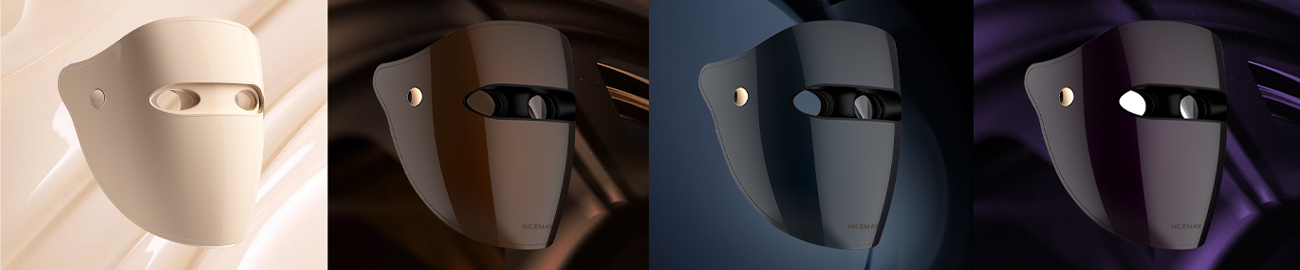
A reputable, cleared wired or wireless mask typically runs $150-$500. Devices priced near the lower end of that range — while still legitimate — often use fewer LED diodes or lower-density panels, which means longer sessions to achieve comparable energy exposure. One option worth knowing in the mid-range bracket is the NICEMAY MR-2308 Nude Beauty Pro LED Mask, which combines multiple clinically relevant wavelengths in a flexible silicone design — a reasonable middle ground for buyers who want documented wavelength specs without paying clinic-grade prices.
A Mistake That Costs Buyers Twice
Buying a cheap, uncertified mask, getting underwhelming results after 8 weeks, then buying a second (better) device anyway. Total cost of ownership ends up higher than just buying the right device the first time. Factor in replacement straps, occasional battery swaps (wireless), and electricity (negligible for wired) when comparing true cost over 2-3 years of use.
Quick Decision Checklist
- Where will you actually use it? Couch, desk, or bathroom mirror — wireless wins for mobility, wired wins for consistency.
- What’s your primary skin goal? Match wavelength to need, not LED count.
- What’s your real budget ceiling? $150-$500 for a cleared, reputable device; anything dramatically cheaper usually cuts irradiance, not just price.
- Can you commit to charging a battery, or do you prefer zero maintenance? Be honest — this single habit predicts consistency more than any spec.
Final Takeaways
The wired-vs-wireless decision isn’t about which is “better” — it’s about which one you’ll actually use three times a week for two months straight. Wireless suits multitaskers and travelers willing to manage a charging routine; wired suits homebodies who want lab-consistent power without thinking about battery life. Either way, prioritize documented wavelength accuracy and FDA clearance over flashy LED counts, and budget $150-$500 for a device built to deliver what it claims.
Ready to find your fit? Compare your daily routine against the checklist above, confirm the wavelength matches your skin goal, and choose the format — wired or wireless — that you’ll genuinely stick with long term.
FAQs About How to Choose Between a Wired and Wireless LED Mask for Your Lifestyle
Is a wireless LED mask as effective as a wired one?
How long does it take to see results from an LED mask?
Can I use retinol or acids with LED light therapy?
Do wireless LED masks lose effectiveness as the battery ages?
Is a higher number of LED lights always better?

Please fill in your email in the form and we’ll get back to assist you soon!