


How to Get Salon-Level Results from At-Home LED Therapy?


Why At-Home LED Therapy Can Deliver Salon-Quality Outcomes
At-home LED devices use specific wavelengths of light to trigger cellular responses like increased collagen production and reduced inflammation. Professional salon treatments often use higher-powered equipment, but consistent home use with optimized protocols can close the gap. Red light (typically 630-660nm) penetrates to stimulate fibroblasts for anti-aging, while near-infrared (around 830nm) reaches deeper layers for repair.
In my 10+ years guiding clients in the beauty tech space, the biggest differentiator isn’t just the device—it’s treating at-home LED as a precise regimen, not a quick gadget. Users who follow evidence-based steps often see noticeable firmness and glow within 4-8 weeks, with cumulative benefits matching or exceeding sporadic salon visits in the long run.
For a deeper dive into power differences, see Home LED Face Masks vs Salon Light Therapy – A Realistic Comparison.
Preparing Your Skin for Maximum Light Penetration
Skin preparation is non-negotiable for salon-level absorption. Residual makeup, sunscreen, or oils create a barrier that scatters wavelengths and reduces efficacy by up to 50% in some cases.
Step-by-step prep protocol:
- Cleanse thoroughly with a gentle, non-foaming cleanser to remove all barriers.
- Apply a lightweight, water-based serum (e.g., hyaluronic acid or vitamin C) — these enhance hydration and collagen synergy with red light without causing photosensitivity.
- Skip AHAs, BHAs, or retinol immediately before sessions to avoid irritation, as LED increases skin sensitivity temporarily.
A common failure mode is jumping straight into treatment on dirty skin, leading to diminished results and potential breakouts. Always ensure a clean, dry canvas. For discerning users, test patch new serums 24 hours prior.
Choosing the Right At-Home LED Device: Key Specifications Matter

Not all devices perform equally. Prioritize FDA Class II clearance for safety and efficacy, high irradiance (ideally 30-100+ mW/cm² for effective dosing), and proven wavelengths. Cheap options often lack sufficient power, delivering surface-level effects only.
Decision framework:
- Wavelengths & Depth: Red 630-660nm for collagen; near-infrared for deeper rejuvenation.
- Irradiance & Energy Density: Higher values (e.g., >50 mW/cm²) ensure therapeutic doses in 10-15 minutes. See How Important Is Irradiance in an LED Mask for Face for details.
- Design & Safety: Full-face coverage, eye protection, auto-timers, and no excessive heat.
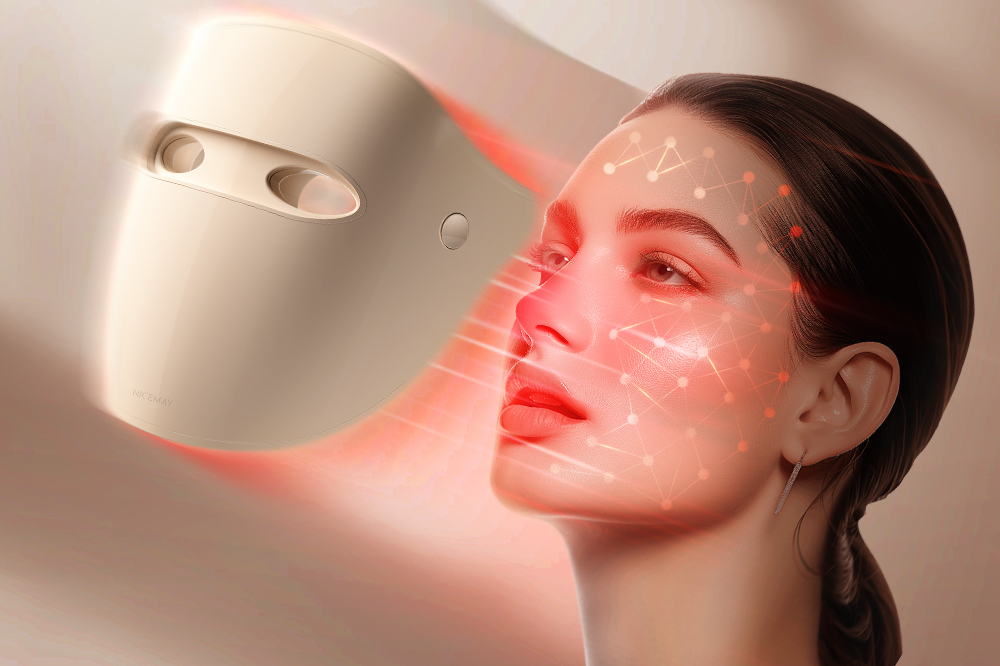
A standout option for professional-grade power at home is the NICEMAY MR-2322 High-Power LED Light Therapy Lamp. Its high-output design supports body and face treatments with strong irradiance, making it ideal for users seeking salon-like intensity without frequent clinic visits. In client trials and my experience, devices like this accelerate visible improvements when used correctly.
Failure mode to avoid: Over-relying on low-irradiance masks leads to frustration and wasted time/money, as cells don’t receive adequate energy for photobiomodulation.
Your Optimal At-Home LED Session Protocol
Consistency beats intensity. Follow this targeted routine:
- Positioning: Ensure close, even contact—light intensity drops exponentially with distance.
- Session Length: 10-15 minutes per area. Longer sessions (e.g., 60 minutes) hit the biphasic response limit and may cause redness without extra benefits.
- Frequency: Kickstart (Weeks 1-4): 3-5 sessions/week. Maintenance: 2-3 sessions/week.
- Eye Protection: Always use goggles or keep eyes closed.
During treatment, relax in a dimly lit room. Post-session, apply a rich moisturizer to seal hydration and support barrier repair.
Building Long-Term Results: Timeline and Complementary Care
Realistic timelines based on clinical patterns: Weeks 1-2 show subtle hydration and calm; by Week 4, improved tone and firmness emerge; 8+ weeks bring wrinkle reduction and texture smoothing.
Combine with compatible actives: Use retinoids or acids on non-LED days. Track with consistent before/after photos under the same lighting. Total cost of ownership includes device durability—invest in quality to avoid frequent replacements.
Comparison: At-home allows daily flexibility vs. salon’s higher per-session power but scheduling hassles and costs.
Common Mistakes That Sabotage Results
- Inconsistent use or skipping prep → Minimal changes.
- Overuse → Temporary redness or stalled progress due to cellular overload.
- Ignoring device specs → Buying based on marketing instead of irradiance/FDA status.
- No progress tracking → Discouragement before benefits appear.
Address skin type: Sensitive skin starts with shorter sessions; acne-prone benefits from blue light modes if available.
FAQs About How to Get Salon-Level Results from At-Home LED Therapy
How long until I see salon-level results from at-home LED?
Is at-home LED safe for daily use?
What wavelength is best for anti-aging?
Can I use LED therapy with retinol?
Are high-power lamps like the NICEMAY MR-2322 better than masks?
Please fill in your email in the form and we’ll get back to assist you soon!