Have you been relying on professional facials to keep your skin looking firm, radiant, and youthful—but finding it difficult to maintain the time and cost of regular appointments? Many skincare enthusiasts face the same challenge: how to preserve salon-quality results between treatments without sacrificing effectiveness. With the rapid advancement of at-home beauty technology, professional-grade skincare devices are becoming a convenient alternative. But can these devices truly deliver the benefits of a facial treatment, and how can you make the transition with confidence? In this guide, we’ll explore how to bridge the gap between professional facials and at-home skincare devices while maintaining visible, long-lasting results.
Understand the Beauty Device Power Gap Before You Switch
Professional devices run at clinical-grade intensities. A spa RF machine heats dermal tissue to 55–65°C to trigger collagen remodeling in a single session. An at-home RF device caps at 42–45°C for safety, because you’re applying it yourself without real-time thermal monitoring. That temperature ceiling isn’t a flaw — it’s what makes home devices FDA-cleared for unsupervised use.You trade peak intensity for frequency: a professional does four sessions a year, while you do four sessions a week.
The same logic applies to microcurrent. Clinical devices deliver 300–600 microamps (μA) in a controlled pattern calibrated by a trained aesthetician. Consumer microcurrent devices work in the 100–350 μA range with biphasic waveforms, which prevent muscle fatigue and facial sagging — a real risk with cheap, unregulated units that run monophasic current above 400 μA without auto shut-off. Before buying any microcurrent device, confirm the waveform type and μA range in the spec sheet.
Match Your Professional Treatment to the Right Home Beauty Device
Most spa facials map directly to a home technology category. The match isn’t perfect, but it’s close enough to maintain results between clinic visits or replace them for maintenance-level care.
Microdermabrasion → Diamond-Tip Exfoliation or Ultrasonic Cleansing
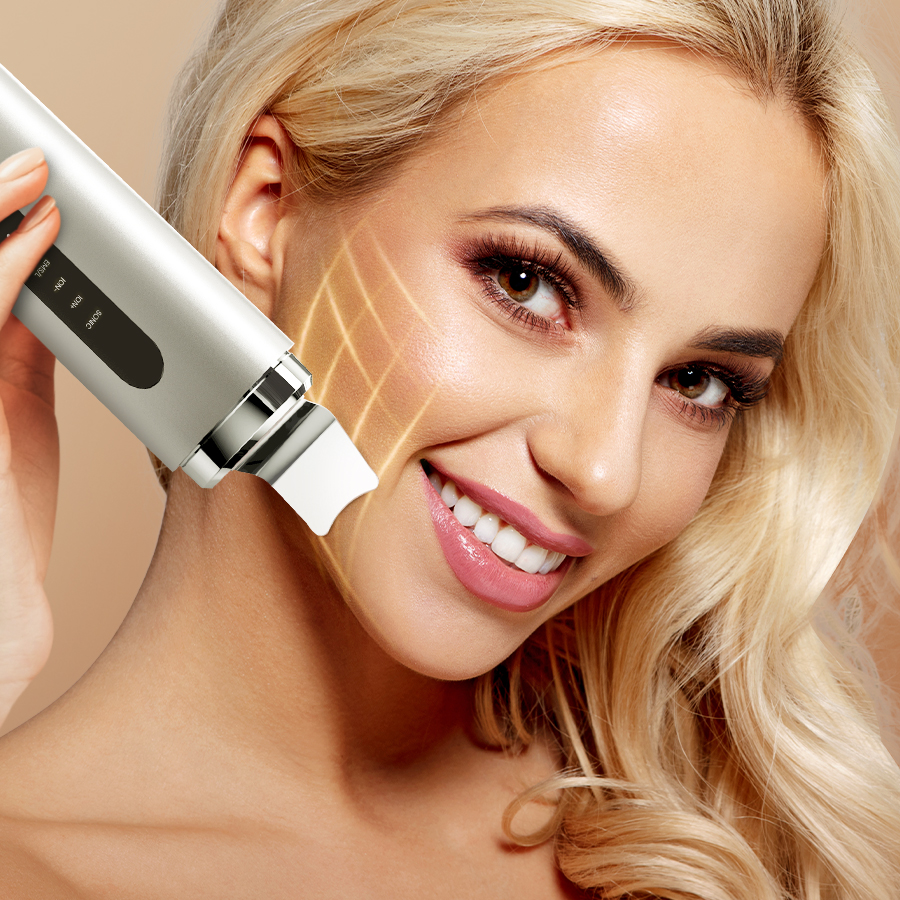
Professional diamond-tip microdermabrasion removes the stratum corneum at 60–80 microns of depth under suction. At-home diamond wands (e.g., PMD Personal Microderm) work at 20–40 microns and should be used once per week on dry, clean skin. For a gentler option, ultrasonic pore extractors like the Dermaflash Dermapore use 28,000 Hz vibration to emulsify sebum without abrasion, making them safer for rosacea-prone skin.
Microcurrent Facial → At-Home Microcurrent or Nanocurrent
NuFACE Trinity and ZIIP HALO are the two most clinically referenced consumer microcurrent devices. NuFACE operates at 335 μA with a biphasic waveform; ZIIP delivers nanocurrent (nano-level, sub-μA) currents via algorithmic programs. Both require conductive gel to complete the circuit. Skipping gel doesn’t just reduce efficacy — it concentrates current at the electrode contact point and risks skin irritation.
LED Therapy → Full-Face LED Mask
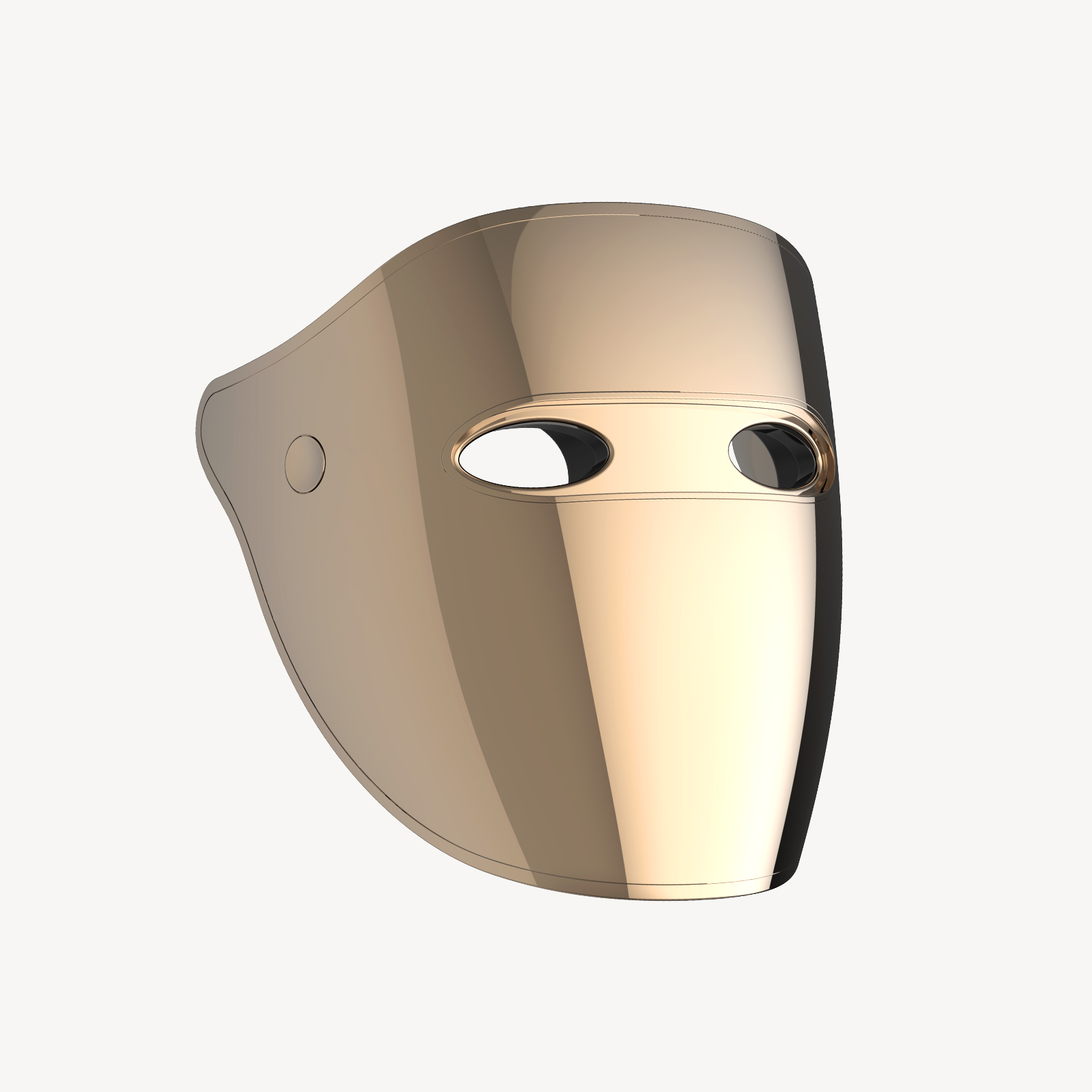
Professional LED sessions run at 40–80 J/cm² energy density, with 633nm red light for collagen and 830nm near-infrared for deeper tissue repair. Consumer masks like the Omnilux Contour FACE deliver 126 LEDs at FDA-cleared wavelengths and reach effective fluence (energy dose) with 10-minute sessions. Three to five sessions per week over 12 weeks produces measurable collagen density improvement in clinical studies — the same schedule aestheticians recommend for post-treatment maintenance.
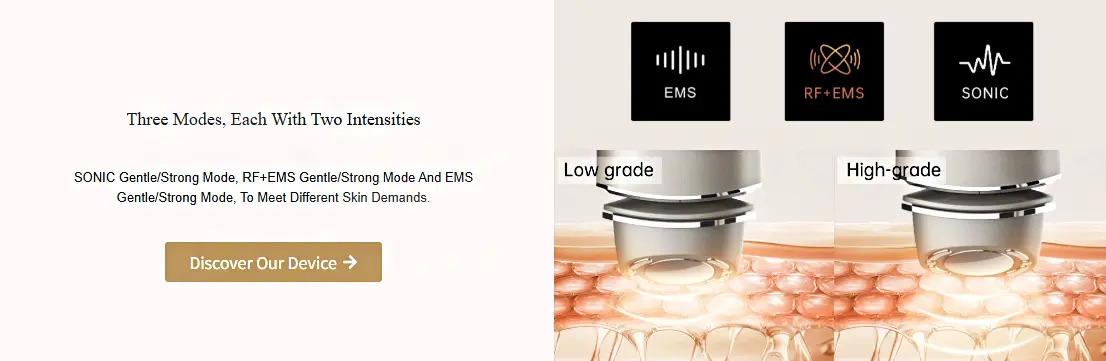
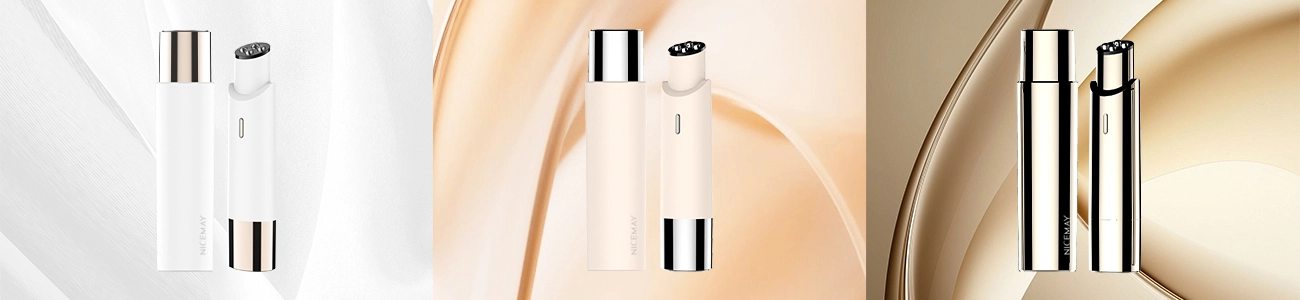
This is the category with the most significant clinical gap, and also the most innovation. The NICEMAY MR-2331 Dual Head RF + EMS Facial Therapy Device addresses that gap by combining two mechanisms: RF energy (at a safe home-use thermal range) stimulates fibroblast activity for collagen remodeling, while EMS (electrical muscle stimulation) contracts and re-educates facial muscles in the same session. The dual-head design lets you alternate between a focused single-point head for periorbital and nasolabial areas and a broader head for forehead and cheek contouring. Used five times per week for the first month, then three times per week for maintenance, most users see visible lift in the jawline and mid-face by week six.
Aestheticians sequence treatments deliberately: cleanse, prep, treat, protect. Your home protocol should follow the same logic, adjusted for device compatibility.
The Weekly Schedule (Combination Approach)
Day
Treatment
Duration
Mon
RF + EMS (NICEMAY MR-2331)
15–20 min
Tue
LED mask (red 633nm + NIR 830nm)
10 min
Wed
Rest or gentle cleansing only
—
Thu
RF + EMS
15–20 min
Fri
LED mask
10 min
Sat
Microcurrent (with conductive gel)
5–10 min
Sun
Rest
—
Avoid running RF and exfoliation on the same day. RF increases transepidermal water loss by 15–20% post-session, and adding mechanical friction raises the risk of barrier disruption.
Prep and Product Sequencing
Apply hyaluronic acid serum before microcurrent or RF sessions, not vitamin C or retinol. Acids and retinoids lower skin pH and increase electrical conductivity inconsistently, which can cause hotspot irritation during RF. Save your retinol for the nights you skip device use.
After RF sessions, apply a ceramide-based moisturizer while skin is still warm from the treatment. Elevated skin temperature increases the absorption rate of topical actives by up to 30%, which is the same principle behind post-professional-facial masking.
Safety Rules for At-Home Beauty Device Users
Skipping the manual is the most common and expensive mistake home device users make. Most RF and microcurrent device injuries reported to the FDA in 2022–2023 involved improper gel application, overlapping treatment zones, or use over active skin conditions.
Follow these hard rules:
Avoid RF and EMS devices if you have: a pacemaker or implanted cardiac device, metal facial implants (excluding dental), active acne lesions (Grade III or IV), or a diagnosis of epilepsy. Microcurrent can trigger muscle fasciculation and, in rare cases, exacerbate seizure conditions.
Skip LED therapy if you take: photosensitizing medications including doxycycline, isotretinoin, or certain SSRIs. Even low-power 830nm near-infrared light can cause erythema in photosensitized skin.
Check FDA clearance: Class II clearance (510(k)) means the device has been evaluated for safety and efficacy against a predicate device. Unclassified or unregistered devices, often sold on marketplace platforms without any clearance documentation, carry real risk. The clearance number should appear in the device manual or the brand’s product page. If it doesn’t, ask the brand directly before buying.
Your collagen turnover rate declines with age, and your results timeline should match your biology.
Ages 25–35: You’ll see microcurrent and RF results in 3–4 weeks of consistent use. At this age, you’re largely maintaining collagen density rather than rebuilding it, so two to three RF sessions per week sustain results after the initial loading phase.
Ages 36–45: Allow 6–8 weeks before evaluating lift and tightening. Fibroblast activity declines roughly 1% per year after age 25, so the same RF stimulus produces a slower collagen response. Increase session frequency to five times per week during the first six weeks, then reduce to three.
Ages 46–55: Clinical studies on at-home RF show measurable skin thickness improvement at 12 weeks when devices are used consistently. Combination protocols, RF plus LED, outperform single-modality approaches in this age group. A 2021 study published in Lasers in Surgery and Medicine found that combining 633nm red LED with RF treatment improved skin elasticity by 28% more than RF alone over 16 weeks.
Common Mistakes That Stall Results
Overusing RF on the same zone. Professional aestheticians move the device continuously to avoid thermal accumulation. At home, holding an RF head in one spot for more than 5 seconds risks micro-burns in the dermis. Keep the device moving in upward strokes.
Buying based on price alone. A $50 RF device and a $300 RF device are not equivalent. The difference lies in the frequency output (MHz range matters for depth of penetration), temperature feedback mechanism, and electrode design. Monopolar RF penetrates 3–5mm; bipolar RF stays in the 1–2mm range. Choose based on your target concern: deep tissue tightening needs monopolar, surface-level collagen stimulation is well-served by bipolar.
Quitting before the collagen response kicks in. At-home RF stimulates collagen synthesis, but collagen takes 28–42 days to visibly remodel. Users who stop at week three and report “no results” are quitting before the biological mechanism completes. Mark week six on your calendar as the first real evaluation point.
FAQs About How to Transition from Professional Facials to At-Home Devices
Can I fully replace professional facials with at-home devices?
For maintenance and prevention, yes. For corrective treatment of deep lines, significant laxity, or hyperpigmentation, professional devices have clinical power that home units cannot match. Most aestheticians recommend treating home devices as a between-clinic investment, not a replacement.
How often should I use an RF device at home?
During the first four weeks (the “loading phase”), five sessions per week builds the initial collagen response. After week four, reduce to two to three sessions per week for maintenance. More is not better: overuse of RF can cause transient inflammation that counteracts collagen production.
Can I combine microcurrent and RF in the same routine?
Yes, but run microcurrent before RF, not after. Microcurrent works on muscle re-education, while RF heats tissue. Doing RF first causes temporary tissue edema that interferes with microcurrent conductivity. The correct order is: cleanse, conductive gel, microcurrent, remove gel, apply HA serum, then RF.
Are at-home LED masks as effective as professional LED treatments?
Consumer LED masks deliver lower energy fluence than clinic panels, but the frequency advantage closes much of the gap. A professional 20-minute LED session at 80 J/cm² done once a month produces similar cumulative results to a 10-minute at-home session at 30 J/cm² done five days per week.
Is it safe to use an at-home RF device near the eyes?
Most consumer RF devices are not designed for periorbital use. The skin around the eye is 0.5mm thick versus 2mm on the cheeks, and standard RF energy density can cause discomfort or lid contraction in that zone. Use microcurrent with a small ball tip for the eye area, and check your RF device’s manual for specific contraindicated zones.