


How to Use an LED Face Mask for Acne Without Over-Treating Your Skin?


Why LED Face Masks Work for Acne (and Where Most People Get It Wrong)?
LED acne therapy isn’t one mechanism — it’s two distinct ones stacked together, and confusing them is the root of most “I used it every day and my skin got worse” complaints.
Blue light (typically 415nm) targets Cutibacterium acnes (formerly P. acnes), the bacteria strain implicated in inflammatory breakouts. These bacteria produce porphyrins that absorb blue wavelengths, triggering a photodynamic reaction that generates reactive oxygen species and ruptures the bacterial cell wallsince porphyrins are not otherwise present in skin, and no UV light is employed, LED is shown to be safe, and it has been approved by the FDA. A landmark open-label study using 415nm monotherapy found 9 out of 30 patients achieved complete clearing with no serious side effects reported.
Red light (typically 630–660nm) works differently — it doesn’t kill bacteria, it calms the inflammatory cascade and accelerates tissue repair, which is why it’s the wavelength most associated with reducing post-acne redness and scarring risk. A 107-patient randomized trial found both 415nm blue and 415nm+660nm blue-red combinations significantly reduced inflammatory acne lesions versus control, with blue-red delivering the strongest effect.
The failure mode I see constantly: people assume “more light = more bacteria killed,” and run sessions twice daily. But porphyrin depletion and skin barrier recovery both run on a 24-hour-plus cycle. Stacking sessions doesn’t accelerate bacterial clearance — it just adds cumulative light-and-heat stress to skin that’s already inflamed from active acne, which is precisely how irritation starts. For a deeper breakdown of additional at-home options worth comparing against pure LED, see The Top 10 Acne Management Devices You Can Use at Home in 2026.
The Right Pre-Treatment Skin Prep (And Why Order Matters More Than You Think)

This is the step most people skip, and it’s the single biggest lever for avoiding over-treatment. LED light has to physically reach the photoreceptors in your skin cells and bacteria — anything sitting on the surface gets in the way.
Cleanse, don’t layer. Wash with a gentle, non-stripping cleanser to remove sweat, sebum, and makeup. Residue creates an uneven barrier that scatters light unpredictably across your face, meaning some areas get under-treated while others — wherever buildup is thinnest — effectively get overexposed.
Skip every active ingredient before the session. This is non-negotiable, not optional advice. SPF contains UV-filtering compounds that physically block light transmission. Retinoids and acids (glycolic, salicylic, lactic) thin the stratum corneum and increase photosensitivity — applying them right before LED exposure is one of the most common causes of the “my face felt like it was burning” complaints I hear. The fix is sequencing, not elimination: use actives on opposite days or apply them after your LED session, never before.
Dry completely. Surface moisture refracts and absorbs light energy before it reaches target depth. Pat skin fully dry — don’t towel-rub inflamed acne — before placing the mask.
How to Choose Wavelength and Session Length Without Overdoing It?
This is where “more is better” thinking does the most damage, so treat these numbers as hard ceilings, not starting suggestions.
Matching Wavelength to Your Acne Type
| Skin concern | Best wavelength | Mechanism |
|---|---|---|
| Active, inflamed breakouts | Blue (~415nm) | Bactericidal via porphyrin photoexcitation |
| Redness, healing, post-acne marks | Red (~630–660nm) | Anti-inflammatory, supports collagen remodeling |
| Combination/active + healing | Blue + Red alternating | Addresses bacteria and inflammation in one protocol |
Session Limits That Actually Match Clinical Protocols
Most published acne studies use sessions in the 10 to 20 minute range, three to five times weekly — not daily, and never twice in one day. One frequently cited home-mask protocol used 630nm red and 850nm near-infrared light for 9 minutes, five times a week, over 12 weeks, with measurable improvement and zero reported side effects. That’s the model worth following: short, consistent, and spaced — not maximal.
If you’re new to LED therapy: start at 10 minutes, 3x/week for the first two weeks. Watch how your skin responds before increasing to the device’s stated maximum. Skin barrier adaptation isn’t instant, and front-loading a brand-new modality at full intensity is the fastest route to a reactive flare.
Avoiding Over-Treatment: Real Failure Modes and How to Spot Them

In my work reviewing device complaints and skin-tech forums, the same three mistakes show up repeatedly — and each one has a specific, identifiable consequence.
Mistake #1: Daily double-sessions. Users assume doubling frequency doubles results. What actually happens is the skin barrier doesn’t get its recovery window, sebaceous activity can rebound as a stress response, and inflammation markers stay elevated instead of resolving — sometimes producing more breakouts, not fewer.
Mistake #2: Layering actives immediately before or after. Applying retinol or a strong acid exfoliant within the same skin-prep window as LED exposure compounds photosensitivity and barrier disruption. The safer protocol: actives go on off-days, or are applied at least a few hours after the session once skin has settled.
Mistake #3: Ignoring early warning signs. Redness that lingers past an hour, tightness, or a new cluster of breakouts after a week of use are signals to pause — not push through. The FDA approved the first at-home LED acne device in 2009, and roughly 35 devices are now on the market, which means device quality and irradiance output vary widely; if irritation appears, reduce frequency before assuming the modality itself doesn’t work for you.
A simple decision framework: if you see any improvement plateau or irritation after a week, drop to 2x/week for 7–10 days before resuming the standard cadence. Skin tolerance, not manufacturer marketing, should set your ceiling.
Post-Session Recovery: Locking In Results Without Overloading Skin
What you do in the ten minutes after your session matters almost as much as the session itself.
Moisturize immediately. LED exposure, even at therapeutic doses, creates mild transient dryness in some users. Apply a lightweight, non-comedogenic moisturizer to support barrier recovery — this is also the window where hydrating ingredients absorb most efficiently, since pores are temporarily more receptive post-light-exposure.
Hold off on actives for several hours. If your routine includes benzoyl peroxide, salicylic acid, or retinoids, give your skin a buffer period rather than applying immediately. Same-day combination is fine for most people; same-session stacking is not.
Don’t add heat or occlusion right after. Steam, hot showers, or heavy occlusive balms directly post-session can compound the mild thermal effect of red/NIR wavelengths, occasionally tipping a calming treatment into an irritating one for reactive skin types. If you’ve noticed persistent flushing after sessions, it’s worth reading LED Face Mask Redness: How to Prevent Irritation and Sensitive Skin Reactions for a more detailed troubleshooting protocol.
Device Hygiene: The Overlooked Variable in Acne Treatment
An LED mask sitting against acne-prone skin for 10–20 minutes, multiple times a week, is a bacterial transfer risk if it isn’t cleaned — which can directly undermine the antibacterial benefit you’re trying to achieve.
After every session: wipe the interior silicone or contact surfaces with a soft cloth and a non-alcoholic antibacterial wipe, or a cloth lightly dampened with rubbing alcohol. Avoid soaking the device or getting moisture into the electronics housing or charging port.
Weekly: check for residue buildup around the light beads themselves — buildup here can scatter or dim output, meaning you’re getting a weaker dose than your timer suggests despite running the full session length.
This single habit — overlooked in nearly every product manual — is one of the simplest ways to prevent reintroducing the bacteria you’re using the mask to eliminate.
A Practical At-Home Option: The NICEMAY MR-2308 Multi-Wavelength Mask
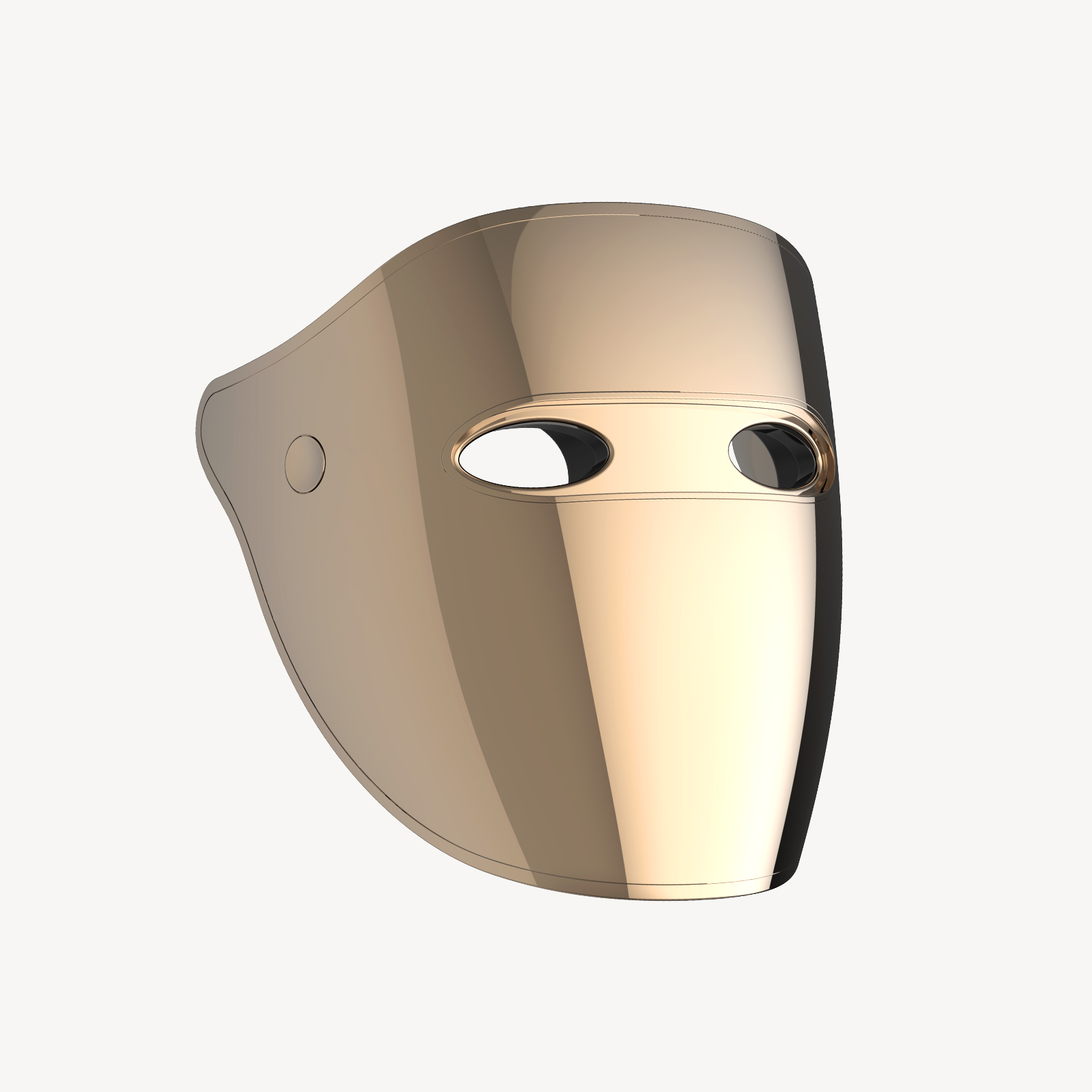
For readers comparing devices rather than building a DIY LED setup, the NICEMAY MR-2308 Colorful LED Light Therapy Rejuvenating Beauty Mask is a useful reference point for how the protocol above translates into device specs. It combines four wavelengths — deep red (660nm), red (630nm), near-infrared (850nm), and golden amber (605nm) — through 220 light beads, with three intensity modes (Soothing at 20±5mW/cm², Brightening at 30±5mW/cm², and Anti-aging at 43±5mW/cm²).
Two design choices are directly relevant to the over-treatment risks covered above: each mode runs for a fixed 10-minute cycle with automatic shutoff, which removes the temptation to “just go a little longer,” and the lower-intensity Soothing mode gives reactive or newly-starting users a genuine low-dose entry point rather than forcing full intensity from session one. Because this mask’s wavelength profile is red/NIR/amber rather than blue, it’s best positioned for the inflammation-calming, redness-reducing, and post-acne repair side of a routine — pair it with a dedicated blue-light device or spot treatment if active bacterial breakouts are your primary concern.
FAQs About How to Use an LED Face Mask for Acne Without Over-Treating Your Skin
Can I use an LED face mask every day for acne?
Should I apply moisturizer before or after my LED session?
Is blue light or red light better for acne?
What does it mean if my skin gets more irritated after using an LED mask?
Do at-home LED masks need to be FDA-cleared to be safe?
Please fill in your email in the form and we’ll get back to assist you soon!