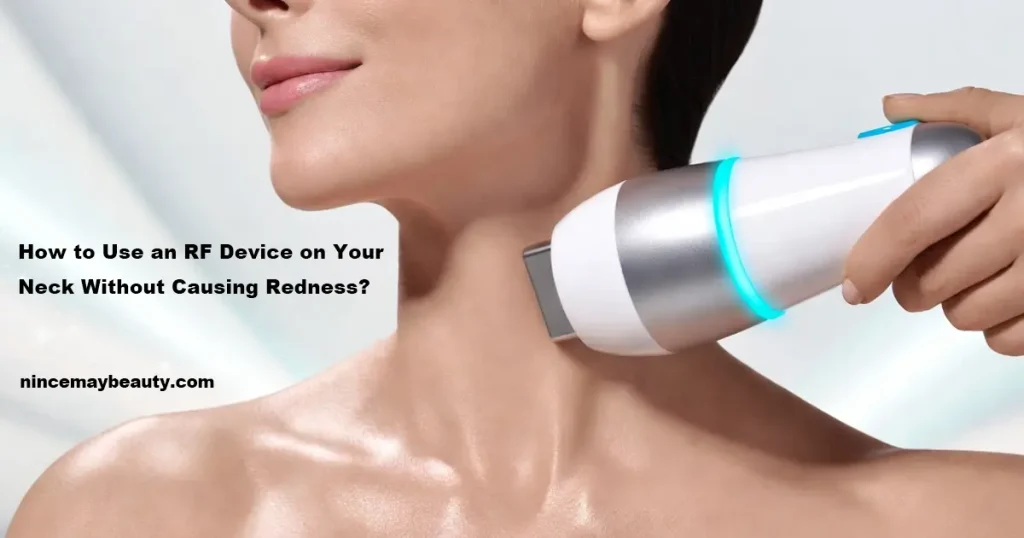
Before you can prevent a problem, you need to understand why it happens. Most guides skip this step entirely. Most people assume redness after RF treatment is inevitable — a minor inconvenience. It is not. It is a signal that the skin has been thermally stressed beyond the therapeutic window.
Thinner Skin, Faster Heat Accumulation
The neck’s dermis is structurally different from facial skin. It contains fewer sebaceous glands (which provide natural lubrication and a degree of thermal buffering), and its subcutaneous fat layer is thinner, offering less insulation between the RF electrode and underlying vasculature. When radiofrequency energy is applied, tissue impedance converts electrical energy into heat. In thicker facial skin, this heat disperses more gradually. In neck skin, it builds in seconds.
Clinical studies published in the Journal of Cosmetic Dermatology confirm that at-home RF devices operating at 1–3 MHz frequencies can raise dermal temperature by 2–5°C within 30–60 seconds of stationary contact. The therapeutic target for collagen neosynthesis is a dermal temperature of 40–42°C. Above 43°C, capillary dilation triggers visible erythema. Above 45°C, you risk a superficial thermal burn. On the neck, that 3-degree safety margin disappears alarmingly fast if the device is held still.
The Vascular Factor
The neck is rich in surface vasculature. The external jugular veins and networks of capillaries sit close to the skin surface, making the area highly prone to reactive flushing when heat is applied — even gentle, therapeutic heat. This is not a device malfunction; it is normal physiology. Managing it requires technique, not just lower settings.
This is the single most important safety consideration when using RF on the neck — and the most underexplained in device manuals. In my experience reviewing treatment protocols for home device users, incorrect zone selection is responsible for approximately 60% of adverse reactions, including not just redness but also temporary nerve tingling and post-treatment tightness that crosses from comfortable to painful.
Safe Treatment Zones
The following areas respond well to RF treatment and carry low risk when correct technique is applied:
- Jawline and jowl area: The transition zone between the lower face and neck. This is one of the highest-reward areas for RF tightening, as collagen density here is amenable to remodeling. Treat with upward, angled strokes toward the ear.
- Submental area (under the chin): The area directly beneath the chin and above the hyoid bone. RF here targets the platysma muscle and the dermis above it. Keep strokes horizontal and limit passes to 3–4 per session.
- Lateral neck bands: The sides of the neck, away from the midline and pulse points. Work in upward strokes from the clavicle toward the jaw. This addresses the vertical platysmal banding that creates a “turkey neck” appearance.
- Upper chest / decolletage: If your device allows, the upper chest area below the clavicle can be treated similarly to the neck. Same rules apply: keep moving, generous gel, low settings.
Strict No-Go Zones — Do Not Treat These Areas
| Zone |
Why It Is Off-Limits |
Risk if Ignored |
| Thyroid gland (midline, front of neck) |
RF energy may interfere with thyroid tissue and electromagnetic function; contraindicated in all professional and at-home protocols. |
Potential thyroid dysfunction; device manufacturer liability void |
| Carotid arteries (pulse points on sides) |
Direct RF over major arteries can cause localized heat in vascular walls and affect blood flow regulation. |
Cardiovascular stress, dizziness, reactive vasodilation |
| Lymph nodes (under jaw angles) |
Heating lymphatic tissue can cause temporary swelling and inflammatory response. |
Post-treatment swelling, sensitivity |
| Over metallic implants / surgical hardware |
Metal conducts RF energy unpredictably, concentrating heat at the implant surface. |
Burns, implant heating, pain |
Conductive Gel: The Most Underestimated Variable in RF Safety
Ask any professional RF technician what separates a safe treatment from a reactive one, and they will say: the gel. At-home users routinely use too little — partly because the bottle empties quickly and feels wasteful, and partly because many device manuals describe gel application as an afterthought rather than a therapeutic necessity.
What Conductive Gel Actually Does
Conductive gel serves two simultaneous functions that are both equally critical. First, it acts as an electrolytic coupling agent, reducing the impedance between the electrode and the skin surface to allow RF energy to penetrate evenly into the dermis rather than discharging unevenly at the surface. Without gel, you get “hot spots” — areas of concentrated energy — which is the most common cause of isolated red patches post-treatment.
Second, it provides a physical lubricating barrier that eliminates friction drag. Even light friction from a dry or semi-dry glide can trigger mechanical redness (dermographism), which is entirely separate from thermal redness and compounds the irritation. On the neck’s sensitive skin, this mechanical component matters.
How Much Is Enough?
The rule of thumb used in clinical settings is simple: if the device is dragging, you need more gel. The head should glide effortlessly, with zero resistance. In practical terms, this typically means applying a layer 2–3 mm thick — far more than most people use. Reapply gel every 3–4 minutes during a session, or whenever you feel increased resistance. Running out mid-session and continuing without reapplication is one of the most common self-reported causes of post-RF redness.
Choosing the Right Gel
Not all gels are equal. Avoid gels containing active ingredients like retinol, AHA/BHA, or vitamin C during RF sessions — RF energy increases transdermal absorption by up to 4x, meaning you could inadvertently deliver an exfoliating acid deep into the dermis and trigger significant post-treatment inflammation. Use a plain, fragrance-free conductive gel or a hyaluronic acid serum without active exfoliants. Post-treatment, a soothing formulation with aloe vera or centella asiatica extract is ideal.
Step-by-Step: How to Use an RF Device on Your Neck Without Causing Redness
The following protocol is built around clinical best practices for at-home use, adapted for the neck’s specific anatomy and lower tolerance threshold. Follow each step precisely, especially if you have had reactions in the past.
Step 1: Pre-Treatment Preparation (5 Minutes Before)
- Cleanse your neck thoroughly with a gentle, sulfate-free cleanser to remove all SPF, makeup, and skincare residue. Active residues heated by RF can cause chemical irritation.
- Pat dry completely. Wet skin alters gel conductivity and creates unpredictable energy distribution.
- Do not apply any active ingredients (retinol, vitamin C, AHA/BHA, niacinamide at high concentrations) before RF treatment.
- Ensure your skin is at room temperature — do not treat immediately after hot shower or exercise, as already-elevated skin temperature shrinks your thermal safety margin.
- Apply conductive gel generously across the entire treatment area.
Step 2: Device Settings — Start Lower Than You Think
The most common mistake new users make is starting at the recommended “moderate” setting. On the neck, always begin at the lowest available intensity — even if you have already used the device successfully on your face at a higher level. The neck’s thermal threshold is measurably lower than the cheek or forehead.
For reference, professional-grade RF devices used in clinical settings deliver 20–50 W of power. At-home devices typically operate at 2–8 W. Even at these lower levels, the neck requires conservative settings. A good starting framework:
| Session Number | Recommended Setting | Expected Sensation | Maximum Duration |
| Session 1–2 | Level 1 (lowest) | Barely perceptible warmth | 5 minutes |
| Session 3–4 | Level 1–2 | Gentle, comfortable warmth | 5–7 minutes |
| Session 5+ | Level 2–3 (if tolerated) | Warm but never hot or stinging | 7–10 minutes |
Step 3: Technique — The Continuous Motion Protocol
This is where most redness originates. Follow these movement principles without exception:
- Never stop moving: The device head must be in continuous motion at all times. The moment you pause — even for 2–3 seconds — heat begins to build at that precise location. Think of it as painting a wall: the brush never stops.
- Speed: Move at approximately 2–3 cm per second. Faster does not distribute heat evenly; slower accumulates it. A consistent, unhurried glide is optimal.
- Pressure: Use only the weight of the device itself. Press no harder than you would press a pen to paper when writing. Excess pressure compresses the gel layer and creates uneven conductivity.
- Stroke pattern: Use upward and lateral strokes — never downward (which works against the lifting goal and can drag delicate skin). Work in overlapping passes, like mowing a lawn.
- Pass limit: Complete 3–5 passes over each zone before moving to the next. Do not concentrate on one area for longer.
Step 4: Post-Treatment Care — Preventing Delayed Redness
Redness after RF on the neck is not always immediate. Delayed erythema — appearing 30–60 minutes post-treatment — is common and caused by continued capillary dilation triggered by residual heat in the dermis. This is preventable.
- Immediately after treatment, gently wipe off excess gel with a soft cloth — do not rub.
- Apply a cooling, soothing moisturizer containing aloe vera, centella asiatica, or a ceramide complex. These ingredients help restore the skin barrier and calm thermal-related inflammation.
- Avoid hot water, saunas, steam rooms, and heavy exercise for at least 4 hours post-treatment.
- Apply a broad-spectrum mineral sunscreen (SPF 30 minimum, SPF 50 preferred) if going outside. RF-treated skin has temporarily increased UV sensitivity for 24–48 hours, and sun exposure is a primary trigger for post-treatment hyperpigmentation.
- Do not layer active ingredients (retinol, AHA, BHA, vitamin C) on treated skin for 24 hours post-session.
Recommended Device: NICEMAY MR-2370 for Neck Tightening
For home users specifically addressing neck laxity, the NICEMAY MR-2370 Microcurrent LED Tightening & Sculpting Device deserves serious consideration. It combines three synergistic technologies — microcurrent stimulation, LED light therapy, and gentle EMS (electrical muscle stimulation) — in a single handheld unit that is specifically designed for the delicate skin of the face and neck.
Why This Device Works Well for the Neck
The MR-2370’s microcurrent output is calibrated in the 200–600 microampere range — the physiological window shown in clinical literature to stimulate fibroblast activity and ATP production without triggering thermal injury. Unlike pure RF devices that rely entirely on resistive heating, microcurrent therapy works through bioelectrical stimulation, meaning there is no thermal accumulation risk on the neck’s thinner skin. This makes it an excellent choice for users who have experienced redness or sensitivity with higher-powered RF devices.
The integrated LED therapy (red and near-infrared wavelengths) further supports collagen synthesis at a non-thermal level, allowing you to treat the neck zone — including areas closer to the midline — that would be off-limits with conventional RF. The USB charging design and ergonomic handle make it practical for consistent, at-home use.
For users who want to combine the benefits of RF-adjacent technologies with the safety profile required for sensitive neck skin, the NICEMAY MR-2370 is a technically sound, well-designed option that addresses the primary failure modes of conventional at-home RF on the neck.
RF vs. Microcurrent for the Neck: Choosing the Right Technology for Your Skin
One of the questions I encounter most often is: “Should I be using RF at all on my neck, or is there a safer alternative?” The honest answer depends on your specific concern, skin type, and history of reactivity. Here is a direct comparison to help you decide.
| Criteria | RF (Radiofrequency) | Microcurrent |
| Primary mechanism | Resistive heating to 40-42°C; triggers heat-shock collagen remodeling | Bioelectrical stimulation; mimics body’s natural bio-current |
| Thermal risk on neck | Moderate-high; requires strict technique adherence | Minimal; no thermal accumulation |
| Best for | Moderate-to-significant skin laxity; visible jowling | Early laxity; muscle tone; maintenance |
| Results timeline | 4-8 weeks for visible tightening | 2-4 weeks for lifted, toned appearance |
| Contraindicated zones | Thyroid, carotid, lymph nodes | Metal implants; active infections |
| Ideal candidate | 35-60, visible skin laxity, no sensitivity history | 25-50, preventative or early-stage, sensitive skin |
The practical takeaway: if you have consistently experienced redness or discomfort with RF on the neck, switching to a microcurrent device is not a compromise — it is often a more appropriate technology for the specific anatomy and concerns of the neck zone. If your primary concern is significant skin laxity, RF remains the gold standard, but technique discipline is non-negotiable.
For a curated list of both RF and advanced alternatives designed specifically for neck tightening, see: The 10 Best RF Devices for Neck Tightening in 2026.
Managing Skin Sensitivity and Redness Risk Factors Before You Start
Certain skin conditions and lifestyle factors measurably increase your redness risk during RF neck treatment. Identifying and managing these before your session is as important as technique. What I have consistently seen is that users who do this pre-screening step have dramatically fewer adverse reactions, even at the same device settings.
High-Risk Factors That Require Modified Protocol or Postponement
- Active rosacea or redness baseline: If you already have chronic redness in the neck or chest area, RF energy will compound it. Wait for a calm baseline period and use the lowest setting with maximum gel.
- Recent sun exposure (within 48 hours): Sunburned or UV-stressed skin has a compromised barrier and heightened inflammatory response. Do not treat. Wait a minimum of 72 hours after significant sun exposure.
- Recent chemical exfoliation (within 5–7 days): Glycolic acid, lactic acid, TCA, and similar treatments thin the stratum corneum. RF on a thinned barrier dramatically increases surface heat and redness risk.
- Active skin infection, dermatitis, or eczema flare: Never treat over compromised or inflamed skin. RF energy can spread infection and significantly worsen inflammatory conditions.
- Blood-thinning medications: Anticoagulants and high-dose aspirin increase capillary fragility and the likelihood of post-treatment flushing and bruising.
The 48-Hour Skin Prep Protocol
For users with sensitive skin or a history of reactivity, this two-day preparation window markedly improves outcomes:
- 48 hours prior: Discontinue all active topicals (retinol, AHA, BHA, vitamin C, niacinamide above 5%).
- 24 hours prior: Switch to a fragrance-free, barrier-supporting moisturizer. Consider adding a ceramide serum to reinforce the skin barrier.
- Morning of treatment: Apply only a gentle cleanser and hydrating moisturizer. No active ingredients.
- 1 hour prior: Ensure skin is at room temperature; avoid hot beverages, exercise, and hot showers in the hour before your session.
For users with sensitive skin who are also exploring light-based therapies, this guide on LED face mask redness: how to prevent irritation and sensitive skin reactions covers directly applicable barrier-preparation principles.
FAQs About How to Use an RF Device on Your Neck Without Causing Redness