


Насколько глубоко проникает свет LED из маски для лица в кожу?

Задумывались ли вы когда-нибудь, действительно ли 10–20-минутная сессия с LED-маской для лица достигает ваших морщин, корней акне или глубокого воспаления — или свет просто скользит по поверхности?
Ответ кроется в длине волны, но это не так просто. Научные измерения показывают:Научные измерения показывают:
- Синий свет (415–470 нм): проникает примерно на 0,5–1 мм (в основном в эпидермис).
- Красный свет (630–660 нм): достигает примерно 2–10 мм (в дерму и глубже во многих случаях).
- Ближний инфракрасный (NIR) (830–850 нм): может проникать на 5–10+ мм, при этом некоторые исследования показывают проникновение до 30–40 мм в более глубокие ткани.
Глубина проникновения определяет, какие проблемы кожи вы можете действительно устранить — поверхностное акне против стимуляции коллагена против глубокого восстановления. В этом руководстве мы подробно разберем данные, объясним механизмы и расскажем о безопасности, чтобы вы могли использовать свою маску эффективно и уверенно.
Не уверены, какие именно длины волн использует ваша LED-маска? Ознакомьтесь с нашим полным руководством: “ Какие длины волн используются в LED-маске для лица? “.
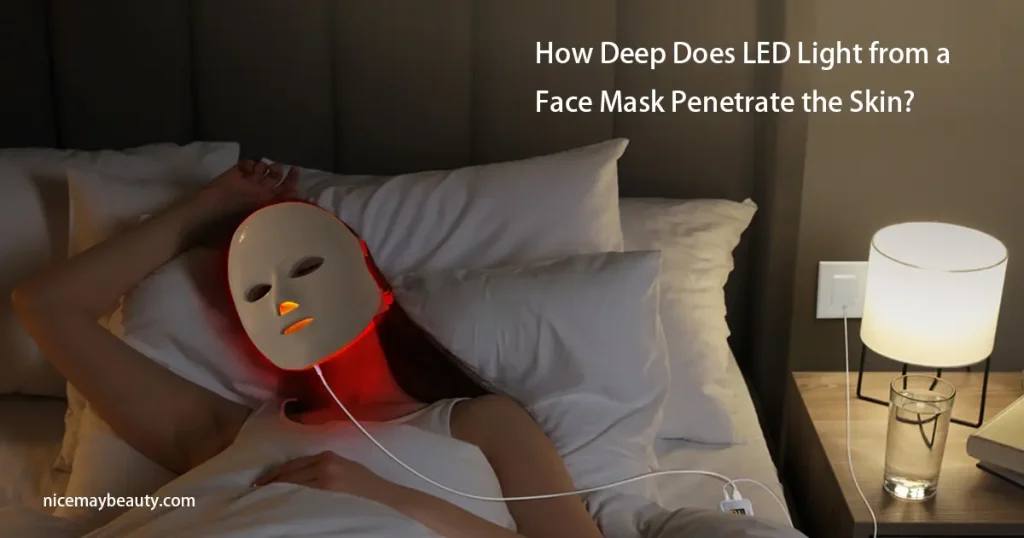
Какие слои кожи должна достигать LED-маска?
Человеческая кожа состоит из трех основных слоев:
- Эпидермис (наружный слой, толщиной 0–0,1 мм): Здесь находятся бактерии акне, пигментация и проблемы с текстурой поверхности.
- Дерма (0,1–4 мм): Содержит коллаген, эластин, кровеносные сосуды — ключевая зона для борьбы со старением, повышения упругости и уменьшения покраснений.
- Гиподерма/подкожный слой (4 мм+): Глубокое воспаление, заживление ран и общая устойчивость тканей.

Глубина проникновения LED-света по длине волны (сравнение на основе данных)
| Цвет / Длина волны | Распространенный диапазон в масках | Типичная глубина проникновения | Достигнут основной слой кожи | Основные преимущества (поддерживаются исследованиями) |
|---|---|---|---|---|
| Синий | 415–470 нм | 0.5–1 мм | Эпидермис | Убивает бактерии акне (P. acnes), контролирует жирность |
| Жёлтый (менее распространённый) | ~590 нм | 0,5–2 мм | Верхний слой дермы | Снижает покраснение и воспаление |
| Красный | 630–660 нм | 2–5 мм (до ~10 мм в исследованиях) | Дерма | Улучшает коллаген, уменьшает мелкие морщины и текстуру (например, исследования показывают, что 660 нм достигает ~10 мм) |
| Ближний инфракрасный (БИК) | 830–850 нм | 5–10+ мм (до 30–40 мм в некоторых моделях тканей) | Глубокая дерма + гиподерма | Восстановление тканей, снижение глубокого воспаления, заживление ран |
Примечание: Это приблизительные диапазоны, основанные на исследованиях ex vivo/in vivo (например, красный свет ~4–10 мм в тканях кожи по источникам ResearchGate и PMC; НИР проникает глубже из-за меньшего рассеяния/поглощения). Домашние маски (низкая интенсивность излучения) часто достигают консервативных значений; клинические устройства позволяют проникать дальше.
Что влияет на глубину проникновения светодиодного света?
- Длина волны — Основной фактор. Более длинные волны (например, 830–850 нм НИР) рассеиваются меньше и проникают глубже, чем более короткие (синий свет быстро поглощается поверхностными хромофорами).
- Цвет кожи (содержание меланина) — Темная кожа (Фитцпатрик IV–VI) поглощает больше видимого света из-за более высокого содержания меланина, уменьшая проникновение на 20–50% для синего/красного света. НИР менее подвержен воздействию (поглощение меланина ~5–10% при 660 нм согласно исследованиям).
- Состав тканей — Толщина, содержание воды, кровеносные сосуды и соотношение жира/мышц вызывают рассеяние/поглощение. Более толстые или богатые кровью участки немного уменьшают глубину проникновения.
- Мощность/интенсивность LED-маски (мВт/см²) — Более высокая интенсивность (например, 20–100 мВт/см²) обеспечивает доставку большего количества фотонов для более глубокого проникновения света (в пределах безопасных лимитов). Большинство домашних масок имеют 10–50 мВт/см².
Что происходит, когда свет LED достигает целевой ткани?
Как только фотоны достигают нужной глубины, они вызывают фотобиомодуляция (PBM) — нетермическую, свет-индуцированную биологическую реакцию (не тепло, как у лазеров).
Ключевой механизм (широко цитируемый в исследованиях PMC и Frontiers):
- Свет в основном поглощается цитохром c оксидаза (ЦОК) в митохондриях (энергетических станциях клетки).
- Это стимулирует цепь переноса электронов → увеличивает АТФ производство (клеточную энергию).
- Вторичные эффекты: кратковременный рост реактивных форм кислорода (ROS) для сигнализации, высвобождение оксида азота (NO), модулированный кальций, снижение воспаления.
Результат: улучшение клеточного восстановления, синтез коллагена (красный/NIR в дерме), снижение количества бактерий (синий в эпидермисе) и общее омоложение. Это фотохимический эффект — безопасный и не повреждающий при правильных дозах.
Хотите увидеть всю клиническую базу данных по терапии LED? Прочтите наш подробный обзор: “ Является ли LED-маска для лица, основанная на научных исследованиях? “.
Всегда ли более глубокое проникновение LED-света лучше?
Нет — глубина не всегда автоматически лучше. Эффективность зависит от соотношения глубины к вашей проблеме:
- Акне/контроль масла → мелкая глубина (синий/желтый остается в эпидермисе/верхней дерме).
- Мелкие морщины, потеря коллагена → средняя глубина (красный в дерму — идеально).
- Глубокое воспаление или восстановление → более глубокое проникновение NIR помогает, но чрезмерная глубина может тратить энергию на неактуальные слои.
Многие исследования подчеркивают двухфазный дозозависимый ответ (закон Арндта-Шульца): слишком мало — ничего не дает, оптимально стимулирует, слишком много — может подавлять пользу. Домашние LED-маски нацелены на точные, проблемо-специфические глубины — а не на максимальное проникновение.
Меры безопасности для масок с высоким проникновением LED для лица
LED-маски для лица обычно очень безопасны — без УФ-излучения, без ожогов, одобрены FDA широко доступны.
Для высокопроникающего NIR (глубже проникновение):
- Безопасность глаз — прежде всего — NIR невидим, но может проникать в ткани глаз. Длительное высокое воздействие рискует вызвать стресс сетчатки. Всегда используйте маски с защитой для глаз, держите глаза закрытыми или носите защитные очки (распространенная рекомендация от Кливлендской клиники и производителей устройств).
- Фоточувствительные люди — Те, кто принимает фотосенсибилизирующие препараты, имеют глазные заболевания или очень темную/пигментированную кожу, должны проконсультироваться с дерматологом (небольшой риск неравномерного поглощения/изменений пигментации).
- Риск переиспользования — Чрезвычайно высокая освещенность/доза может вызвать легкое покраснение или снизить эффективность (бипазисная реакция). Следуйте инструкциям (обычно 10–20 минут, 3–5 раз/неделю).
- Нет связи с раком — Красный/NIR не показывает канцерогенного риска в исследованиях; это неионизирующее излучение.
Часто задаваемые вопросы о свете маски LED
Уменьшает ли темный цвет кожи проникновение света LED?
Да, немного — у людей с более высоким содержанием меланина больше поглощается видимого света (синий/красный), что уменьшает глубину на 20–50%. NIR лучше проникает в темные оттенки (исследования показывают примерно 80–90% пропускания при 660 нм).
Может ли световая терапия на лице с помощью LED-устройства достигать мышц или костей?
Маски для лица обычно не достигают — НИР проникает в глубокие слои дермы/гиподермы (5–10+ мм), но не в глубокие мышцы/кости, как клинические панели. Основное внимание уделяется преимуществам на уровне кожи.
Всегда ли более высокая мощность лучше для более глубокого проникновения?
Не обязательно — более высокая интенсивность помогает достигать глубины до определенного уровня, но превышение оптимальной дозы может подавлять результаты (бипазисная реакция). Следуйте рекомендациям устройства.
Безопасны ли LED-маски вокруг глаз?
В целом да, с предосторожностями — закрывайте глаза, используйте встроенные щитки или добавляйте очки. НИР представляет основную невидимую опасность; никогда не смотрите прямо на светодиоды.
Сколько времени потребуется, чтобы увидеть результаты правильного проникновения?
Большинство замечают улучшение текстуры кожи за 4–8 недель (при постоянном использовании 3–5 раз в неделю). Изменения коллагена требуют 8–12 недель согласно клиническим исследованиям.
Заключение
Свет от LED-маски для лица действительно достигает слоев, где происходят реальные изменения — при правильном подборе длины волны, мощности и типа кожи. Синий борется с поверхностными проблемами, красный стимулирует коллаген в дерме, а НИР поддерживает более глубокое восстановление — все это подтверждено наукой фотобиомодуляции.
Готовы выбрать подходящую маску? Начинайте с проверенных длин волн и безопасной интенсивности излучения.

Пожалуйста, заполните вашу электронную почту в форме, и мы скоро свяжемся с вами для помощи!