


Silicone Face Brush vs Manual Brush – Which Cleans Skin More Thoroughly?


How Silicone Face Brushes Actually Clean Skin?
Silicone facial brushes work through sonic micro-vibration — typically in the range of 6,000–10,000 pulses per minute — transmitted through silicone nubs that are usually 20A–40A on the Shore hardness scale (soft enough to flex against skin, firm enough to dislodge debris). Because the vibration does the work rather than manual pressure, the brush doesn’t need to tug or drag across the skin to loosen trapped sebum, sunscreen, or makeup residue from pore openings.
What I’ve consistently seen in reviewing device performance data: sonic silicone brushes remove roughly 6x more makeup and surface debris than manual cleansing alone, according to manufacturer-sponsored clinical testing methodology similar to what’s used for sonic toothbrush validation. The key differentiator is the non-porous silicone surface itself — unlike nylon, silicone has no microscopic pits or fibers where residue can lodge, so every pass of the brush is working with a genuinely clean surface, not one that’s redistributing yesterday’s bacteria.
For acne-prone or reactive skin, this matters clinically. Sonic silicone cleansing produces effective pore-debris removal without the mechanical friction that can inflame active breakouts, which is why dermatologists frequently recommend it over stiff-bristle alternatives for inflammatory acne.
How Manual Bristle Brushes Clean — and Where They Fall Short

Manual nylon or synthetic-bristle brushes clean through direct mechanical abrasion. Bristle diameter typically runs 0.15–0.3mm, and the firmer the bristle, the more aggressive the exfoliation — which is exactly why they can also cause problems. A mistake I see too often: people using firm-bristle brushes daily on skin that’s already compromised by retinoids or exfoliating acids, which strips the lipid barrier and triggers a cycle of redness, tightness, and reactive breakouts within 1–2 weeks.
The core issue is porosity. Nylon bristles are inherently porous at the microscopic level, meaning they absorb water, oil, and dead skin cells with every use. Left damp between uses — which is how most people store them — bristles become a growth medium for bacteria, mold, and mildew. Dermatology guidance generally recommends replacing bristle brush heads every 1–3 months and sanitizing them after every single use, a maintenance burden most people simply don’t keep up with.
Manual brushes still have a place: for very resilient, non-reactive skin needing deeper physical exfoliation of dead surface cells, firm bristles can outperform silicone. But for most users, the trade-off — better exfoliation for worse hygiene and higher irritation risk — isn’t a good one.
Silicone vs Manual Brush: Head-to-Head Comparison
| Factor | Silicone Face Brush | Manual Bristle Brush |
|---|---|---|
| Cleaning mechanism | Sonic vibration + soft nubs | Physical bristle friction |
| Surface material | Non-porous silicone | Porous nylon/synthetic |
| Bacterial growth risk | Low — resists mold/mildew | High — absorbs moisture & debris |
| Exfoliation depth | Light-moderate, gentle | Moderate-deep, more abrasive |
| Best skin type | Sensitive, acne-prone, combination | Thick, resilient, non-reactive |
| Replacement cycle | 12-18 months (device lasts years) | 1-3 months (brush head) |
| Daily use safe? | Yes, generally | Not recommended more than 2-3x/week |
| Risk of micro-tears | Very low | Moderate, especially with pressure |
The Hygiene Factor: Why Non-Porous Material Changes the Equation

This is the section most buying guides skip, and it’s the one that matters most for long-term skin health. Bacterial colonization on porous cleansing tools has been documented in skincare-tool hygiene studies, with Staphylococcus and other skin-flora bacteria surviving on damp bristle surfaces for days. Every reuse without full sanitization reintroduces that bacterial load directly onto the face — which is a meaningful contributor to recurring breakouts that people often blame on their skincare products instead of their tools.
Silicone’s closed, non-porous surface doesn’t allow bacteria the same foothold. It can be rinsed with soap and water or wiped with alcohol and will air-dry within minutes rather than staying damp for hours like bristles. In practice, this is why silicone brushes are the standard recommendation for anyone with active acne, rosacea, or a compromised skin barrier — hygiene isn’t a bonus feature here, it’s the primary safety mechanism.
Practical hygiene protocol comparison:
- Silicone brush: rinse after each use, deep-clean weekly, replace device every 1–2 years
- Manual bristle brush: rinse and air-dry fully after every use, sanitize weekly with brush cleanser, replace head every 4–12 weeks
If you’re not willing to commit to the second protocol consistently, silicone is the lower-risk choice by default.
Which Tool Is Safer for Sensitive or Acne-Prone Skin?
For sensitive, acne-prone, or barrier-compromised skin, silicone is the safer choice — not just the gentler one. The reason comes down to mechanical failure modes. Firm bristles concentrated on inflamed skin can cause micro-tearing at the epidermal level, which you often won’t see immediately but will feel 24–48 hours later as increased sensitivity, stinging with actives, or new breakouts along the jawline and cheeks where pressure tends to concentrate.
Silicone nubs flex and glide rather than dig in, which is why sonic silicone brushes are commonly recommended alongside — not instead of — active ingredients like salicylic acid or benzoyl peroxide, since they clear surface debris without adding additional inflammatory stress. This is a meaningful distinction: a tool that damages the barrier while you’re also using barrier-thinning actives compounds the problem rather than solving it.
If your skin reacts to schedule dermatologists, cleansing brushes, or product changes with more than mild, short-lived redness, that’s a signal to move to a lower-friction tool immediately rather than pushing through it.
Choosing the Right Silicone Face Brush: A Practical Decision Framework
Not all silicone brushes are equal, and the wrong purchase still wastes money even within the “safer” category. When evaluating a silicone facial brush, check for:
- Vibration control — multiple intensity settings let you match the device to sensitive days vs normal days, rather than one fixed intensity for everyone
- Battery-free or waterproof rating — IPX7 or better means safe full-shower use without seal degradation over time
- Nub density and softness — denser, softer nub fields distribute pressure more evenly than sparse, stiff arrays
- Compact, travel-friendly design — a brush you’ll actually use consistently beats a higher-spec one left in a drawer
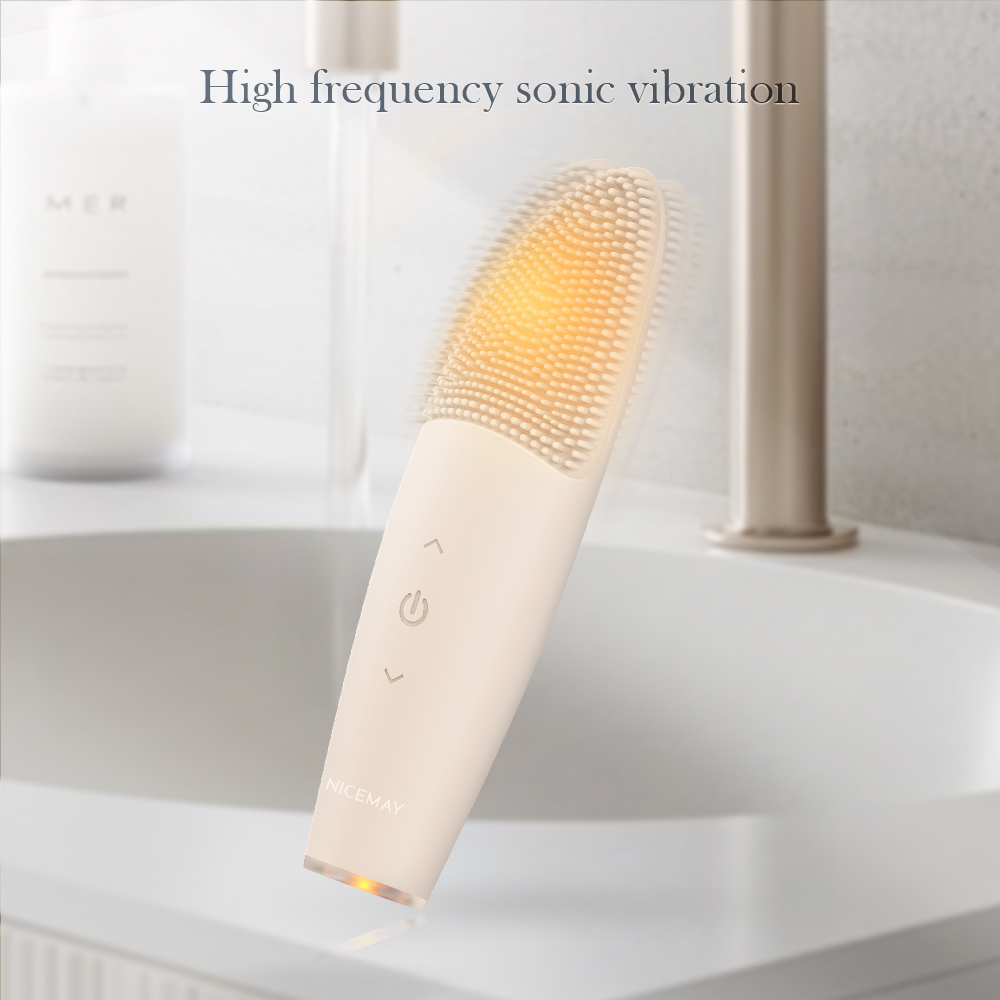
For readers weighing exactly this decision, the NICEMAY MR-1969 Compact Silicone Facial Brush is a practical entry point — it’s built around soft, non-porous silicone nubs sized for daily sensitive-skin use, with a compact form factor suited to travel and small bathroom counters. It reflects the core criteria above without overcomplicating the routine: rinse, cleanse, air-dry.
If you want the full mechanics of how these devices work before buying, our guide on All You Need to Know About Silicone Facial Cleansing Brushes covers device anatomy and vibration specs in more depth. And if you already own one, How to Deep Cleanse with a Silicone Brush Without Breaking the Skin Barrier walks through the technique that prevents over-cleansing.
FAQs About Face Brush vs Manual Brush
Is a silicone face brush actually more hygienic than a manual bristle brush?
Can I use a silicone cleansing brush every day?
Do manual brushes exfoliate better than silicone brushes?
How often should I replace a manual bristle brush head?
Which is better for acne-prone skin, silicone or bristle brushes?
Please fill in your email in the form and we’ll get back to assist you soon!