


Silicone Face Scrubber vs. Loofah: Hygiene & Effectiveness

When it comes to cleansing your face, the tool you choose matters as much as the cleanser itself. Silicone face scrubbers and loofahs both promise cleaner, smoother skin — but they work very differently, and one has a clear hygiene advantage.
The short answer: silicone wins on hygiene and longevity; loofahs deliver more intense exfoliation but harbor bacteria fast. Which one belongs in your routine depends on your skin type, sensitivity level, and how much maintenance you’re willing to do.

Silicone Face Scrubber vs. Loofah: Head-to-Head
| Category | Silicone Scrubber | Loofah |
|---|---|---|
| Hygiene | ✦ Excellent — non-porous, resists bacterial growth | Poor — porous fibers trap moisture & dead skin |
| Exfoliation | Gentle, surface-level; ideal for daily use | ✦ Stronger — deeper scrubbing action |
| Lifespan | ✦ Months to years with proper care | 2–4 weeks before bacteria risk becomes significant |
| Sensitive Skin | ✦ Recommended — soft bristles, low abrasion | Often too harsh; risk of micro-tears |
| Lather | Good lather with most cleansers | ✦ Richer foam, especially with mesh types |
| Eco-Impact | Durable = less waste over time | Natural loofahs are biodegradable; plastic mesh is not |
| Cost Over Time | ✦ More economical long-term | Cheap upfront, but frequent replacements add up |
Why Hygiene Is the Deciding Factor for Facial Use?
Your face is not your body. The skin is thinner, more reactive, and directly prone to breakouts — which makes your cleansing tool’s hygiene profile critical.
The Bacteria Problem with Loofahs
Loofahs — whether natural plant fiber or plastic mesh — have an inherently porous structure. After each use, warm water, soap residue, and dead skin cells become trapped inside. That damp, warm environment is ideal for bacterial colonization. Studies have found multiple species of bacteria, including Pseudomonas aeruginosa, present in regularly used loofahs. For body use this is already a concern; for your face, it’s a bigger risk.
How Quickly Does a Loofah Become Unsafe?
Dermatologists generally recommend replacing loofahs every 2–4 weeks. Most people stretch them much longer. Even with regular rinsing and air-drying, the interior fiber structure cannot be fully sanitized between uses.
Why Silicone Face Scrubbers Stay Cleaner
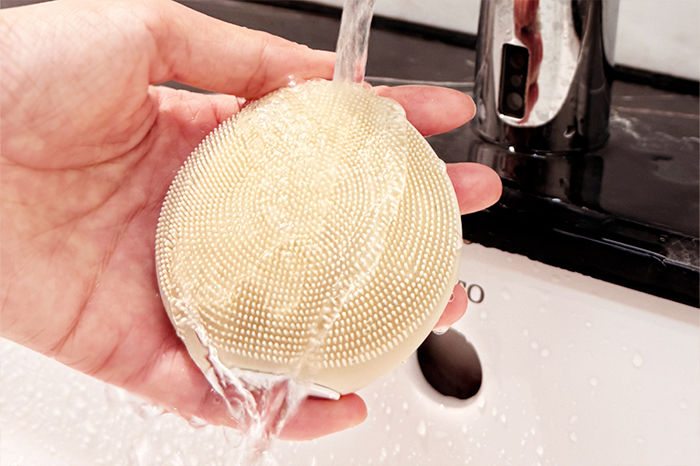
Medical-grade silicone is non-porous. There are no interior channels for bacteria to colonize. After a rinse, it air-dries quickly and retains no organic residue. A once-weekly deep clean (boiling, dishwasher, or a diluted cleanser soak) keeps it genuinely hygienic for months.


Exfoliation Effectiveness: Depth vs. Daily Safety
Both tools exfoliate — but not at the same level, and not with the same risk profile.
What a Silicone Scrubber Actually Does?
Silicone bristles work through gentle mechanical stimulation. They loosen surface-level dead skin cells, boost circulation, and help your cleanser penetrate more effectively — without disrupting the skin barrier. This makes them safe for daily use on most skin types, including reactive or acne-prone skin.
What a Loofah Actually Does?
A loofah delivers a more aggressive scrub. For the body — rough elbows, knees, and feet — that intensity is often beneficial. For the face, it can cause micro-abrasions that compromise the skin barrier, trigger inflammation, or worsen breakouts. Natural loofahs especially vary in coarseness and can be unpredictably harsh.
The Exfoliation Verdict for Your Face
If you need deep exfoliation as part of your facial routine, a targeted chemical exfoliant (AHA/BHA) combined with a silicone scrubber is both safer and more effective than a loofah. Reserve the loofah for below the neck.
Which Is Right for Your Skin Type?
Sensitive Skin
Silicone's soft bristles won't disrupt the barrier. Loofahs are too unpredictable in texture.
Acne-Prone
Hygiene is paramount. Silicone won't reintroduce bacteria to active breakouts the way a damp loofah will.
Oily Skin
Daily silicone use helps manage sebum without over-stripping — a common problem with aggressive scrubbing.
Normal / Body Use
For body scrubbing where tougher exfoliation is wanted and facial sensitivity isn't a concern.
Dry / Mature Skin
Loofahs can strip the moisture barrier further. Gentle silicone stimulation supports circulation without dehydrating.
Combination Skin
A silicone scrubber works across both zones. Use a loofah only if body exfoliation is your goal.
Maintenance Reality: What Each Tool Actually Demands
Knowing the upkeep requirements before you buy prevents regret.
Keeping a Silicone Face Scrubber Clean
- Rinse under warm running water immediately after each use to remove cleanser and skin residue.
- Stand it upright or hang it to air-dry — never lay it face-down in a puddle of water.
- Once a week, soak in diluted antibacterial soap or run it through the dishwasher top rack.
- Inspect the bristles monthly for wear. Replace the scrubber if bristles flatten or degrade.
Maintaining a Loofah (If You Choose to Use One)
- Hang in a dry, ventilated spot outside the shower, not inside where humidity stays high.
- Soak in a diluted bleach solution (1 part bleach to 9 parts water) weekly to slow bacterial growth.
- Replace unconditionally every 2–4 weeks regardless of appearance — internal bacteria aren’t visible.
The maintenance commitment for loofahs is significantly higher and easy to lapse on — which is exactly why dermatologists tend to discourage them for regular facial use.
Exploring Other Silicone Cleansing Tool Options
If you’re leaning toward silicone, it’s worth knowing how different silicone tool designs compare before committing.
Manual silicone face scrubbers are the most straightforward option — affordable, low-maintenance, and easy to control. But there are also motorized silicone cleansing brushes that add oscillation or vibration to the equation, offering a more active cleanse without sacrificing hygiene. The right choice depends on how much stimulation your skin can tolerate and what your cleansing goals are.

Please fill in your email in the form and we’ll get back to assist you soon!