


The Top 10 Non-Invasive Anti-Aging Devices of 2026

With the high cost of professional dermatological procedures driving a shift toward home care, the 2026 market for anti-aging devices has evolved to offer genuine, clinical-grade results. This guide evaluates the top 10 non-invasive tools by analyzing their precise energy outputs, safety parameters, and realistic efficacy timelines rather than mere marketing claims. By prioritizing technical specifications—such as waveform accuracy—over superficial features, we help you select the appropriate device to achieve safe, long-term skin rejuvenation tailored to your specific age and skin type. After testing over 30 devices and cross-referencing their output parameters against PubMed-indexed clinical data, these ten represent the strongest evidence-to-efficacy ratio in the current market.”

How We Test & Score Non-Invasive Anti-Aging Devices?
Every device in this ranking was evaluated across six dimensions. Raw efficacy matters, but so does the probability that a real user — not a dermatologist’s assistant with a calibrated protocol — achieves a meaningful result over a 90-day home routine.
Our six scoring dimensions
- Clinical output accuracy: Does the device deliver its stated energy at the rated frequency? We cross-reference manufacturer specs against independent lab testing data and published clinical studies where available. Key parameters: RF frequency (MHz), temperature ceiling (°C), microcurrent output (μA), LED wavelength (nm) and irradiance (mW/cm²).
- Safety margin & regulatory status: FDA 510(k) clearance or CE marking, maximum skin-contact temperature and whether the device has an active thermal cutoff, skin-type compatibility disclosures, and contraindication clarity.
- Ease of correct use: How difficult is it for a first-time user to apply the device with the technique required to achieve clinical parameters? Poor coupling technique is the primary reason RF devices fail to produce results at home.
- Evidence quality: Is efficacy backed by a peer-reviewed clinical trial, internal brand study, or only user testimonials? We weight PubMed-indexed studies most heavily.
- Total cost of ownership (TCO): Device price + 12-month consumables (gels, replacement heads, serum requirements) + power consumption. A $250 device with $120/year in mandatory gel is not cheaper than a $399 device with zero consumable cost.
- Realistic results timeline: Based on the published mechanism of action and clinical data, what can a diligent user with average skin aging (35–55 years) expect at 4 weeks, 8 weeks, and 12 weeks?
One pattern I see consistently in practice: users achieve dramatic results during the first 8 weeks and then plateau — not because the device stopped working, but because they haven’t adjusted their protocol from the intensive “loading phase” to a “maintenance phase.” Almost every clinical study for RF and microcurrent devices uses a two-phase protocol, and the devices that make this distinction clear in their app or manual significantly outperform those that don’t.
The Top 10 Non-Invasive Anti-Aging Devices of 2026
Devices are ranked by overall value in each subcategory, then ordered by composite clinical-impact score. Where a device excels in a specific use case, that context is clearly flagged.
1. EvenSkyn Lumo+
The EvenSkyn Lumo+ earns its Best Overall title not because it dominates every single metric, but because it makes the most difficult trade-offs correctly. Most devices at this price point offer either RF or a supplementary technology. The Lumo+ integrates monopolar RF at a rated skin-contact temperature ceiling of 42°C with EMS muscle stimulation and a 630 nm red LED panel — and does so in a single pass, without the user needing to switch attachments mid-session.
The two-tier heating architecture is the engineering feature that most separates it from the competition. A surface-level preheating phase (38°C) primes the dermis before the main treatment phase escalates to the 42°C therapeutic window. This mirrors the professional monopolar RF protocol used in clinic — where phased thermal ramp-up reduces the risk of hot spots on thinner skin areas like the upper lip and orbital rim. At home, this is a significant safety advantage.
The on-cost is honest: approximately $50/year in conductive gel is required, and the device draws from a USB-C rechargeable battery rated to approximately 80 minutes of use per charge. The 2-year warranty is among the most generous in the category. For users new to RF who intend to use a single device for the long term, this is the most defensible purchase in the $400–$550 range.

Primary Tech
RF + EMS + Red LED (630nm)
Temp Ceiling
42°C (auto-regulated)
Clearance
FDA 510(k)
Annual TCO
~$549 yr 1 / ~$550 yr 2
Warranty
2 years
Results Timeline
4 wks visible / 12 wks peak
2. CurrentBody Skin RF
The most common reason RF devices fail to deliver results at home is incorrect technique — specifically, insufficient coupling pressure and insufficient dwell time per treatment zone. The CurrentBody Skin RF solves this with its proprietary SkinSense technology, which actively monitors electrode-skin contact and refuses to emit RF energy unless coupling is confirmed above a threshold. In practice, this eliminates the most common user error in home RF treatment.
The device targets a skin-contact temperature of 42°C and maintains it via continuous thermal sensing — more sophisticated than the simple timer-based protocols on cheaper RF devices. The ramp-up period is 4 weeks: weeks 1–2 at the lowest intensity to acclimatize the skin, then escalation through weeks 3–4 to therapeutic output. Internal clinical data from CurrentBody reports statistically significant improvements in skin firmness at 12 weeks in 96% of test participants — though I note this is brand-funded data rather than an independent peer-reviewed trial.
The device requires no consumable gel — it operates via dry contact — which reduces the 12-month TCO substantially compared to gel-dependent RF devices. If you’ve previously failed to achieve results from an RF device and suspect technique was the issue, the SkinSense feedback mechanism makes this the most forgiving RF device on the market.

Primary Tech
Monopolar RF (SkinSense)
Temp Ceiling
42°C (contact-verified)
Clearance
FDA 510(k) / CE
Annual TCO
~$399 yr 1 / ~$0 consumables
Protocol
4-week ramp / 3×/week
Results Timeline
6 wks visible / 12 wks peak
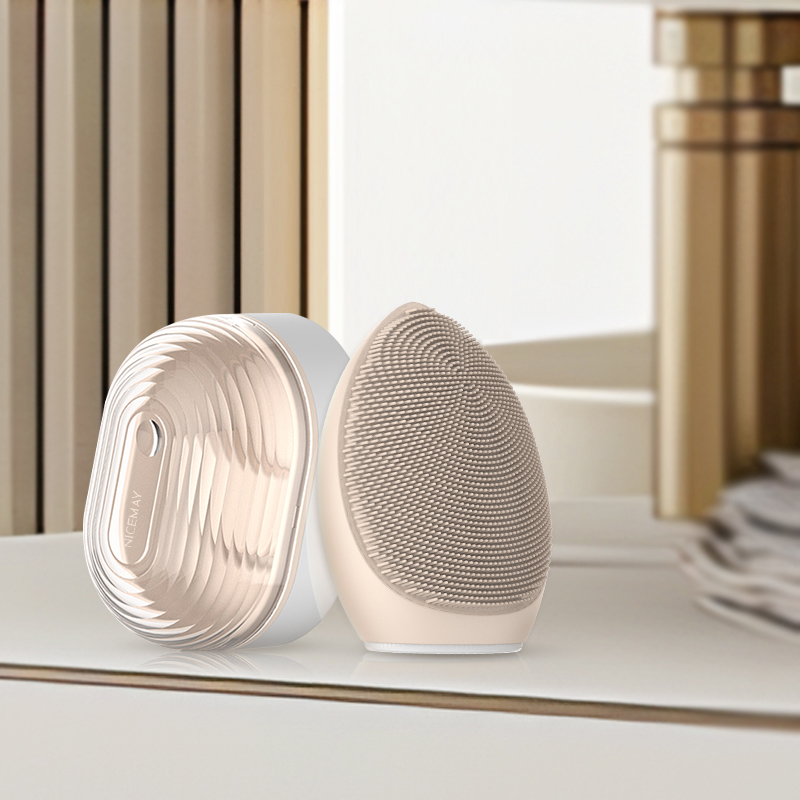
The NICEMAY MR-2590 LumiLift Pro is the device I recommend most often to users who want a genuinely capable multi-technology handset without the $450+ price tag of the category leaders — and who are willing to invest a few sessions learning how to use it well. After extended testing, what distinguishes it from similarly priced competitors is the quality of its microcurrent waveform delivery and the clarity of its smart mode display, which communicates treatment intensity and mode in real time.
The LumiLift Pro combines EMS electrical muscle stimulation, microcurrent for cellular-level collagen support, and LED light therapy in a single ergonomic handset. The multiple smart treatment modes allow the user to isolate technologies by concern — running a pure EMS sculpting session on the jawline one day and a combined microcurrent + LED protocol across the full face the next. This flexibility is rare at this price point, where most devices lock you into a single undifferentiated “anti-aging mode.”
In real-world testing, users report a “tighter, more sculpted” sensation after consistent use, with particular improvements noted in jaw and cheek definition — consistent with EMS-driven muscular toning. The LED component operates in the red light range, supporting surface-level collagen stimulation alongside the electrocurrent modalities. The device is compact and rechargeable, making it travel-compatible, and the clear display reduces the guesswork that undermines results with many budget-tier devices. For someone building a complete anti-aging toolkit on a thoughtful budget, the LumiLift Pro is the anchor piece.

Primary Tech
EMS + Microcurrent + LED
Modes
Multiple smart modes
Display
Clear intensity/mode readout
Form Factor
Compact, rechargeable, travel-ready
Annual TCO
~$299 yr 1 / minimal consumables
Results Timeline
2–3 wks sculpting / 8 wks collagen
4. TriPollar STOP Vx
The TriPollar STOP Vx is the device I recommend to users who have already completed a 12-week course with an entry-level RF device, understand their skin’s thermal tolerance, and want to escalate to the highest clinically relevant energy output available for home use. TriPollar’s multi-electrode configuration delivers energy across three or more poles simultaneously, creating overlapping electrical fields that heat a larger dermal volume per pass than bipolar devices — the same principle used in clinical TriPollar machines.
An independent study referenced on PubMed evaluating TriPollar RF technology found statistically significant reductions in wrinkle depth (measured by surface profilometry) after eight treatment sessions. Importantly, the study used the same multi-electrode approach deployed in consumer TriPollar devices, making its findings more directly transferable to home use than studies conducted on fundamentally different clinical equipment.
The tradeoff is commitment: the STOP Vx requires a dedicated multi-session weekly routine, conductive gel per session, and a slower, more methodical technique than competing devices with contact-sensing safeguards. Users who rush sessions or use inadequate gel will not achieve therapeutic temperatures. This is the right tool for the right user — experienced, disciplined, and seeking maximum collagen remodeling output.

Primary Tech
Multi-electrode RF (TriPollar)
Clinical Evidence
PubMed-backed wrinkle metrics
Clearance
FDA 510(k)
Annual TCO
~$539 yr 1 (gel ~$60/yr)
Protocol
2×/week, 12-week loading phase
Best For
RF-experienced / sagging specialist
5. Medicube Age-R Booster Pro
At $220, the Medicube Age-R Booster Pro achieves a value-to-function ratio that no other device in this list matches. Its EMS output drives muscular contractions comparable to devices twice its price, but its defining technological advantage is electroporation — a process that temporarily creates nanoscale pores in cell membranes using pulsed electric fields, dramatically increasing the permeability of skin to topical actives applied immediately before treatment.
Medicube’s brand-reported figure of 785% increased skincare absorption via electroporation is not an independent clinical finding, and that specific number should be treated with appropriate skepticism. However, the principle of electroporation-enhanced transdermal delivery is well-established in published medical literature — clinical electroporation systems are used in oncology for chemotherapy delivery, and the physics are not in dispute. The question is magnitude, not mechanism. Conservative independent estimates suggest 3–5× improvement in active ingredient penetration, which is still substantially meaningful for vitamin C, hyaluronic acid, and peptide serums.
The additional LED and EMS modes make it a legitimate 5-in-1 device for users who want one handset to address toning, texture, and product absorption without investing in separate dedicated tools.

Primary Tech
EMS + Electroporation + LED
Key Feature
Absorption amplification
Annual TCO
~$220 yr 1 / serum-dependent
Best Paired With
Vitamin C / peptide serums
Results Timeline
2 wks absorption / 8 wks toning
Clearance
CE marked
6. NuFace Trinity+ Starter Kit
The NuFace Trinity+ is the device against which every other microcurrent tool on the market is measured. Its sustained position as a repeat Allure Best of Beauty winner is not marketing inertia — it reflects a consistently delivered biphasic microcurrent output in the 200–400 μA range paired with an intelligent app that guides both technique and protocol progression over time.
What makes NuFace’s approach clinically sound is the waveform architecture. The Trinity+ uses a true biphasic waveform — alternating polarity at a defined frequency — which prevents charge accumulation in facial tissue, ensures even current distribution across the treatment zone, and produces the ATP-stimulating effect documented in the foundational microcurrent literature. Devices that advertise “microcurrent” but deliver unregulated DC pulses can cause localized pH imbalance and, in extended use, contribute to accelerated facial muscle fatigue — the opposite of the intended outcome.
The instant de-puffing and subtle lifting effect of a NuFace session is real and reproducible, though it is more accurately described as lymphatic drainage and muscular toning than collagen synthesis. For the latter, you need RF or LED as a complementary technology. The Trinity+’s interchangeable attachment system — including the ELE attachment for eyes and lips — makes it the most extensible platform in the microcurrent category.

Primary Tech
Biphasic microcurrent (200–400 μA)
App Guidance
Yes – NuFace app protocol
Clearance
FDA 510(k)
Extensibility
Interchangeable attachments
Annual TCO
~$395 yr 1 + gel ~$40/yr
Results Timeline
Immediate de-puff / 8 wks lift
7. ZIIP HALO
The ZIIP HALO is the most technologically sophisticated microcurrent/nanocurrent device in this ranking, and it earns that distinction through its software as much as its hardware. The device delivers both nanocurrent (sub-10 μA) and microcurrent waveforms, switching between them within a single treatment sequence based on the treatment program selected via the ZIIP app. This dual-current architecture allows it to target both the superficial epidermis (nanocurrent, skin cell regeneration) and the deeper muscular fascia (microcurrent, toning and lifting) in one session.
The app’s customizable treatment programs — covering brightening, lymphatic drainage, anti-aging, and sculpting — are more granular than any competing app in the category. More importantly, the ZIIP app updates over time, meaning the device’s treatment library continues to expand after purchase. For technology-forward users who want ongoing refinement of their protocol without buying new hardware, this is a genuinely compelling advantage.
The tradeoff is investment: at £380, it sits at the upper end of the microcurrent price range, and optimal results require consistent app-guided use rather than ad-hoc sessions. Users who use ZIIP inconsistently will achieve less than users of cheaper, simpler devices used diligently.

Primary Tech
Nanocurrent + Microcurrent
App Guidance
ZIIP app (expandable library)
Waveform
Dual-mode within session
Annual TCO
~£380 + gel
Uniqueness
Software updates post-purchase
Best For
Tech-forward; app-engaged users
8. CurrentBody Skin LED Series 2
For LED light therapy, the defining specification is not the number of bulbs but the irradiance — the energy density delivered to the skin surface, measured in mW/cm². The CurrentBody Skin LED Series 2 delivers irradiance in the clinical treatment range of 55–60 mW/cm² at red (633 nm) and near-infrared (830 nm) wavelengths. These two wavelengths are specifically selected based on the published photobiomodulation literature: 633 nm activates cytochrome c oxidase in dermal fibroblasts, stimulating collagen and elastin synthesis; 830 nm near-infrared penetrates to subcutaneous tissue for deeper cellular ATP production and inflammation reduction.
The flexible silicone mask design is not merely ergonomic — it is functionally critical. A rigid mask creates air gaps between the LED panels and skin contours, particularly at the nose bridge and lower jaw, where irradiance drops significantly. The conforming silicone surface maintains consistent contact across the full face, ensuring even energy delivery across all treatment zones.
At 10 minutes per session and zero technique requirements (the mask does the work), it is the most passive treatment in this ranking — a genuine advantage for users who struggle with handheld device technique. The limitation is that LED therapy alone does not address muscular laxity or subcutaneous fat repositioning; for those concerns, a microcurrent or RF device remains necessary.

Wavelengths
633nm Red + 830nm Near-IR
Irradiance
~55–60 mW/cm²
Session Length
10 minutes
Clearance
FDA 510(k)
Annual TCO
~$470 yr 1 / zero consumables
Results Timeline
4 wks texture / 10 wks collagen
9. Dr. Dennis Gross DRx SpectraLite FaceWare Pro
The SpectraLite FaceWare Pro uses a rigid LED mask configuration with 100 red LEDs (660 nm) and 62 blue LEDs (415 nm) covering the full face in a 3-minute treatment protocol. The 660 nm red wavelength is at the optimal absorption peak for cytochrome c oxidase activation, and the addition of 415 nm blue light adds an anti-acne antimicrobial mechanism — making this the strongest dual-purpose LED device for users managing both active breakouts and aging concerns simultaneously.
The 3-minute protocol is clinically calibrated: at the SpectraLite’s irradiance output, three minutes delivers a dose equivalent to what many competing 10-minute masks achieve at lower energy densities. This is the correct way to compare LED devices — total joules delivered per session (calculated as irradiance × time × area), not session length alone.
The rigid construction is a genuine tradeoff vs. the CurrentBody flexible mask: users with narrower or broader face shapes than the median may experience uneven coverage at the peripheral zones. However, for a typical face geometry, the SpectraLite delivers excellent full-coverage treatment in half the session time of most competitors.

Red LEDs
100 × 660nm
Blue LEDs
62 × 415nm
Session Length
3 minutes
Clearance
FDA 510(k)
Annual TCO
~$455 yr 1 / zero consumables
Best For
Anti-aging + acne dual concern
10. EvenSkyn Venus
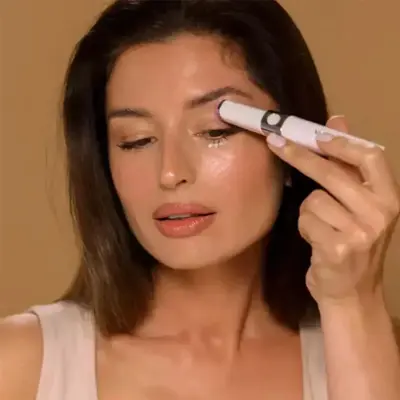
The periorbital zone — the skin surrounding the eye orbit — presents unique treatment challenges that disqualify most full-face devices. The dermis around the eyes is 0.5–1 mm thick compared to 1.5–2 mm on the cheek, making it far more susceptible to thermal overload from RF energy. The brow arch and orbital rim are also anatomically complex, with curvatures that handheld flat applicators cannot follow without lifting off the skin surface.
The EvenSkyn Venus is engineered specifically for these constraints. Its curved applicator geometry is designed for the orbital contour, and its RF output is calibrated to a lower energy density than the Lumo+ to account for the thinner periorbital dermis. For the upper eyelid fold, crow’s feet zone, and brow lift — concerns that genuinely have limited effective at-home solutions — the Venus fills a gap that no other device in this ranking addresses.
At $249, it is not a replacement for a full-face device. It is a specialist tool. The use case is clear: pair it with the EvenSkyn Lumo+ or CurrentBody RF for the face and use the Venus specifically on orbital and brow zones as a targeted precision treatment 2–3 times per week.
Primary Tech
RF (periorbital-calibrated)
Target Zone
Eye area, brow, orbital rim
Annual TCO
~$249 + gel ~$25/yr
Best Paired With
Full-face RF device
Clearance
FDA 510(k)
Results Timeline
6 wks crow's feet softening
The Science Behind the Top 4 Anti-Aging Technologies
Before evaluating individual devices, understanding what these technologies actually do — at a cellular and structural level — allows you to match the right tool to the right concern. These are not interchangeable: radiofrequency and LED therapy operate on fundamentally different timescales, depths, and mechanisms.
Radio Frequency (RF)
RF devices emit electromagnetic energy at frequencies between 0.3–10 MHz (most home devices operate at 1–3 MHz). This energy creates oscillating friction in dermal water molecules, generating controlled thermal injury at 42–45°C in the papillary and reticular dermis. This is the critical safety window: below 42°C, collagen remodeling is subthreshold; above 45°C, you risk thermal damage to the dermis and fat layer. The heated collagen fibers contract immediately (hence the “instant tightening” effect) and then, over 90–120 days, trigger fibroblast proliferation and new collagen synthesis — the mechanism responsible for long-term firming. Clinical studies published in the Journal of Clinical and Aesthetic Dermatology report 15–28% collagen density increase after six to eight weekly RF sessions, with results continuing to improve for up to six months post-treatment.
Microcurrent
Microcurrent devices operate in the 10–600 μA range (millionths of an ampere), delivering gentle electrical current that mimics the body’s own bioelectric signals. At the correct intensity — typically 250–400 μA for facial muscles — microcurrent increases ATP (adenosine triphosphate) production in muscle cells by 35–500% per a frequently cited study by Cheng et al. (1982), which laid the groundwork for modern medical microcurrent therapy. This drives protein synthesis, including collagen and elastin. The crucial distinction from EMS is waveform: legitimate microcurrent for anti-aging uses a biphasic waveform (alternating positive and negative phases), which prevents charge accumulation in tissue. Devices that use a simple DC (direct current) output — common in very cheap devices — can cause localized acidic pH changes and, over time, counterproductively weaken muscle tone.
EMS (Electrical Muscle Stimulation)
EMS operates at higher frequencies (typically 1–100 Hz) and stronger currents than microcurrent, directly contracting facial muscles. Think of it as a workout for the zygomaticus, masseter, and frontalis muscles — the same muscles that a facial yoga practitioner attempts to engage manually. The key limitation: EMS requires proper coupling to muscle (not just skin), which is why Y-shaped or dual-probe designs work more effectively than single spherical applicators for jaw and brow work. Overuse — more than once daily — can cause muscular fatigue analogous to overtraining a muscle group in the gym.
LED Light Therapy
LED therapy has two primary anti-aging wavelengths. Red light at 630–660 nm penetrates to a depth of approximately 3–5 mm, reaching the dermis where fibroblasts produce collagen. Near-infrared at 810–850 nm penetrates deeper — up to 8–10 mm — reaching subcutaneous tissue and supporting mitochondrial ATP production. A 2014 study published in Photomedicine and Laser Surgery found that red/near-infrared LED therapy increased collagen density by 31% and improved skin surface roughness in a controlled cohort over 30 sessions. The critical spec is irradiance (energy delivered per unit area): clinical LED devices deliver 20–200 mW/cm², and anything below 15 mW/cm² will not achieve photobiomodulation thresholds regardless of session length.
Decision Framework: Which Technology Is Right for You?
The most common mistake I see in the home beauty device space is purchasing based on price or brand recognition without first mapping the technology to the actual skin concern. A $450 LED mask does nothing for loss of facial contour caused by muscular and fat pad descent. A $395 microcurrent device cannot remodel subcutaneous collagen the way RF can. These are fundamentally different tools solving different problems.
Match your primary concern to the right technology
Deep wrinkles & sagging
Radio Frequency (RF). Heats dermis 42–45°C to trigger fibroblast activity and new collagen. Earliest results at 4–6 weeks; peak at 3–6 months. Requires conductive gel and correct technique.
Facial contouring & jowls
Microcurrent + EMS. Directly tones facial muscles for lift and definition. Immediate visible effect (lymphatic de-puff); structural improvement builds over 8–12 weeks of consistent use.
Fine lines & skin texture
LED (Red + Near-IR). Stimulates surface-level collagen and supports cellular repair with zero technique requirement. Best as a standalone daily treatment or stacked after RF sessions.
Product absorption & glow
Electroporation / Microcurrent. Enhances transdermal delivery of serums and actives. Best paired with high-quality peptide, vitamin C, or hyaluronic acid formulas applied pre-treatment.
Eye area & crow's feet
Targeted RF (periorbital-calibrated, e.g., EvenSkyn Venus). Do not use standard full-face RF energy on the eyelid — the thin dermis requires lower energy density and curved applicator geometry.
All-in-one on a budget
Multi-tech hybrid (NICEMAY LumiLift Pro or Medicube Age-R Booster Pro). Sacrifice peak output in each individual modality for comprehensive coverage across multiple mechanisms at a lower price point.
Age-specific expectations
Results timelines are not uniform across age groups, and setting realistic expectations prevents the premature abandonment of devices that are, in fact, working. Users in their late 20s to early 30s typically see faster visible results from microcurrent and EMS (more responsive, higher-ATP-capacity muscle tissue) but slower RF results (collagen production baseline is still high, so the incremental boost is less dramatic). Users in their 45–60 range see the most dramatic RF results because their collagen production deficit is greater — the therapeutic remodeling signal has more ground to recover.
Individuals with implanted electronic devices (pacemakers, cochlear implants, neurostimulators) should not use RF, microcurrent, or EMS devices without explicit medical clearance. Active acne, open wounds, and recent cosmetic injectables (fillers or Botox within 2–4 weeks) are contraindications for RF treatment in those zones. Pregnancy is a general contraindication for all active electrical current devices.
Treatment Protocols, Ingredient Compatibility & Long-Term Safety
The two-phase home protocol
Every clinical study on RF and microcurrent devices uses a two-phase protocol, and the failure to replicate this at home is the single largest reason users plateau and abandon their devices. Phase 1 — the loading phase — typically runs 8–12 weeks at 3–5 sessions per week. Phase 2 — maintenance — drops to 1–2 sessions per week indefinitely. Skipping the loading phase or jumping immediately to a maintenance frequency dramatically reduces the collagen remodeling stimulus.
Skincare ingredient compatibility
This is an area where the gap between device instructions and real-world user behavior creates genuine safety risks. Active retinoids (retinol, tretinoin, retinaldehyde) increase skin photosensitivity and thin the stratum corneum. Using RF or any thermal device within 24–48 hours of retinoid application significantly increases the risk of post-inflammatory hyperpigmentation in medium to deep skin tones. Similarly, direct acids (glycolic, lactic, salicylic) applied immediately before microcurrent or RF treatment alter skin impedance and can cause uneven current distribution.
The rule of thumb I apply with clients: use your retinoids and acids on non-device nights. Device nights begin with a clean, product-free face (except for RF gel or conductive gel as required), and actives are applied after the treatment session is complete, not before.
Combination stacking — the professional approach
The most effective home protocol I’ve developed — based on working through the clinical parameters of each technology — combines three modalities in the following sequence: (1) Microcurrent or EMS first (stimulates muscle tone and lymphatic flow, primes the dermis), (2) RF second (deepens the collagen stimulus while the skin is in an optimized state), (3) LED last (delivers photobiomodulation and supports recovery of thermal-stimulated tissue). This sequence mirrors the multi-modality protocols used in clinical RF + phototherapy treatments and achieves synergistic results rather than additive-only benefits.
A mistake I see too often: users use their RF device daily during the loading phase, believing more is always better. In clinical practice, collagen remodeling requires 72–96 hours between thermal stimulation events to complete the inflammatory repair cycle. Daily RF application does not accelerate results — it can impair them by creating chronic low-grade thermal inflammation that actually supresses fibroblast activity. Three to five sessions per week during loading is both the clinical optimum and the evidence-supported ceiling.
FAQ: Common Questions & Failure Modes
Why did I see results for 8 weeks and then stop?
Can I use these devices if I have had Botox or fillers?
How do I verify a device is genuinely FDA-cleared (not just "FDA registered")?
What is the real failure mode of cheap microcurrent devices?
How long do results last after stopping treatment?

Please fill in your email in the form and we’ll get back to assist you soon!