


The 10 Best Jawline Contouring Devices for Home Use in 2026


Why Wireless LED Masks Have Become the Standard and What to Demand From Them?
The shift from wired to wireless LED masks isn’t just about convenience. It has fundamental implications for how closely the mask conforms to facial contours, and conformity is directly linked to therapeutic outcomes. Wired masks are tethered to power bricks that constrain movement and create tension on the device, often pulling it away from curved areas like the nasiolabial folds and temples — precisely where many users see the least improvement.
Wireless masks, by contrast, allow you to recline, tilt, and adopt a genuinely relaxed position during a 10–20 minute session. That matters: facial muscle tension during treatment reduces blood microcirculation to the dermis, which partially counteracts the vasodilatory effects of red light (630–660 nm) that drive collagen synthesis. A relaxed, hands-free session isn’t a luxury feature; it’s a clinical advantage.
However, not all wireless masks are equal in how they manage power delivery. Budget wireless devices often use low-capacity batteries that cause voltage drop mid-session — meaning the irradiance at minute 15 may be 20–30% lower than at minute one. The best devices in this guide use constant-current drivers that maintain stable LED output throughout.
The Wavelengths That Actually Matter
LED light therapy is only therapeutic when you’re getting the right wavelengths at the right irradiance. The peer-reviewed consensus around photobiomodulation (PBM) therapy identifies three primary therapeutic windows:
| WAVELENGTH | PRIMARY TARGET | PENETRATION DEPTH | CLINICAL BENEFIT |
|---|---|---|---|
| 415–420 nm (Blue) | P. acnes bacteria | ~0.5mm (epidermis) | Destroys porphyrins; reduces inflammatory acne |
| 630–660 nm (Red) | Fibroblasts | ~2–3 mm (dermis) | Stimulates collagen Type I & III; reduces wrinkles |
| 830–850 nm (Near-Infrared) | Mitochondria / deeper dermis | ~5–10 mm | ATP production, tissue repair, inflammation reduction |
| 1072 nm (Deep Near-Infrared) | Subcutaneous tissue | ~20+ mm | Deep cellular regeneration; emerging anti-aging data |
A common buyer mistake is prioritizing LED count over wavelength accuracy. A mask with 200 LEDs at 620 nm delivers inferior collagen stimulation compared to a mask with 100 LEDs at 633 nm — because 633 nm sits in the absorption peak of cytochrome c oxidase in fibroblasts. Wavelength precision matters more than bulb quantity.
Wireless vs Wired LED Face Masks – Pros, Cons, and the Real Differences
How Important Is Irradiance in an LED Mask for Face?
The 10 Best Wireless LED Face Masks in 2026, Ranked
1. CurrentBody Skin LED Light Therapy Mask — Series 2
The Series 2 earns the top spot because it does something no other consumer mask currently offers: triple-wavelength delivery including 1072 nm deep near-infrared — a frequency with emerging clinical evidence for subcutaneous collagen remodeling at depths of 20+ mm, far beyond what standard 830 nm NIR reaches. In practice, this means the mask doesn’t just surface-level stimulate; it potentially addresses the deeper structural collagen decline that becomes the primary aging concern from your mid-30s onward.
The flexible silicone body is not just ergonomically pleasant — it’s clinically significant. Research on photobiomodulation consistently finds that contact distance between LED and skin is the single greatest determinant of delivered irradiance. CurrentBody’s body-hugging design maintains a near-zero air gap across the forehead, cheeks, and chin simultaneously, which cheaper rigid masks simply cannot achieve. The result is dramatically more consistent energy delivery across the full treatment area.
One genuine limitation: at $470 it’s an investment, and the 10-minute session requires consistency to see results. Clinical studies on 633 nm red light typically show measurable wrinkle reduction after 8–12 weeks of 3–5 sessions per week. Patience is required — but the platform for that patience is the strongest available.

Wavelengths
633 nm / 830 nm / 1072 nm
LED Count
132+ medical-grade LEDs
Clearance
FDA-cleared
Session Length
10 minutes
Flexibility
Medical-grade flexible silicone
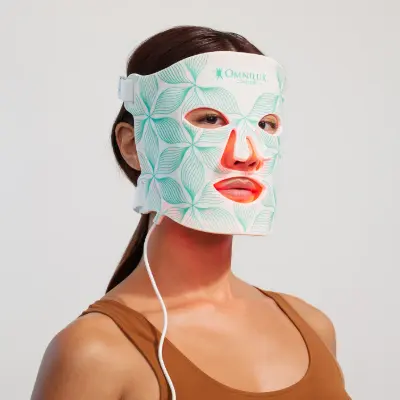
2. Omnilux Contour Face
Omnilux has the deepest body of independent clinical validation of any consumer LED mask on this list. Its 633 nm and 830 nm dual-wavelength configuration isn’t a proprietary invention — it maps directly onto the most studied PBM frequencies in peer-reviewed dermatology literature, meaning the clinical claims are backed by decades of third-party research, not just in-house trials. Published studies using Omnilux devices report statistically significant reductions in Fitzpatrick wrinkle scale scores after 9 weeks of consistent use.
The flexible silicone construction mirrors the CurrentBody approach. Where Omnilux leads is in dermatologist adoption and professional credibility — it’s the mask most often found in aesthetic clinics and most commonly cited in physician-led skincare protocols. For someone who wants the most vetted, safest choice with the longest track record, Omnilux edges out everything in terms of confidence-to-investment ratio.
It loses the number-one spot only because it lacks the 1072 nm deep NIR wavelength introduced in the CurrentBody Series 2 — an advancing frontier that the Omnilux architecture currently doesn’t address.
Wavelengths
633 nm / 830 nm
LED Count
132 LEDs
Clearance
FDA-cleared
Session Length
10 minutes
Flexibility
Flexible medical silicone
The NICEMAY MR-2308 is the mask that most recommendation guides miss — and it’s a significant oversight. What sets it apart is its multi-wavelength simultaneous delivery: red, blue, and near-infrared LEDs that allow the device to address three distinct skin concerns within a single session rather than requiring mode-switching or separate devices. For users dealing with both acne inflammation (420 nm blue) and early fine lines (630 nm red), this is not a minor convenience — it’s a fundamentally different treatment protocol.
The build quality punches above its price class. The mask is noticeably lighter than most competitors, which matters for comfort during 15–20 minute sessions; heavy masks that press uncomfortably onto the nose bridge are among the leading causes of protocol dropout. The wireless design maintains freedom of movement, and the full-face LED array ensures that the lateral cheeks and jawline — areas where many cheaper masks show weak light distribution — receive adequate photon dosing.
Who should choose it? The NICEMAY MR-2308 is particularly well-suited to users in their mid-20s to mid-40s managing combination-skin concerns: residual adult acne alongside the first signs of photoaging. It offers legitimate therapeutic wavelengths, a comfortable wireless experience, and a price point that makes consistent daily use feel economically rational rather than guilt-inducing. Few masks under $300 can make that claim while delivering clinically relevant wavelengths. It’s a standout in the mid-tier bracket and earns its third-place ranking by merit.

Wavelengths
Red / Blue / Near-Infrared
LED Coverage
Full-face array
Design
Wireless, lightweight
Best For
Multi-concern treatment
Flexibility
Adjustable fit
4. Therabody TheraFace Mask
At $650, this is the priciest entry on the list and it earns that position through differentiation rather than pure LED performance. Therabody’s TheraFace Mask combines red, near-infrared, and blue light therapy with targeted micro-vibration nodes — specifically engineered to address the masseter, temporal, and periorbital areas where TMJ tension and stress-related facial holding patterns accumulate.
The vibration component works at frequencies proven to increase lymphatic drainage and reduce facial puffiness independent of the LED component — roughly analogous to the gua sha effect but delivered uniformly. The combined protocol is particularly effective for users who grind their teeth, clench their jaw, or hold tension in the neck and lower face. For those users specifically, the $650 price buys two devices’ worth of function in one. For users with purely phototherapy goals, however, the Omnilux or CurrentBody delivers comparable LED outcomes at lower cost.

Wavelengths
Red / Near-IR / Blue
Added Tech
Micro-vibration massage
Clearance
FDA-cleared
Session
10 minutes LED + vibration
5. The Light Salon Boost LED Mask

Wavelengths
633 nm / 830 nm
Design
Premium flexible silicone
Focus
Anti-aging / skin healing
Origin
Professional salon brand
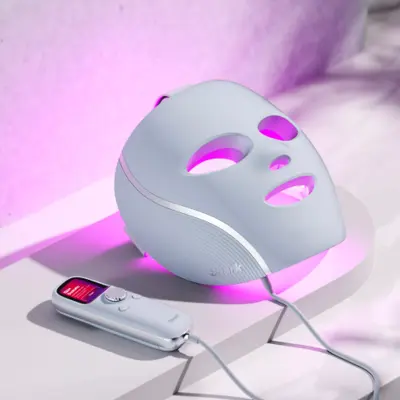
6. Shark CryoGlow LED Face Mask
Wavelengths
Red / Blue / Near-IR
Added Tech
Active cryotherapy cooling
Best For
Morning puffiness, dullness
7. Dr. Dennis Gross DRx SpectraLite FaceWare Pro
The 3-minute treatment mode targeting acne-causing P. acnes bacteria via 415 nm blue light is the fastest proven LED protocol available in a consumer mask. For users with busy schedules, the compressed protocol is clinically designed — not just convenient. The 62-LED blue array delivers a sufficient photon dose to cause measurable porphyrin photooxidation in a truncated session. The high blue-LED density (62 LEDs dedicated to acne treatment alone) is exceptional at this price point and distinguishes this device for breakout-prone users.

LED Configuration
100 red/NIR + 62 blue LEDs
Session Length
3 minutes (acne mode)
Best For
Acne + anti-aging combo
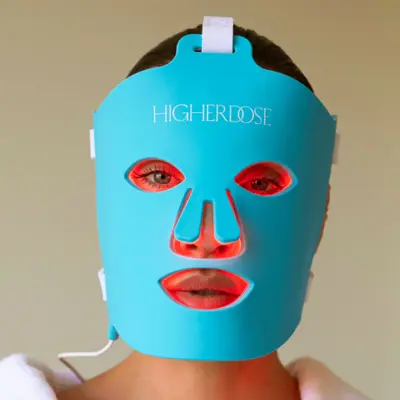
8. HigherDOSE Red Light Face Mask
Wavelengths
Red / Near-Infrared
Brand Focus
Holistic wellness
Best For
Recovery, cellular repair, glow
9. Solawave Wrinkle Retreat Pro

Primary Wavelength
Red LED array
Focus
Wrinkle reduction
Best For
Budget-conscious beginners
10. Skin Gym Wrinklit LED Mask

Wavelengths
Red / Blue / Orange
Weight
Ultra-lightweight
Best For
First-time LED users, travel
How to Choose: A Decision Framework Based on Your Primary Skin Concern
The most common purchasing mistake with LED masks is buying the “best-rated” device rather than the best device for your specific concern. Clinical evidence for photobiomodulation is wavelength-specific — a mask excelling at acne has a very different LED configuration than one excelling at deep collagen remodeling.
For Anti-Aging (Fine Lines, Volume Loss, Texture)
Prioritize devices with verified 630–660 nm red light and 830 nm NIR. These two bands work in synergy: the red light stimulates surface and mid-dermal fibroblasts, while the NIR penetrates to the deeper reticular dermis and subcutaneous interface where volume loss originates. Irradiance matters here — aim for at minimum 50 mW/cm² at skin surface. The CurrentBody Series 2, Omnilux, and The Light Salon Boost all satisfy this criterion. For deeper anti-aging concerns in users 40+, the 1072 nm addition in the CurrentBody Series 2 represents a meaningful clinical upgrade.
For Active Acne and Breakout Prevention
You specifically need a device with a true 415–420 nm blue LED component, not merely red. The mechanism is completely different: blue light at 415 nm activates endogenous porphyrins in P. acnes bacteria, causing their self-destruction via reactive oxygen species — this is the only proven non-antibiotic method of killing acne bacteria using light. Any LED mask marketed for acne that doesn’t specify a sub-420 nm blue wavelength is relying on red light’s anti-inflammatory effects alone, which address swelling but not bacterial load.
For Redness, Rosacea, and Sensitivity
Avoid blue LED entirely if you have rosacea or reactive skin — 415 nm blue can exacerbate erythema in sensitive phenotypes. Focus exclusively on 630 nm red and 830 nm NIR, both of which have anti-inflammatory evidence. Start with sessions of 5–7 minutes before building to full protocol length. Several studies on 633 nm red light show measurable reduction in facial erythema indices after 8 weeks — but the key is low-and-slow introduction.
For General Skin Maintenance (Under 30)
A mid-tier device like the NICEMAY MR-2308 hits the sweet spot. At this life stage, the goal is preventative collagen stimulation and acne management rather than reversal of established photoaging. The multi-wavelength flexibility allows the device to adapt as skin concerns evolve — a consideration that makes it a significantly better long-term investment than a single-purpose mask.
What the Best Wireless LED Masks Get Right on Safety — and What to Avoid
At-home LED therapy carries a far more favorable safety profile than RF, ultrasound, or microneedling devices — photons cannot mechanically damage tissue. However, meaningful failure modes exist, and understanding them is essential before purchasing.
Eye Safety
LED masks emit light directly toward closed eyes for 10–20 minutes per session. Quality masks block transmission through opaque LED housings positioned over the orbital area. Always verify that a mask uses opaque eye-area shields, not merely asking you to close your eyes. A simple test: in a dark room, put the mask on and see if any blue or bright light is perceptible through your eyelids. Any visible light penetrating closed eyes represents a cumulative photochemical exposure risk to the retinal pigment epithelium.
Photosensitizing Medications
Several common medications increase photosensitivity: tetracycline antibiotics, some SSRIs (particularly sertraline), isotretinoin, and hydrochlorothiazide diuretics. If you are taking any photosensitizing medication, consult your prescribing physician before beginning LED mask use — this is a non-negotiable precaution.
The FDA Clearance Question
FDA clearance (510k) for a Class II light therapy device indicates that the manufacturer has demonstrated the device is substantially equivalent to a predicate device in terms of safety and efficacy. It is meaningful regulatory assurance — not infallible proof of efficacy, but a significant quality signal. Three masks on this list carry it (CurrentBody Series 2, Omnilux, Therabody). Others carry CE certification or equivalent international approvals. Unregistered masks with no documented regulatory pathway should be avoided entirely.
FAQs About Top 10 Wireless LED Face Masks
How often should I use a wireless LED face mask to see results?
Can I use LED face masks with active skincare ingredients like vitamin C or retinol?
What's the difference between red light at 630 nm vs 660 nm — does it matter?
Are wireless LED masks safe during pregnancy?
Can darker skin tones use LED face masks safely?
What makes the NICEMAY MR-2308 stand out from other mid-tier LED masks?
How long do wireless LED face masks last, and is battery degradation a concern?
Can I use an LED face mask if I have melasma?

Please fill in your email in the form and we’ll get back to assist you soon!