


Which Skin Conditions Should Avoid Beauty Devices?

Misusing at-home beauty devices can waste money and cause lasting damage—like permanent barrier disruption, worsened inflammation, or even scarring. Certain skin conditions make devices risky; know when to avoid them entirely to protect your skin.
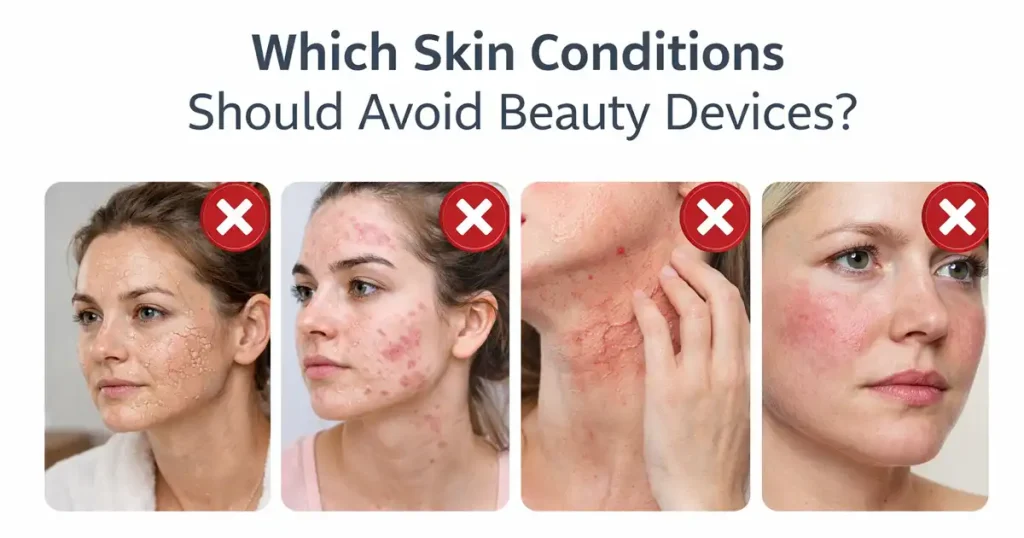
Why Some Skin Conditions Are Contraindicated for Beauty Devices: Protecting Your Barrier from Harm
At-home beauty devices promise glowing results, but ignoring contraindications can trigger flares, infections, or delayed healing. Dermatologists stress that heat, light, or electrical stimulation aggravates vulnerable skin. In 2026, FDA-cleared devices include better safety features like auto-adjusting intensity, but they don’t override medical risks—always prioritize your skin’s health.
Quick Self-Check: Should You Pause Beauty Device Use?
If you answer “yes” to any of these, stop using devices and consult a dermatologist immediately:
- Do you have active breakouts, open wounds, or infections?
- Are you experiencing a rosacea or eczema flare-up?
- Do you have a history of photosensitivity, lupus, or skin cancer?
- Are you pregnant, epileptic, or have a pacemaker/metal implants?
- Are you taking photosensitizing medications (e.g., isotretinoin, tetracyclines)?
This checklist helps catch risks early, preventing unnecessary irritation.
Key Skin Conditions That Contraindicate Beauty Devices: Detailed Risks and Reasons
Certain conditions heighten sensitivity to device mechanisms. Here is a science-backed breakdown of why specific conditions require total avoidance.
1. Active Infections, Open Wounds, or Bacterial Issues
When the skin’s physical barrier is broken, using any device poses a high risk of pathogen migration.
- Bacterial Spread: Moving a device head across infected areas can spread bacteria like Propionibacterium acnes or Staphylococcus to healthy pores, leading to systemic breakouts.
- Viral Triggering: For those with a history of Herpes Simplex, the heat or microcurrent stimulation can inadvertently trigger a viral outbreak.
- Healing Interference: Mechanical vibrations or electrical pulses disrupt the delicate formation of new epithelial cells, potentially leading to permanent scarring or post-inflammatory hyperpigmentation (PIH).

2. Severe or Inflammatory Acne During Active Breakouts
While some light therapies help, cystic acne and pustules are highly reactive to stimulation.
- Follicular Rupture: Deep-reaching Radio Frequency (RF) or high-frequency tools generate internal heat that can cause weakened follicular walls to rupture, spilling inflammatory material into the dermis.
- Aggravated Inflammation: Physical friction from moving devices—combined with conductive gels—often increases redness and swelling in inflamed lesions.
- The Exception: Only non-contact, medical-grade Blue LED may be used, but even then, avoid any device that requires skin contact or dragging during a severe flare.

3. Photosensitive Disorders and Medications
This is a critical contraindication for LED and Laser tools. Photosensitivity can lead to phototoxic reactions or severe burns.
- High-Risk Medications: If you are using Isotretinoin (Accutane), Tetracyclines (like Doxycycline), or certain NSAIDs, your skin’s threshold for light-induced damage is significantly lowered.
- Topical Ingredients: Recent application of high-strength Retinoids, AHAs, or BHAs thins the stratum corneum, making it hypersensitive to the energy output of beauty wands.
- Autoimmune Concerns: Conditions like Lupus involve a systemic immune response to light; using LED masks can trigger not just skin rashes but systemic flares.

4. Rosacea and Eczema Flares: Heat and Stimulation Triggers
For compromised barriers, “stimulation” is often synonymous with “irritation.”
- Vascular Reactivity: Rosacea is characterized by hypersensitive blood vessels. Heat-based devices (RF, Steamers) cause intense vasodilation, which can turn temporary redness into permanent telangiectasia (broken capillaries). For a deeper dive into managing this specific condition, see our detailed analysis: [Are Beauty Devices Safe for Rosacea-Prone Skin?]
- TEWL (Transepidermal Water Loss): Eczema-prone skin lacks a functional lipid barrier. Ultrasonic vibrations or exfoliating brushes accelerate water loss, leaving skin parched, cracked, and prone to secondary infection.

5. Skin Cancer History or Active Concerns
Safety margins are paramount when dealing with potentially abnormal cell growth.
- Cellular Stimulation Risks: Beauty devices are designed to “boost cellular activity” (ATP production or collagen synthesis). For areas with a history of Basal Cell Carcinoma (BCC) or melanoma, there is an ethical and safety concern regarding stimulating cells in a previously malignant zone.
- Diagnostic Masking: Frequent use of skin-tightening or blurring devices might accidentally mask the evolving visual characteristics of a suspicious mole, delaying a timely professional diagnosis.

6. Systemic Conditions: Pregnancy, Epilepsy, Pacemakers, and Implants
These contraindications involve the stability of the body’s electrical and biological systems.
- Electrical Interference: Microcurrent and RF devices emit electromagnetic energy that can interfere with the pulse rhythm of Pacemakers or other implanted cardiac defibrillators.
- Metal Implants: If you have dental implants or metal bone pins, RF energy can concentrate heat on the metal surface, potentially causing internal tissue burns.
- Pregnancy & Epilepsy: Due to a lack of clinical testing on fetal safety, electrical devices are avoided during pregnancy. For epilepsy, certain flickering LED frequencies can act as triggers for photosensitive seizures.
Contraindication Matching Table: Devices to Avoid by Skin Condition in 2026
| Skin/Medical Condition | Devices to Strictly Avoid | Primary Risk Reason | Safer Alternatives |
|---|---|---|---|
| Active Infections/Wounds | All (especially ultrasonic, microcurrent) | Bacterial spread, delayed healing | Topical antiseptics; wait for full recovery |
| Severe Inflammatory Acne | RF, high-frequency, facial brushes | Increased inflammation, scarring | Gentle cleansing; non-contact blue LED |
| Photosensitivity (Meds/Lupus) | LED, Laser, light-based tools | Phototoxic burns, hyperpigmentation | Non-light manual routines |
| Rosacea/Eczema Flares | RF, steamers, heat-based tools | Triggered redness, barrier disruption | Cooling masks, soothing ceramides |
| Skin Cancer History | All light therapies (LED) | Potential cell stimulation concerns | Dermatologist-approved topicals |
| Pregnancy/Epilepsy/Pacemakers | Electrical (microcurrent, RF) | Signal interference, fetal safety | Manual tools like Jade rollers |
Safer Alternatives When Beauty Devices Are Contraindicated
Skip powered devices? Try manual tools for circulation and soothing:
- Jade or Rose Quartz Rollers/Gua Sha: Best for lymphatic drainage and calming (e.g., gentle gua sha kits).
- Cooling Gel Masks or Ice Globes: Reduces inflammation and constricts blood vessels without using heat.
- Barrier-Repair Topicals: Use products with Centella Asiatica, Ceramides, or Squalane to heal the skin manually.
These non-electrical options deliver benefits safely without compromising the skin barrier. If you are in a remission phase and want to reintroduce technology, timing and tool selection are critical. Learn how to navigate your options in our guide: [How to Choose Beauty Devices Based on Skin Sensitivity?]
When to Always Consult a Dermatologist for Beauty Device Use ?
Seek professional advice for:
- Post-Procedure Recovery: If you recently had Botox, fillers, or chemical peels, devices can shift or interfere with results.
- Persistent Reaction: If redness or itching lasts more than 24 hours after device use.
- Chronic Management: If you are on immunosuppressants or long-term steroid creams.
FAQs About Which Skin Conditions Should Avoid Beauty Devices
Which skin conditions absolutely contraindicate beauty devices?
Active infections, open wounds, severe acne flares, and cancer history—the risks far outweigh the benefits.
Is any beauty device safe during pregnancy?
Most professionals advise avoiding electrical or light-based tools due to a lack of long-term fetal safety data; stick to manual tools.
Can rosacea patients use beauty devices at all?
Not during active flares. During remission, low-heat or cooling devices might be okay after a professional patch test.
What if I'm on photosensitizing meds like Isotretinoin or Doxycycline?
Avoid LED and light therapies entirely. These medications make your skin “trap” light energy, leading to significant burns.
Are blue light devices okay for active acne?
They are safe for mild-to-moderate bacteria killing, but avoid any tool that requires “massaging” or “sliding” over inflamed cysts.
Conclusion
In 2026, beauty devices offer incredible benefits—but for conditions like active acne, rosacea flares, photosensitivity, or systemic issues, avoidance prevents harm. Use the self-check, opt for gentle alternatives, and consult a dermatologist for peace of mind. Your skin’s long-term health is worth it—choose safety first for a lasting glow!
Please fill in your email in the form and we’ll get back to assist you soon!