


How to Use an Ultrasonic Skin Scrubber on Dry vs Oily Skin?


What Is an Ultrasonic Skin Scrubber and How Does It Work?
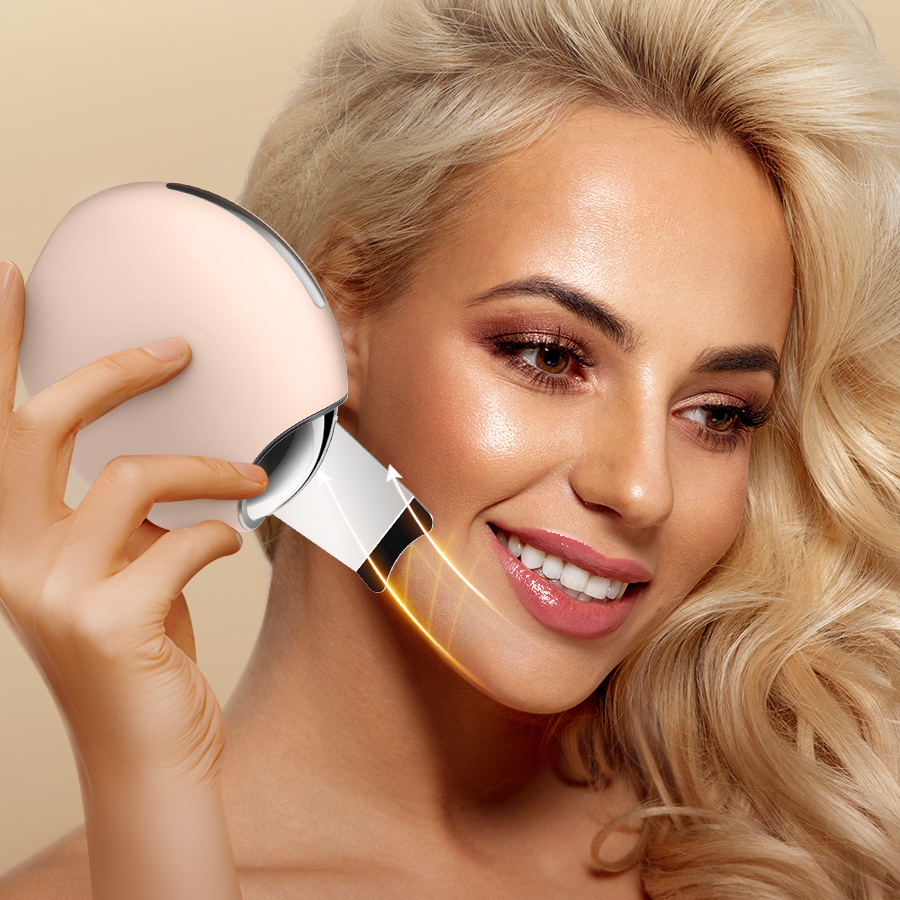
An ultrasonic skin scrubber is a handheld beauty device that uses a metal spatula vibrating at 24,000–28,000 Hz to create a phenomenon called cavitation — microscopic bubbles form in the water layer on your skin, expand rapidly, and implode, physically dislodging dead cells, sebum, and debris from pores without any abrasion.
The key physics here: the device requires a continuous water film to transmit ultrasonic energy into the skin. Without it, the waves dissipate into air and you’re just scraping your face with a metal tool. This single principle governs every technique difference between skin types.
Most quality devices offer two core modes:
- Extraction/Cleansing Mode — spatula angled downward, vibrations push debris upward and out
- Infusion/Penetration Mode — spatula flat against skin, vibrations drive serums deeper into the dermis (studies suggest ultrasonic phonophoresis can increase topical absorption by up to 1,000% compared to passive application)
How to Use an Ultrasonic Skin Scrubber on Oily Skin?

Oily skin produces excess sebum — typically 2–3x more than dry or normal skin — which mixes with dead cells to form the oxidized plugs we call blackheads. Ultrasonic cavitation is particularly effective here because it emulsifies that sebum without stripping the skin barrier.
Frequency and Prep
Use 2–3 sessions per week, focusing on the T-zone (forehead, nose, chin) where sebaceous glands are most concentrated. Before starting, cleanse with a gentle, non-stripping face wash.
For stubborn blackheads, apply a kaolin or bentonite clay mask for 10 minutes prior. Clay draws impurities toward the surface via absorption, giving the cavitation mechanism an easier target. Do not let the clay fully dry — remove it while it’s still slightly damp, then proceed immediately.
Lubrication: What to Use
Keep the skin continuously damp with water or an oil-free, alcohol-free toner (look for toners containing niacinamide or witch hazel). Re-mist every 60–90 seconds. Never work on dry skin — this is the most common mistake I see with oily-skin users who assume their natural sebum is enough. It isn’t; sebum doesn’t conduct ultrasonic waves the way water does.
Extraction Technique (Step-by-Step)
- Mist the treatment area thoroughly
- Hold the device with the spatula angled at 30–45 degrees, edge pointing downward
- Glide slowly in short upward or outward strokes — approximately 1–2 cm per second
- Work section by section: forehead, each cheek, nose, chin
- Never drag the device sideways or press hard — the vibrations do the work, not pressure
- Wipe the blade with a soft cloth or cotton pad after every 2–3 strokes to remove extracted debris; reapplying it to the skin is a contamination risk
- Session length: 5–8 minutes for a full face
Post-Treatment
Rinse with cool water (cool water helps contract temporarily opened pores), then apply a lightweight, oil-free moisturizer. If you’ve done a clay pre-treatment session, a calming serum with centella asiatica or panthenol helps reduce any transient redness.
How to Use an Ultrasonic Skin Scrubber on Dry Skin?

Dry skin presents a different challenge: the epidermis is thinner, the lipid barrier is compromised, and surface flaking — while it looks like a textural problem — is actually the skin’s protective response to transepidermal water loss (TEWL). Aggressive extraction on dry skin causes micro-tears in the stratum corneum, which accelerates barrier breakdown and worsens dryness over time.
Frequency and Prep
Limit sessions to once or twice weekly, and never use the device on visibly cracked, sensitized, or eczema-affected skin.
Preparation is non-negotiable: take a warm (not hot) shower beforehand, or use a facial steamer for 3–5 minutes to fully hydrate and soften flaky patches. Dry, rigid skin cells resist cavitation — softening them first allows gentler, more effective exfoliation at lower energy levels.
Lubrication: Don’t Use Plain Water
This is where dry-skin technique diverges sharply from oily skin. Plain water evaporates quickly and can leave dry skin feeling tighter mid-session. Instead, use a hydrating toner or facial mist containing hyaluronic acid, glycerin, or aloe vera. These humectants slow evaporation and provide the conductivity needed for cavitation while simultaneously delivering moisture to the skin surface. Re-mist every 45–60 seconds — more frequently than for oily skin.
Extraction Technique
Same 30–45 degree angle and upward/outward motions as oily skin, but with lighter pressure and shorter strokes. The goal is removing surface flakes, not deep pore extraction. If you feel any dragging or pulling, you’re either pressing too hard or the skin has dried out — stop, re-mist, and continue.
Session length: 3–5 minutes maximum, focusing on areas prone to flaking (forehead, cheeks, around the nose).
Infusion/Serum Mode — Where Dry Skin Truly Benefits
This is the step oily-skin users rarely need but dry-skin users should never skip. After the extraction phase:
- Apply a generous layer of hyaluronic acid serum or a peptide-rich hydrating serum to damp skin
- Flip the spatula so the flat side lies flush against the skin — no angle, no edge
- Glide slowly in upward motions across the face
- The ultrasonic vibrations create a phonophoresis effect, pushing the serum deeper into the dermis
Research on ultrasonic phonophoresis confirms that low-frequency ultrasound (20–100 kHz range — which includes most consumer devices) significantly increases the permeation of hydrophilic molecules like hyaluronic acid through the stratum corneum. This means you’re not just layering serum on top of skin; you’re delivering it where it creates lasting hydration.
Dry Skin vs Oily Skin: Side-by-Side Protocol Comparison
| Factor | Oily Skin | Dry Skin |
|---|---|---|
| Frequency | 2–3x per week | 1–2x per week |
| Prep | Clay mask optional | Steamer/warm shower required |
| Lubricant | Water or oil-free toner | Hydrating toner/facial mist |
| Pressure | Moderate, confident strokes | Light, gentle strokes |
| Session Length | 5–8 minutes | 3–5 minutes |
| Primary Mode | Extraction | Extraction + Infusion |
| Best Serum for Infusion | Niacinamide, salicylic acid toner | Hyaluronic acid, peptides |
| Post-Care | Oil-free moisturizer | Rich moisturizer or face oil |
Choosing the Right Ultrasonic Skin Scrubber: What to Look For
Not all devices perform equally. Here’s what the specifications actually mean for real-world results:
Vibration frequency: Most consumer devices operate between 24,000–28,000 Hz. Higher isn’t always better — what matters is consistency of output. Cheap devices often degrade in frequency output after 60–90 days of use, reducing cavitation effectiveness. Look for devices that state their frequency clearly and come from brands with documented quality control.
Blade material and coating: Medical-grade stainless steel with a smooth, mirror-polished finish minimizes friction and bacterial accumulation. Avoid devices with rough edges or visible seams on the spatula.
Modes and intensity levels: A quality device should offer at minimum 2 modes (extraction + infusion) and at least 3 intensity levels. Single-intensity devices are too aggressive for dry or sensitive skin.
Water resistance: IPX4 or higher is the minimum for safe bathroom use. Devices without waterproofing ratings should not be used near running water.
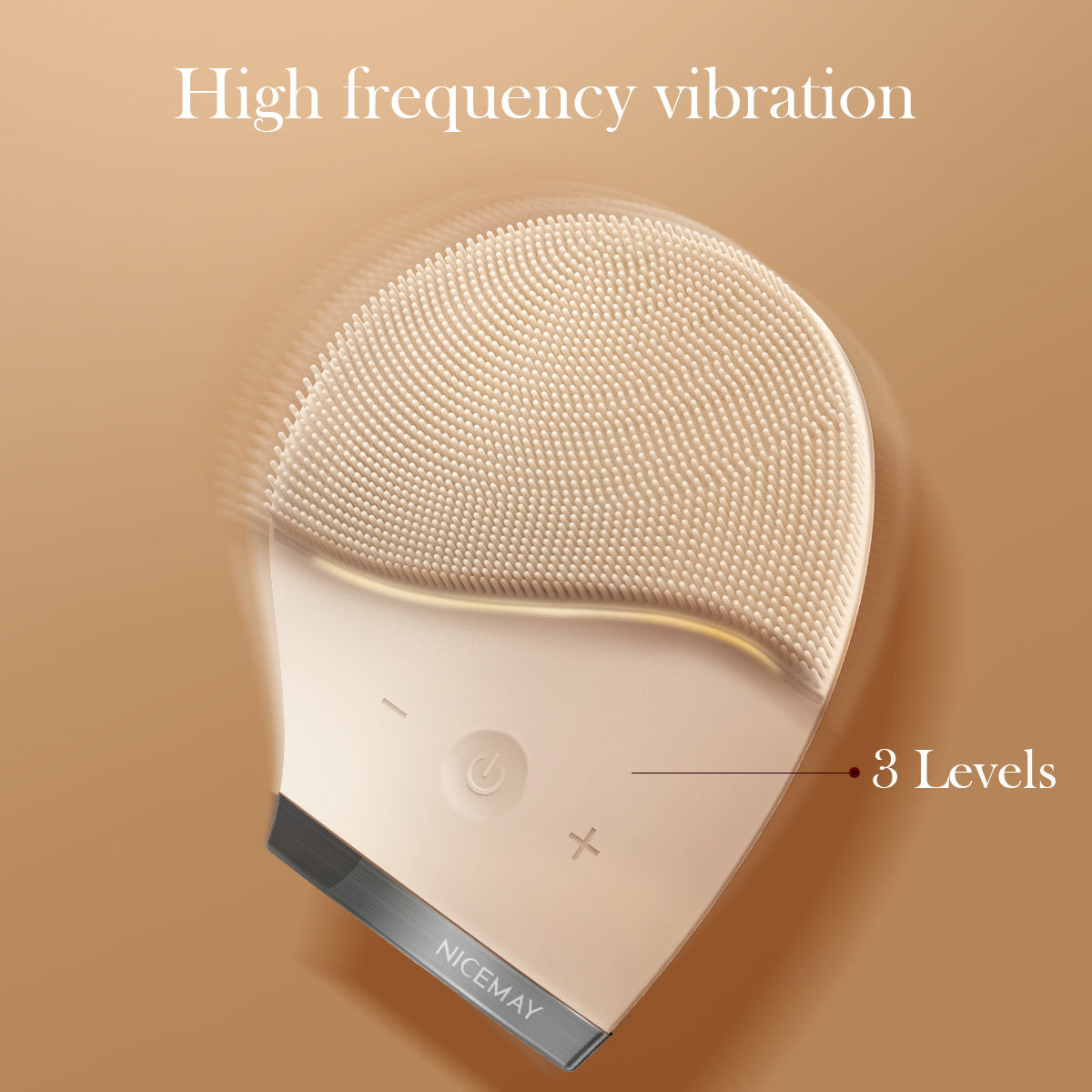
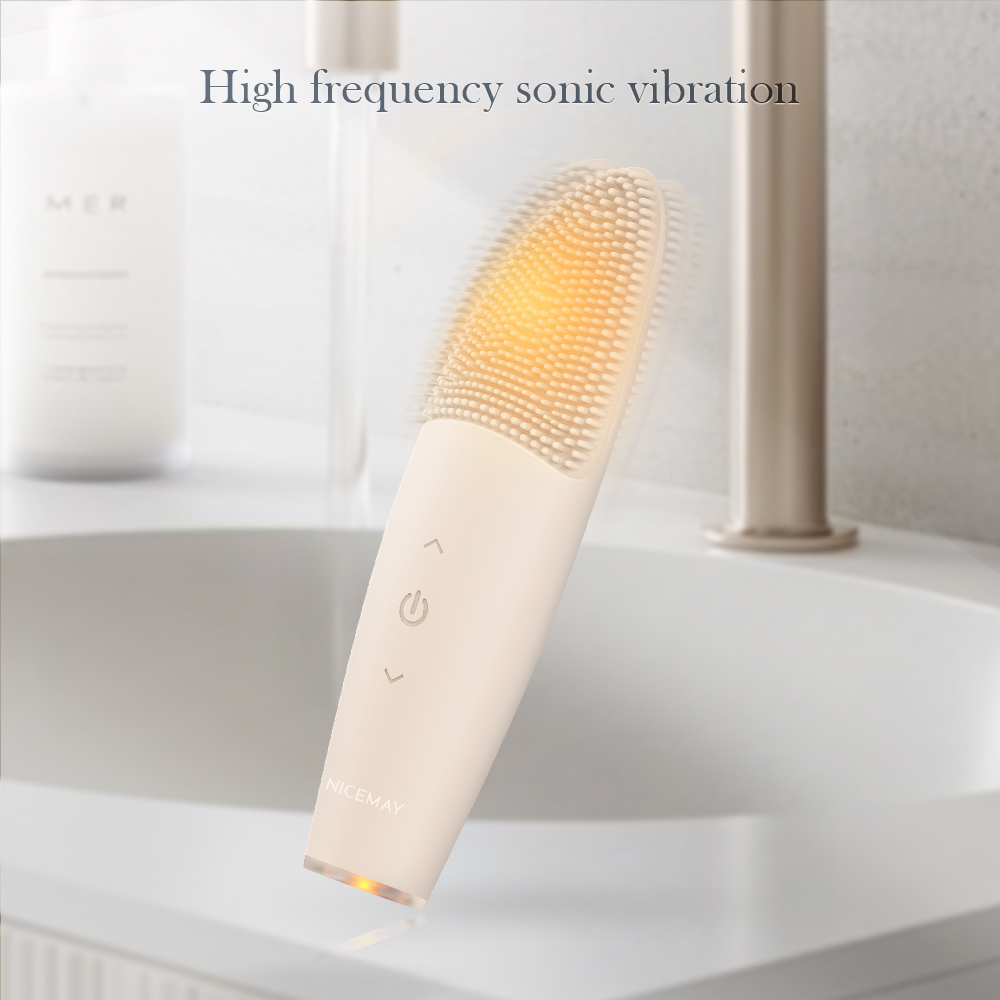
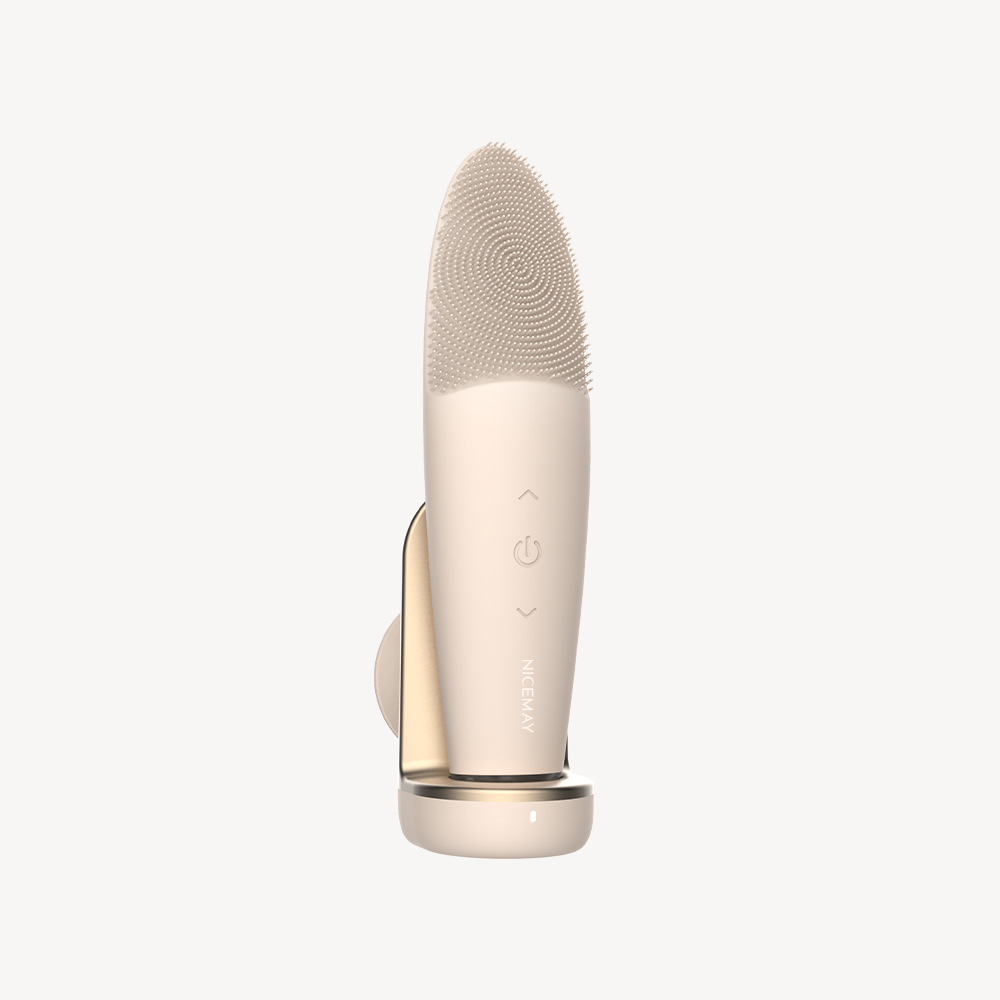
One device that checks all these boxes for both skin types is the NICEMAY BJ-1357 Ultrasonic Ion Skin Scrubber. It operates at a stable 24,000 Hz with multiple modes, includes both extraction and ion infusion functionality, and features a medical-grade spatula — making it equally effective for oily skin deep-cleansing and dry skin serum infusion without switching devices.
For a broader comparison of devices across price tiers, see our roundup of the Top 10 Best Ultrasonic Facial Cleansers of 2026 and the 10 Best Skin Scrubbers for Blackhead Removal in 2026 for targeted picks by concern.
Universal Best Practices (Regardless of Skin Type)
These rules apply whether your skin runs oily, dry, or anywhere in between:
- Always cleanse first. Makeup and sunscreen residue create a barrier that prevents cavitation from reaching pores. A gentle micellar water or cleanser before use is non-negotiable.
- Wipe the blade after every few strokes. Leaving extracted debris on the spatula and reapplying it to your face reintroduces bacteria and sebum back into open pores.
- Never use on active breakouts, open wounds, or sunburned skin. Ultrasonic vibration on inflamed or broken skin accelerates damage, not healing.
- Avoid using directly over bony prominences with zero subcutaneous tissue (like the orbital bone or jawline) with high pressure — these areas have less padding and are more prone to bruising from device pressure.
- Always finish with moisturizer. Both extraction and infusion modes temporarily increase skin permeability. Sealing in hydration afterward prevents TEWL and keeps the barrier intact.
- Clean and dry the device after every use. Store with the spatula facing up or covered to prevent cross-contamination.
Common Mistakes That Sabotage Your Results
1. Skipping re-misting mid-session. The skin surface dries out within 60–90 seconds in most environments. Once it’s dry, you’re no longer getting cavitation — you’re just dragging metal across your face. Keep a misting bottle within reach.
2. Moving too fast. A common instinct is to move the device quickly to “cover more ground.” Ultrasonic exfoliation requires slow, deliberate strokes — 1–2 cm per second — to allow cavitation to fully form and act on each area.
3. Using on fully dry skin to “get better extraction.” Some users think skipping the misting step creates more friction and therefore more extraction. In reality, it increases the risk of micro-abrasion and reduces cavitation entirely. The water film isn’t optional.
4. Over-treating oily skin. Using the device daily on oily skin strips the acid mantle, triggering the skin to produce even more oil as a compensatory response. Oily skin users who increase to daily use often report worse congestion within 2–3 weeks.
5. Ignoring post-treatment sun sensitivity. Exfoliation — even gentle ultrasonic exfoliation — temporarily increases UV sensitivity. Always apply SPF 30+ the morning after a treatment session.
FAQs About How to Use an Ultrasonic Skin Scrubber on Dry vs Oily Skin
Can I use an ultrasonic skin scrubber on combination skin?
How long before I see results from ultrasonic skin scrubbing?
Can I use a vitamin C serum with the infusion mode?
Is ultrasonic skin scrubbing safe during pregnancy?
Why is my skin red after using the scrubber?

Please fill in your email in the form and we’ll get back to assist you soon!