


2026年における首の引き締めに最適なRFデバイストップ10

The neck is particularly susceptible to visible aging, such as horizontal bands and crepey texture, due to its thinner skin, lower sebaceous gland density, and constant mechanical stress. Radio frequency (RF) technology addresses this by delivering controlled electromagnetic heat to the 42–45°C therapeutic window, which effectively denatures existing collagen and triggers fibroblast proliferation for sustained tissue tightening. This guide provides a technically rigorous ranking of the 10 best RF devices for 2026, evaluated specifically on their thermal safety, applicator design, and clinical efficacy for the neck and décolletage, rather than mere repurposed facial specifications.
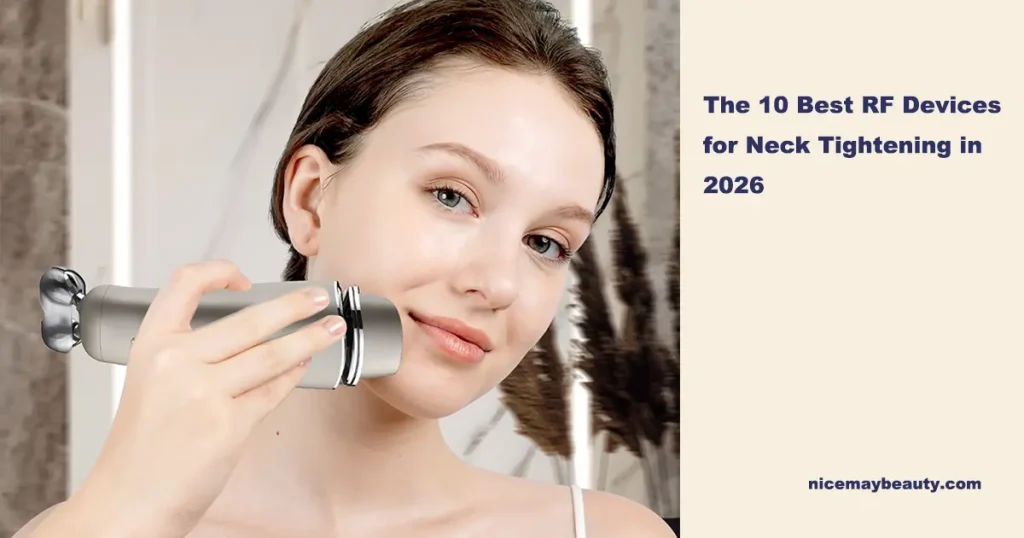
Why the Neck Is a Different Skincare Challenge Entirely?
Before buying any RF device for neck use, you need to understand why most devices are not actually optimised for this area — even when the brand claims they are. The neck presents three distinct biological and structural challenges that make it the most technically demanding zone to treat with at-home radiofrequency.
Skin Thickness and Dermal Density
Facial skin averages 1.5–2.0 mm in thickness. Neck skin, particularly the anterior (front) neck, typically measures 0.8–1.2 mm — roughly 40% thinner. This matters enormously for RF energy delivery because bipolar applicators that apply 5–15 watts of energy across that depth on the face will overshoot the therapeutic window on the neck, delivering energy past the dermis and into subcutaneous tissue where it can cause discomfort, erythema, or — in repeated misuse — uneven fat loss beneath the platysma muscle. Devices with automatic thermal sensors that cap skin surface temperature at 42–45°C are non-negotiable for safe neck use; devices without them put you entirely in control of a safety parameter that changes in real time.
The Platysmal Banding Problem
The platysma is a broad, thin sheet of muscle running from the chest up across the neck to the lower face. As it weakens and separates with age, it creates the vertical bands visible on many necks from the 40s onward — a problem that RF alone cannot fully resolve but that devices combining RF with EMS (Electrical Muscle Stimulation) or microcurrent can significantly improve. The current must be calibrated appropriately: EMS frequencies for the neck platysma work best in the 1–80 Hz range, and microcurrent for the delicate submental zone should stay within the 200–400 μA range to avoid overstimulation.
The Tech Neck Crease Factor
Repetitive neck flexion creates static, deep horizontal creases that accumulate at the angles where skin folds most frequently. RF-induced collagen remodeling can soften these lines over time, but only if the device can reach the reticular dermis — typically 1–3 mm deep. Devices that deliver energy only to the papillary dermis (0–0.3 mm) via extremely superficial applicators will show almost no improvement on established tech neck creases. This is why frequency selection matters: higher frequencies (like 40.68 MHz) are generally more superficial, while multi-polar configurations at lower frequencies (1–3 MHz) penetrate more deeply.
The 10 Best RF Devices for Neck Tightening in 2026: Ranked & Reviewed
Each device below has been ranked based on thermal safety for thin neck skin, RF delivery method and effective penetration depth, clinical or consumer study backing, ease of use on the curved neck anatomy, and total cost of ownership including gels and replacement heads. For deeper context on how these devices compare within the broader radio frequency landscape, see むくみを軽減し、肌のトーンを改善するために。さらに、.
1. EvenSkyn Lumo+ — Best Overall RF Device for Neck Tightening
Technology Stack: Multi-polar RF + EMS + Red LED (630 nm)
The EvenSkyn Lumo+ earns the top position through an unusually intelligent combination of modalities rather than any single standout specification. Its multi-polar RF configuration operates at a proprietary frequency range that distributes thermal energy across the neck’s irregular contours without creating the focal hot spots that bipolar applicators can produce on curved anatomy. What distinguishes it from competitors is the inclusion of Electrical Muscle Stimulation alongside RF — addressing platysmal banding directly rather than relying on RF collagen remodeling alone to cosmetically mask the underlying muscle laxity.
The multi-tier energy settings (five levels) are not a cosmetic feature; they exist specifically to allow users to start at level 1–2 on thin neck skin and advance as tolerance builds over the first 4–6 weeks. This progressive approach mimics the intensity ramping used in professional RF protocols and is significantly safer than devices that default to a single fixed intensity. The 630 nm red LED panel adds superficial photobiomodulation that supports fibroblast activity between sessions without adding thermal load.
One practical differentiator: the Lumo+ is formulated for use without proprietary gels, accepting standard hyaluronic acid serums or water-based conductive gels. Over a 12-month ownership period, this saves approximately $120–200 compared to devices requiring branded coupling agents.
- 最適な用途: First-time RF users and those with combined concerns of skin laxity and platysmal banding
- Session protocol: 3–4x per week, 10–15 minutes per neck zone, 12-week minimum for visible results
- 現実的なタイムライン: Textural improvement at 4–6 weeks; structural lift at 10–14 weeks

2. TriPollar STOP Vx — Best for Experienced Users Seeking Clinical Intensity
Technology Stack: 3rd-Generation Multi-RF + TriPollar Muscle Activation (TMA)
TriPollar has been manufacturing professional RF systems since 2005, and the STOP Vx is the most aggressive home device they’ve commercialised. The 3rd-generation multi-RF configuration uses a rotating field approach across multiple electrodes to deliver one of the highest sustained energy densities available in a consumer device — more comparable to entry-level clinical handpieces than to most at-home tools. This makes it the most powerful option for users who have previously used RF devices and built thermal tolerance, but genuinely unsuitable for beginners whose skin hasn’t yet adapted to sustained heat exposure.
The TriPollar Muscle Activation (TMA) technology introduces a second wave of current specifically calibrated to stimulate the neck’s platysma — operating at a frequency distinct from the RF itself. Published clinical data from TriPollar-commissioned studies (n=42) showed 87% of participants reported visible improvement in neck firmness after 6 weeks of twice-weekly treatment, with average skin thickness increase of 18% measured by ultrasound. These are meaningful numbers, though the study was not independently peer-reviewed.
The clinical intensity comes with a tradeoff: the STOP Vx requires careful attention to device movement speed on the neck. Moving too slowly increases cumulative thermal exposure per skin area; moving too quickly reduces efficacy. The manufacturer recommends a 3-second minimum glide per zone — a protocol discipline that beginners frequently violate.
- 最適な用途: Users with prior RF experience; noticeable skin laxity or deep horizontal neck creases
- 避けるべき場合: You haven’t used RF devices before; skin is very thin or reactive

Technology Stack: Dual-Head RF + EMS + Photon LED
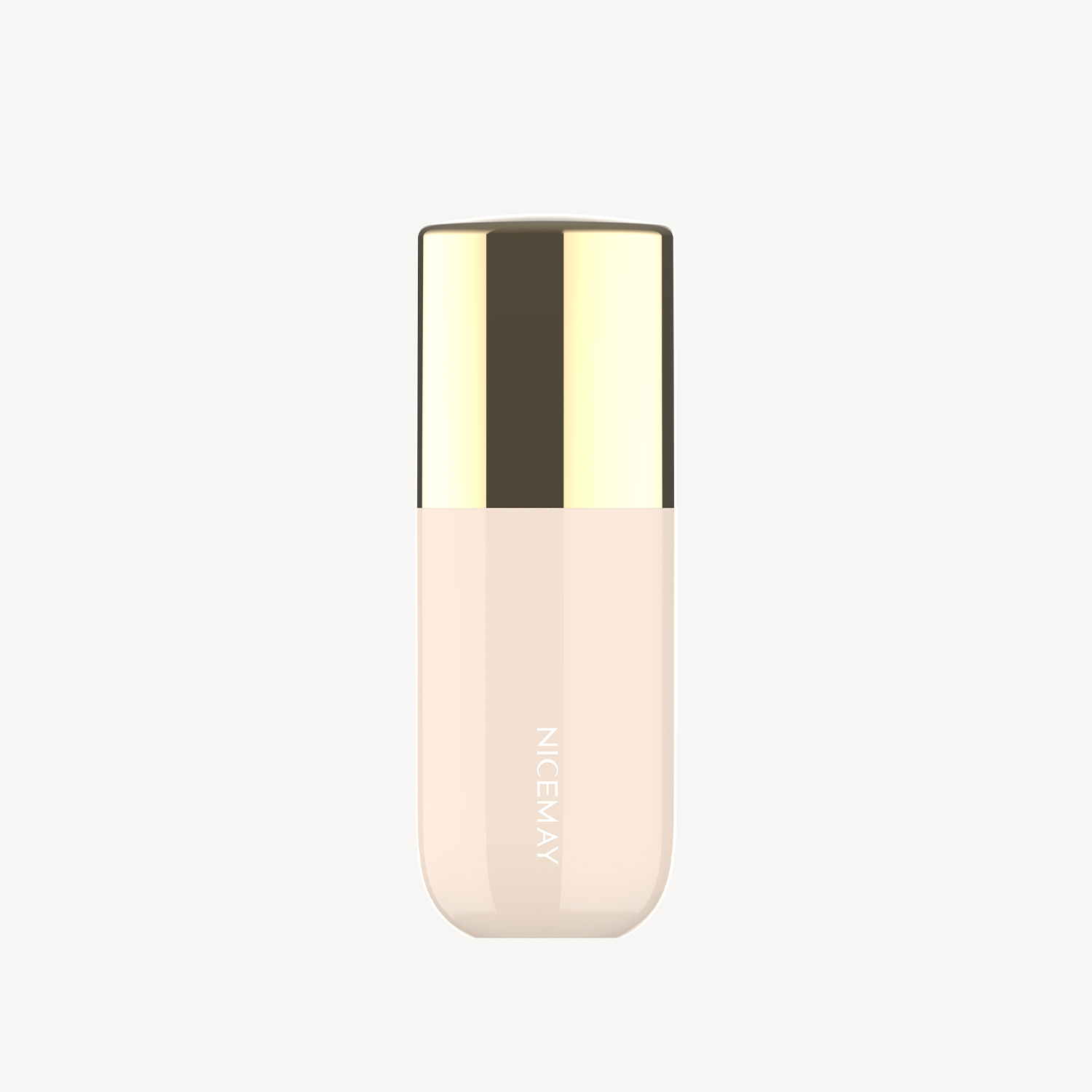
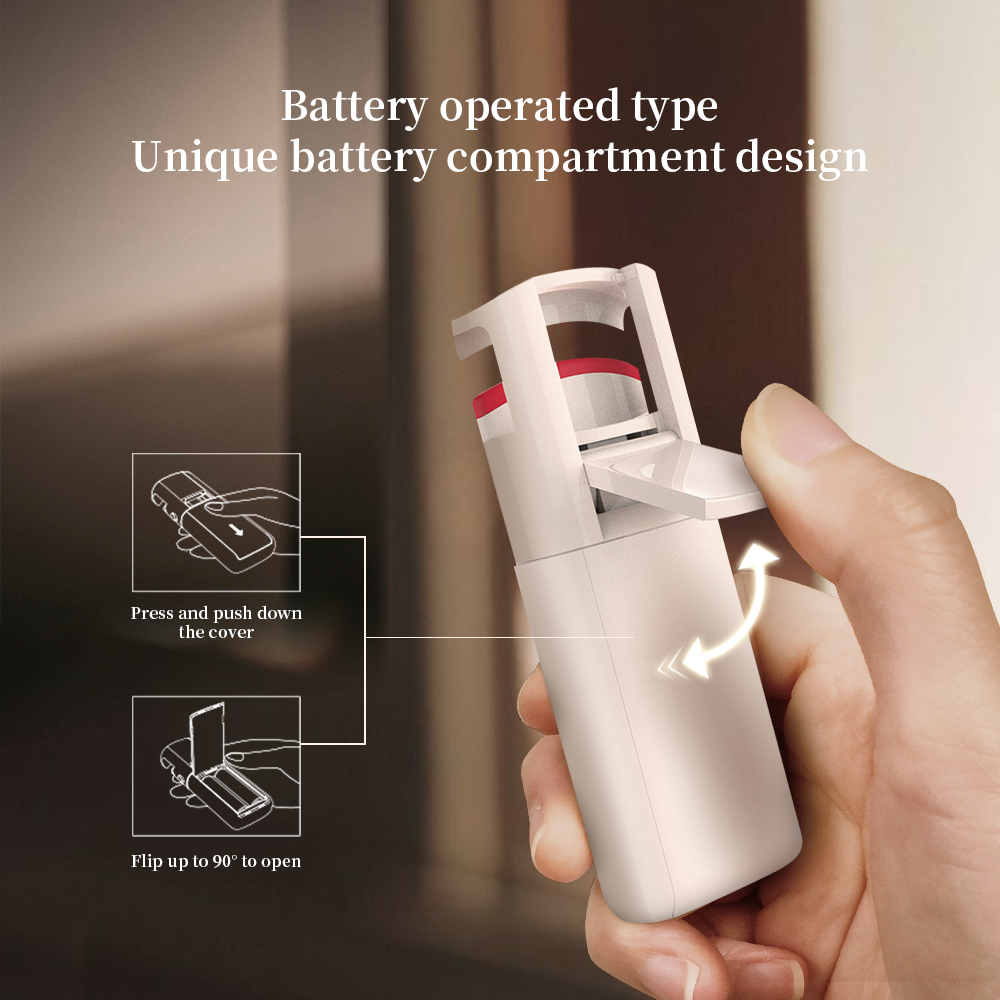
その NICEMAY MR-2331 デュアルヘッドRF + EMSフェイシャルセラピー デバイス earns its ranking through a genuinely differentiated design philosophy: two interchangeable applicator heads engineered for different anatomical needs, allowing precise calibration between the flat neck surface and the more contoured submental and jawline zone. This dual-head architecture is a meaningful engineering decision for neck treatment specifically — the applicator geometry that works on the relatively flat mid-neck creates pressure hotspots at the mandibular angle, a problem the NICEMAY system solves by switching heads rather than repositioning awkwardly.
The RF delivery system operates in combination with EMS at calibrated μA levels appropriate for the platysma muscle group, which runs from the clavicle to the lower face. Rather than applying the same electrical parameters used for facial microcurrent (which targets smaller, more superficial mimetic muscles), the NICEMAY MR-2331 adjusts output for the broader muscle sheet of the neck — a physiologically correct approach that many multi-purpose devices don’t bother to make. The photon LED component (red at 630 nm + near-infrared at 830 nm) provides complementary collagen stimulus without additional thermal load, making it possible to use LED maintenance between RF treatment days.
For users treating both tech neck creases and mild jowling simultaneously, the ability to target the submental transition zone with the contoured head — while using the flat head for the anterior neck plate — in a single session workflow is a time efficiency that competitors priced similarly don’t offer. The device charges via USB-C and holds approximately 90 minutes of charge, sufficient for 4–6 complete neck-and-décolletage sessions before recharging.
- 最適な用途: Users with both neck laxity and early jowl concerns; those wanting a single device protocol
- Session protocol: RF mode 3x/week; LED maintenance on non-RF days; 10–12 minutes per complete neck circuit
- Total cost of ownership: No proprietary gel required; USB-C charging; replacement heads available independently

4. NEWA Plus — Best for Deep Tissue Collagen Remodeling
Technology Stack: 3DEEP Multi-Frequency RF
The NEWA Plus uses End-to-End Electroporation (3DEEP) technology, a proprietary multi-frequency RF approach developed in collaboration with Syneron Medical — the company behind some of the most widely used clinical RF platforms globally. Where most home devices deliver energy from the applicator surface inward at a fixed penetration depth, 3DEEP creates a volumetric heating pattern that preferentially targets the deep reticular dermis at 1.5–3 mm depth while minimising energy concentration in the more superficial epidermis. For established tech neck creases, this depth specificity is clinically meaningful.
The NEWA Plus carries robust independent clinical backing: a peer-reviewed study published in the 化粧品皮膚科学ジャーナル (2021) involving 45 participants reported statistically significant improvement in skin elasticity (measured by Cutometer) after 12 weeks of treatment per manufacturer protocol, with mean elasticity improvement of 22.3% compared to baseline. This is among the strongest independent clinical evidence available for any consumer RF device. The study was conducted on facial skin, but the dermal physiology that governs collagen response is consistent with neck tissue.
- 最適な用途: Users with established deep creases and patients seeking the most clinically-evidenced home device
- Limitation: Session time (20 minutes per treatment area) is among the longest of any reviewed device

5. CurrentBody Skin RF — Best for Beginners
Technology Stack: Bipolar RF + Skin Sense Thermal Control
CurrentBody’s Skin RF device is the most beginner-accessible RF tool reviewed here, and that accessibility is built into the hardware rather than just the marketing. The Skin Sense system uses integrated infrared sensors to actively monitor skin surface temperature, automatically modulating power output to maintain the 40–43°C therapeutic range without exceeding it. For a beginner treating neck skin — where tactile feedback is inherently less reliable than on the face — this closed-loop thermal control is not a convenience feature; it’s the primary safety mechanism.
The bipolar RF configuration delivers energy to approximately 2–3 mm depth, adequate for the papillary and upper reticular dermis but not deep enough for significant platysmal-zone remodeling. For users with early-stage neck changes — mild crepiness, early horizontal lines, general skin densification goals — this depth is appropriate. For users with established laxity or visible platysmal banding, the CurrentBody will provide gradual improvement but is not the highest-ceiling device in this ranking.
- 最適な用途: First-time RF users; sensitive skin; those who want “set it and forget it” safety
- 効果のタイムライン: Crepey texture improvement at 6–8 weeks; skin tone improvement at 10–12 weeks

6. Medicube AGE-R Ultra Tune 40.68 — Best for Surface-Level Neck Densification
Technology Stack: 40.68 MHz RF + EMS
The Medicube AGE-R Ultra Tune uses the ISM-designated 40.68 MHz RF frequency — the same frequency used in many professional clinical radio frequency systems. At this frequency, tissue penetration is relatively superficial compared to multi-polar 1–3 MHz devices, concentrating energy in the upper 0.5–1.5 mm of skin. This makes it exceptionally effective for crepey surface texture improvement and early-stage dermal densification, but less impactful for deep structural laxity. The trade-off is a very favorable safety profile: the risk of inadvertent deep thermal injury is lower at this frequency, and the more superficial heating pattern means faster visible texture improvements in the early weeks of treatment.
The combination of 40.68 MHz RF with EMS provides a rational pairing for the neck: the EMS addresses platysmal tone at a neuromuscular level while the RF works on the overlying dermal matrix. Users treating the neck primarily for crepey “chicken skin” texture — rather than profound sagging — will find this device exceptionally targeted for that specific complaint.

7. Silk'n Titan AllWays — Best for Neck and Décolletage Combination Treatment
Technology Stack: Bipolar RF + LED + Infrared (IR) Heat
The Silk’n Titan AllWays distinguishes itself by integrating three energy modalities in a single pass: bipolar RF for dermal heating, infrared light (700–1200 nm range) for additional thermal penetration, and LED for photobiomodulation. This triple-modality approach is particularly well-suited to décolletage and chest treatment, where the larger surface area benefits from broader energy distribution and where the IR heat can help address surface-level dyschromia alongside skin texture improvement. For the neck itself, the bipolar RF component is the primary active modality; the IR and LED enhance the result but are not transformative on their own.
A practical advantage of the AllWays for neck and décolletage treatment is the applicator size: larger than typical facial devices, it covers the broad flat surface of the upper chest more efficiently. Users treating both the neck and décolletage as a unit — a clinically appropriate approach since the two zones share continuous tissue — will appreciate a device engineered for that combined workflow rather than forcing them to adapt a face-first applicator to the chest.

8. TheraFace PRO by Therabody — Best for Neck Muscle Tension Relief + Skin Tightening
Technology Stack: Microcurrent + LED + Heated Ring Attachment
The TheraFace PRO represents a different philosophy from the other devices in this ranking: it treats the neck as a zone of both muscular tension and skin aging, rather than purely a cosmetic target. The heated ring attachment (operating at 40–42°C) applied to the neck delivers therapeutic warmth that increases local circulation and softens the fascial tension that contributes to the compressed posture patterns driving tech neck creases. The microcurrent component (operating in the 250–450 μA range) then targets the superficial muscle layers and subdermal tissue with low-level electrical stimulus that mimics the body’s own bioelectric signaling.
For users who experience chronic neck tension — common among those with the postural patterns that create tech neck — the TheraFace PRO provides a therapeutic value that goes beyond cosmetic skin tightening. The heat relaxes the cervical musculature before the microcurrent and LED work on the skin. This sequential approach is sound physiologically: vasodilation from heat improves the conductance of microcurrent through tissue, potentially improving treatment efficacy.

9. NuFACE Trinity+ with RF Attachment — Best Dual-Action Lift and Tighten System
Technology Stack: Microcurrent (primary) + RF Attachment (add-on)
The NuFACE Trinity+ is fundamentally a microcurrent device with an optional RF attachment — a distinction that matters for setting accurate expectations. The base device delivers biphasic microcurrent at 335 μA to stimulate the facial and submental musculature, with clinical data supporting its lifting effects (NuFACE has published two independent clinical trials showing statistically significant facial contour improvement). The RF attachment adds a bipolar RF element that works on the dermal matrix while the microcurrent targets the muscular layer.
The combination is genuinely synergistic for the neck-jawline transition zone: microcurrent addresses platysmal tone and submental muscle definition, while the RF delivers controlled dermal heating that tightens the overlying skin. The practical limitation is the modular workflow: users must complete a microcurrent pass and then switch to the RF attachment for a separate thermal pass — adding to total treatment time. For users who genuinely want both modalities and are willing to commit to a 20–25 minute combined neck protocol, the Trinity+ RF combination is among the most anatomically complete treatments available at home.

10. FOREO FAQ 101 — Best Ergonomics for Neck Contouring
Technology Stack: Power-Grid RF + LED Pulsations
The FOREO FAQ 101 earns its place in this ranking primarily through engineering intelligence applied to an overlooked problem: applicator geometry. Most RF devices are designed around the relatively flat planes of the cheek and forehead. The FAQ 101’s curved, articulating head and Power-Grid RF distribution system are specifically adapted for the neck’s complex topography — the curved anterior surface, the angle behind the ear, the submental fold, and the lateral neck curves where standard flat applicators lose consistent skin contact and therefore create uneven energy delivery.
The LED pulsation component operates on a specific duty cycle (pulsed rather than continuous) that has been shown in FOREO’s internal studies to increase the photobiomodulation effect by giving cells recovery time between photon doses. The power-grid RF distributes electromagnetic energy across a mesh pattern rather than from discrete electrodes — producing more even superficial heating across the contact area. This makes the FAQ 101 an excellent maintenance device and a strong choice for users prioritising the neck-jawline contour over maximum energy penetration.

Quick Comparison: The 10 Best RF Devices for Neck Tightening at a Glance
| 比較表 | RFタイプ | Thermal Safety | Added Modalities | 最適な用途 |
|---|---|---|---|---|
| EvenSkyn Lumo+ | Multi-polar | Multi-tier settings | EMS + 赤色LED | 全体 / 全レベル |
| TriPollar STOP Vx | マルチRF第3世代 | マニュアル + プロトコル | TMA筋肉刺激 | 経験者向け |
| NICEMAY MR-2331 | デュアルヘッドRF | 調整可能なレベル | EMS + フォトンLED | 多用途首システム |
| NEWA Plus | 3DEEP多周波数 | 内蔵センサー | なし | 深層組織 / 臨床証拠 |
| カレントボディ スキン RF | バイポーラ | スキンセンス自動キャップ | なし | 初心者 / 敏感肌向け |
| メディキューブ AGE-R | 40.68 MHz シングル | レベルコントロール | EMS(筋電気刺激) | 表面のクレーピー肌 |
| シルクン・タイタン オールウェイズ | バイポーラ | 自動調整 | 赤外線(IR)+LED | 首+デコルテ |
| セラフェイス PRO | なし(マイクロカレント) | 加熱リング 40~42℃ | LED+加熱リング | たるみ+肌の老化 |
| ヌーフェイス・トリニティ+RF | バイポーラ(アドオン) | 手動 | マイクロカレント | リフト+引き締めのコンボ |
| フォレオ よくある質問 101 | パワーグリッド RF | 自動検知 | LEDのパルス | 輪郭エルゴノミクス |
首の安全性のためにRFデバイスの仕様を実際に読む方法
家庭用RFデバイス市場には曖昧な主張が蔓延している。理解すべきは 安全で効果的な首の治療を真に予測する5つの仕様 あなたを高額な失敗から守ることができる:
1. RF周波数(MHz)
消費者向けRFデバイスは一般的に0.8 MHzから40.68 MHzの範囲で動作する。低周波数(0.8–3 MHz)は深部加熱を促し、高周波数(27–40.68 MHz)はより表層に留まる。首の場合、マルチポーラー方式(例:1–3 MHzのマルチポーラー)が安全性と真皮層への浸透のバランスが最良である。40.68 MHzの単一周波数デバイスは表面改善に有効だが、深部のコラーゲンリモデリングには効果がない。.
2. 電極構成
モノポーラーRF(デバイスに1つの電極、体に接地パッド)では最も深い5–20 mmの加熱が可能だが、熱リスクが高く、主に臨床環境に限定される。バイポーラーRF(同じアプリケーターに2つの電極)は、電極間の距離の約半分の深さでアークを形成し、家庭用のバイポーラーは通常2–5 mmの加熱を行う。マルチポーラー構成は3つ以上の電極にエネルギーを分散させ、各電極の出力を低く抑えながら広範囲で均一な加熱を実現し、家庭用首治療において最も安全で寛容な選択肢となる。.
3. 熱感知と安全カットオフ
これは家庭用首RFにおいて最も重要な安全機能である。赤外線温度センサーを内蔵したデバイスは、皮膚表面の温度をリアルタイムで検知し、治療閾値の42–45°Cに近づくと自動的に出力を減少させることができる。これがない場合、触覚に頼る必要があるが、これは信頼性に欠け、特に顔よりも閾値感覚が低い首の皮膚では危険性が高い。明示的に確認すべきは:Skin Sense、SmartSense、IRTフィードバック、または閉ループ熱制御を示すブランド名の用語。.
4. 出力電力(ワット)とセッションプロトコル
家庭用RFデバイスは、プロフェッショナル機器(クリニックのモノポーラー機器は150–300Wに達することもある)よりも低出力で合法的に動作している。消費者向けデバイスは通常1Wから30Wの範囲である。首の場合、1回のセッションあたりの総エネルギー供給量が重要であり、ピークワット数よりも重要である。5Wで20分間動作させると6,000ジュールを供給し、15Wで6分間使用すると5,400ジュールを供給する。メーカーのセッションプロトコルは、特定の電極接触面積と周波数に合わせて調整されているため、治療時間を延長しても追加の効果はなく、熱リスクが増加するだけである。.
5. 導電性媒体の要件
RFエネルギーは、アプリケーターの電極と皮膚表面を結合し、インピーダンスの不一致によるホットスポットを防ぐためにカップリング媒体(ゲル、血清、クリーム)が必要である。一部のデバイスは専用のゲルを必要とし、他は標準的な導電性ゲルや特定の血清とともに使用できるように設計されている。首の場合、ヒアルロン酸ベースのゲルは理想的なカップリング媒体であり、親水性で非閉塞性、RFの浸透を妨げない。治療中に蒸発して不均一な導電性を引き起こすアルコールベースの製品は避けるべきである。.
ショッピング時に注目すべき点:首用RFのための技術的バイヤーフレームワーク
特に 首用RFデバイスを評価する際に, 標準的なマーケティングチェックリスト — 『アンチエイジング』『臨床試験済み』『プロフェッショナルグレード』 — は臨床的にほとんど役に立たない。代わりにこのフレームワークを適用してください:
ステップ1:デバイスが下顔面/首の使用に対してクリアまたは承認されていることを確認してください
FDAのクラスIIの510(k)ホームRFデバイスの承認は、通常、対象使用エリアを指定しています。眼周囲または顔面のみの使用で承認されたデバイスの中には、その区域に対する明示的な規制承認なしに首の適用として販売されているものもあります。常に確認してください FDA 510(k) データベース またはデバイスの承認書類を確認してください。ヨーロッパのCEマーク付きデバイスは、同様の特定の体の部位指定を持つべきです。規制の表現が「顔」となっており、「首やデコルテ」ではない場合は注意してください。.
ステップ2:統合された温度センサーの確認 — 警告音だけではなく
過熱時に自動シャットオフを発動し機器を保護するデバイスと、肌表面の温度センサーによって肌を保護するデバイスには意味のある違いがあります。閉ループ熱フィードバックを確認してください — デバイスは自分自身ではなくあなたの肌を測定します。警告音は反応的な場合が多いですが、真のスマートセンシングは積極的です。この機能は、首の安全性にとって他の仕様よりも重要です。.
ステップ3:カップリング媒体の要件と長期コストの評価
独自のゲル要件は、年間$150〜$400の追加コストをデバイス所有コストに加えることがあります。購入前に計算してください。特に多極構成のデバイスは、すでにお持ちの水性ヒアルロン酸セラムと連携して動作するように設計されており、継続的なコストを大幅に削減します。ブランド専用ゲルを必要とする場合は、サードパーティの代替品が互換性があるかどうかを確認してください。.
ステップ4:首の解剖学に合わせたアプリケーターの形状を考慮
アプリケーターヘッドが曲線的な側面の首、角度のある顎下部、平坦な前面の首にどのように接触するかをテストまたは少なくとも視覚化してください。頬用に設計された平坦なアプリケーターは、首の曲線で接触を失い、不均一な加熱を引き起こします。関節式または曲線状のアプリケーターは、首の地形の変化に沿って接触を維持します。眼周囲用に設計された小型のデバイスは、効率的な首のカバレッジには通常小さすぎます。.
ステップ5:デバイスの強度をあなたの肌の初期状態に合わせる
薄く反応性の高い首の肌に高出力のデバイス(TriPollar STOP Vx、NEWA Plus)を、事前のRF調整なしで使用するのは一般的な誤りです。RF熱に対する皮膚の適応には、定期的な治療で4〜8週間かかります。初心者向けのデバイスや低設定から始める段階的なアプローチは、熱耐性を高め、治療後の紅斑や過剰な敏感さといった逆説的な肌反応のリスクを減らします。.
根拠に基づく家庭用RF首のプロトコル:頻度、セラム、避けるべきこと
適切なデバイスを持つことは半分に過ぎません。プロトコル — どのくらい頻繁に使用するか、事前に何を塗るか、治療中に何を避けるか — が結果を出すか、4週間後に停滞するかを決定します。.
最適な治療頻度
RFが開始するコラーゲンリモデリングサイクルは、28〜42日間の期間で新しいコラーゲン線維の形成を促進します。過剰な治療(毎日のRFセッション)はこのサイクルを早めることなく、むしろ慢性的な低レベルの炎症状態を作り出し線維芽細胞の機能を妨げるため遅らせます。ほとんどの臨床プロトコルは、週2〜4回のセッションを推奨し、同じ肌エリアには少なくとも48時間の間隔を空けることを推奨しています。12週間後には、週1〜2回のメンテナンスプロトコルに移行し、結果を維持しつつリターンを減らさないようにします。.
Pre-Treatment Preparation
塗布するもの: 首を徹底的に洗浄し、水性導電性セラム(ヒアルロン酸1〜2%)が理想的)を薄く塗布してください。ゲルは滑りやすく感じるべきですが、過剰であってはなりません — 通常、首全体には3〜5ポンプを使用します。.
治療前に避けるべきもの: リチノールまたはレチノイドは48時間以内(熱傷に対して肌を敏感にするため);AHAまたはBHAは24時間以内(バリア機能を損なうため);セルフタンニングは(RFエネルギーをメラニン豊富な表面層に不均一に吸収させるため);日焼けした肌は(活動的な炎症がRF熱ストレスを増加させるため).
治療後ケア
治療直後、肌は軽く温かく、赤みを帯びることがありますが、これは正常な反応であり、20~40分以内に治まります。バリア機能の回復をサポートするため、無香料のペプチド美容液またはナイアシンアミドを塗布してください。治療後24時間は、レチノイド、ピーリング剤、ビタミンC(アスコルビン酸)は避けてください。午前中に治療を行う場合、または8時間以内に紫外線にさらされる可能性がある場合は、広範囲スペクトルのSPF30+以上の日焼け止めを塗布してください。.
RF効果を増幅させる成分の相乗効果
RFによって開かれるコラーゲン刺激の期間は治療後約48~72時間持続し、この間、線維芽細胞が活発に活性化されます。この期間中に成長因子美容液、トリペプチド-5(マトリキシル)、またはバクチオール(熱に敏感にならないレチノール代替品)を塗布することは、in-vitro(試験管内)研究で、RFによって開始された線維芽細胞の反応に相加的な刺激を与えることが示されています。これらの結果を促進する生物学的メカニズムについてより深く理解するには、以下を参照してください
RFスキンタイイトニングの背後にある生物学 – 熱から新しいコラーゲンへ。.
現実的な結果:RFが実際に首で提供するもの — 年齢と肌状態による
おそらく、多くのRFデバイスレビューで欠落している最も重要な会話は、正しいプロトコルを一貫して守った場合に、年齢層や肌状態に応じて実際に期待すべきことです。臨床データは明らかです:RFは効果的ですが、結果の大きさとタイムラインはあなたの出発点によって大きく異なります。.
30〜40歳:予防と早期介入
この段階では、首は早期のしわ、電話使用による軽度の横線、そして顎下周辺の肌のたるみの兆候を示し始めます。この段階のRFは、まだ強い線維芽細胞の予備能を持つ組織内の早期コラーゲン分解に対抗しています。12週間の一貫したプロトコルで期待される結果:肌の質感と弾力性の改善(Cutometer測定で25〜40%)、細かい線の深さの目に見える減少、既存の肌の厚さの維持。RFデバイスは、この年齢層での予防ツールとして最もコスト効果が高いと考えられます — 重要な損失が起こる前に構造を維持します。.
40〜55歳:意味のある構造改善
これは、家庭用RFデバイスが最も顕著な結果をもたらすゴールデンタイムです。確立された首のたるみ、中程度の横じわ、早期のプラティスムバンディングは、RF+EMSの一貫したプロトコルに良く反応します。この年齢層の多極RF研究からの公開データは、16週間後に真皮密度が15〜25%改善し(高解像度超音波測定)、ほとんどのメーカー主催の試験で被験者の満足度が80%以上に達していることを示しています。独立した研究では、より控えめな数字—10〜18%の密度改善—を示す傾向がありますが、全体としては一貫して良好な結果を示しています。.
55歳以上:支援的な結果と現実的な期待
閉経後、線維芽細胞の密度と反応性は著しく低下し、これが閉経後の肌で見られるコラーゲンの加速的な喪失と関連しています。RFデバイスはこのグループでも依然として効果を発揮します — 熱刺激は年齢に関係なく生理学的に妥当です — しかし、反応の大きさは減少し、結果が現れるまでに時間がかかります。私の観察では、このグループのユーザーは、ホームデバイスだけに頼るのではなく、クリニックのRF、超音波療法、注射などの専門的な治療と組み合わせることで最良の結果を得ています。ホームRFは、専門的なセッションの間のメンテナンスツールとして強力であり、代替ではありません。.
RF首の結果を損なう5つの誤り(そしてそれを避ける方法)
誤り1:顔と同じ圧力を曲面の首の部分に使用すること
平らなアプリケーターと肌の接触は、均一なエネルギー伝達にとって非常に重要です。特に側面の首の曲線や顎下の移行部分では、デバイスの形状を補うために圧力を強くかけると、接触面積が変化し、エネルギーが集中して熱スポットを作り出します。曲面部分の正しい技術は、強い圧力ではなく、軽くて遅い滑らせる動きで、一貫して優しい接触を保つことです。.
誤り2:初回使用時に高出力に飛びつくこと
よくある誤りは、新しいデバイスを受け取ったときに、レベル3〜4で使用し、より高い出力がより早い結果をもたらすと誤解することです。皮膚組織には熱調整曲線があります。最初の2週間は最大出力50〜60%で始めることで、肌が適応しやすくなり、特定の肌でのデバイスの挙動を学ぶことができます。いきなり最大出力に飛びつくと、治療後の敏感さや紅斑を引き起こし、次のセッションが遅れることがあります。.
誤り3:導電ゲルを全く使用しないこと
一部のユーザーは、時間や製品を節約するために、残留のスキンケア用血清に頼って結合ゲルを省略します。しかし、肌と電極のインターフェースで十分な伝導が行われないと、インピーダンスが急上昇し、エネルギーの分布が不規則になります。一部の部分には過剰なエネルギーが集中し、他の部分にはほとんどエネルギーが届かないこともあります。その結果、不均一な結果や局所的なホットスポットが生じる可能性があります。これは絶対に避けられません:各RFセッションの前に、新鮮で十分な導電性のある層を必ず塗布してください。.
誤り4:活動中のやけど、発疹、刺激の上に治療を行うこと
損なわれた肌のバリアは、RFエネルギーの分布パターンを劇的に変えます。炎症を起こした肌は、インピーダンス特性が変化し、エネルギーが炎症部分に集中しやすくなります。活動中の刺激の上に治療を行うと、その炎症が悪化し、治癒が数週間遅れることがあります。常に、活動中の肌の反応が完全に収まるまでRF治療を再開しないでください。.
誤り5:一貫したSPF使用なしに結果を期待すること
RFで刺激された新しいコラーゲンは保護されたコラーゲンではありません。首の皮膚が紫外線に無防備にさらされると、RF施術に応じて形成されている新しいコラーゲン線維が積極的に分解されます — 中〜強い日光曝露では、その分解速度が生成速度を上回る可能性があります。目に見える持続的な結果を得るには、首(スキンケアで特にケアが行き届きにくい部位)にSPF30〜50を継続的に塗布することが、RF施術自体と同じくらい重要です。.
フォームにメールアドレスを入力してください。すぐにお手伝いします!