


민감한 피부라면 얼굴용 LED 마스크를 사용해도 될까요?

Most people with sensitive skin can safely use an LED mask for face when choosing low-irradiance red or near-infrared settings and starting with short sessions. Clinical studies report minimal irritation (<5%), but those with rosacea, eczema, or photosensitivity should consult a dermatologist first.
An LED mask for face can be a gentle, barrier-friendly addition for reactive, easily irritated skin—helping calm redness and support repair without the sting or dryness that many actives cause. If your skin stings easily or most products feel too harsh, light therapy is often one of the better-tolerated options when approached thoughtfully. This guide, grounded in clinical reviews and dermatologist guidance, explains safety, benefits, device selection, and practical steps for using an LED mask for face safely.

Is Red Light Therapy Safe for Rosacea or Eczema?
Red light therapy masks are frequently endorsed for these conditions due to their anti-inflammatory properties.
Rosacea (Particularly Erythematotelangiectatic Subtype)
Red and near-infrared wavelengths help reduce flushing, burning, and visible redness by modulating inflammatory pathways and stabilizing vessels. Small clinical series and dermatologist experience show noticeable improvement in erythema and discomfort after consistent use.
블루라이트 should be used with caution—while it can target papules/pustules in some cases, it may temporarily increase sensitivity during active flares.
출처: 2020 case series in 피부과 치료지 (PMC6988247) on combined blue/red LED for papulopustular rosacea; AAD on red light therapy safety and rosacea management.
Eczema (Atopic Dermatitis)
Red light supports barrier recovery and reduces itch/inflammation; emerging trials report symptom improvement in mild-moderate cases with no significant adverse events.
Blue light shows limited anti-inflammatory effects but is less studied and generally avoided in active, weeping eczema.
출처: National Eczema Association guidance on LED light therapy; 2018 systematic review in 수술 및 의학 레이저 (PMC6099480) on photobiomodulation for inflammatory skin conditions.
Benefits of Gentle LED Light Therapy for Sensitive Skin
Low-intensity red light therapy targets inflammation while respecting the skin barrier.
- Measurable reductions in redness and inflammatory markers after 4–6 weeks (per systematic reviews).
- Supports collagen production and smoother texture without disrupting fragile barriers.
- Helps acne-prone sensitive skin through gentle bacteria control and calming.
Individual tolerance varies, especially in highly reactive skin—always introduce slowly.
출처: 2018 systematic review in 수술 및 의학 레이저 (PMC6099480); 2019 RCT on LED safety across skin tones (PMC8887049).
Safety Profile: A Low-Risk Option for Sensitive Skin
LED masks for sensitive skin show excellent tolerability—temporary mild erythema in <5% of users, no long-term adverse effects reported in clinical settings.
Board-certified dermatologists frequently recommend red-dominant devices for rosacea and eczema when avoiding high-energy blue modes. Darker skin tones (Fitzpatrick IV–VI) demonstrate low risk of post-inflammatory hyperpigmentation at moderate fluences.
Sources: American Academy of Dermatology (AAD) on short-term safety of red light therapy; Cleveland Clinic on LED mechanisms and low-risk profile.
For broader safety considerations, see: ” 얼굴용 LED 마스크 사용을 피해야 하는 사람?“.
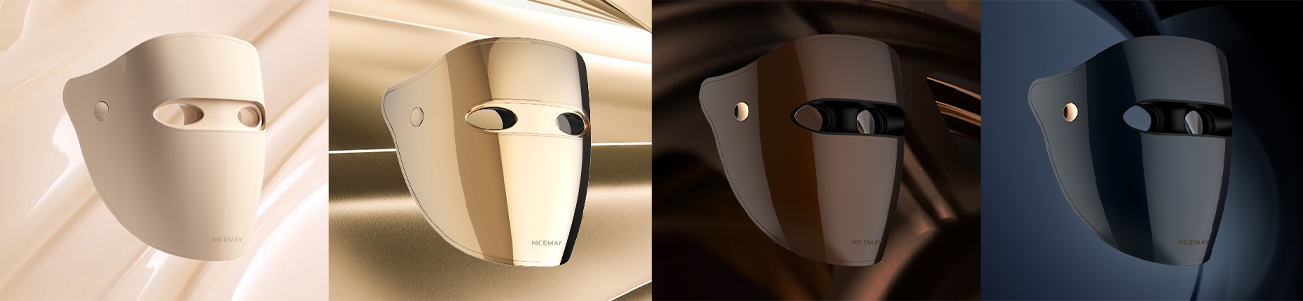
Who Should Be Extra Cautious with an LED Mask for Face?
Even among sensitive skin types, certain situations warrant added care or temporary avoidance:
- Active rosacea flare (redness, burning, pustules) — wait for stabilization before starting
- Severely compromised skin barrier (raw, weeping, or extremely dry/cracked skin)
- Immediately post-procedure skin (lasers, peels, microneedling) — allow full recovery first
- Concurrent isotretinoin use — high photosensitivity risk; pause LED until treatment ends
- Known photosensitivity disorders (e.g., lupus, polymorphic light eruption) — professional clearance required
If any apply, consult a dermatologist before trying an LED mask for face designed for sensitive skin.
Sources: AAD and Cleveland Clinic contraindication lists; dermatologist consensus on photosensitizing periods.
LED Mask Red Light vs Blue Light for Sensitive Skin
| 빛 종류 | Suitability for Sensitive Skin | 주요 이점 | Cautions & Energy Notes |
|---|---|---|---|
| Red/NIR (630–850 nm) | Excellent first choice | Calms inflammation, reduces redness, supports barrier | Low energy; deeper, gentler penetration |
| Blue (415–470 nm) | Use cautiously; limit in flares | Targets acne bacteria; some anti-inflammatory effects | Higher energy; may irritate active rosacea/eczema |
Dermatologists often prefer red-dominant masks for reactive skin; blue is better reserved for controlled acne management.
출처: National Eczema Association on blue light effects; AAD wavelength guidance.
How to choosing the Right LED Mask for Face ?
Focus on board-certified dermatologist-recommended, FDA-cleared options with adjustable intensity.
- Red/NIR primary wavelengths
- Low-moderate irradiance (20–50 mW/cm²)
- Soft silicone construction, eye protection, auto-timers
Frequently recommended models for reactive skin include Omnilux Contour Face, CurrentBody Skin LED Mask, and Dr. Dennis Gross DRx SpectraLite.
Best Practices for Using an LED Mask for Face Safely
- Patch test on inner forearm 24 hours prior.
- Cleanse gently; skip exfoliants/actives pre/post.
- Apply barrier cream or moisturizer afterward.
- Stop immediately at any discomfort; hydrate well.
- Combine with soothing, fragrance-free topicals.
출처: Mayo Clinic and WebMD on safe LED application; dermatologist tips for reactive skin.
For daily usage guidance, see: ” 얼굴용 LED 마스크는 일일 사용에 안전한가요?? “
최종 생각
An LED mask for face can be a gentle, low-risk option for sensitive skin—clinical evidence supports redness reduction and calming benefits for most, especially with red/near-infrared focus. Start conservatively, listen to your skin, and consult a dermatologist if you have rosacea, eczema, or heightened reactivity. With the right approach, light therapy can become a soothing part of your routine—calm, clear skin is within reach.
자주 묻는 질문: 여드름을 위한 LED 마스크 사용에 대한 일반적인 질문
레티놀 또는 각질 제거제를 사용한 후 LED 마스크를 사용하기까지 얼마나 기다려야 하나요?
대부분의 피부과 전문의들은 강력한 활성 성분(레티놀, AHA, BHA) 사용 후 자극이 겹치는 것을 피하기 위해 24–48시간 기다릴 것을 권장합니다. 다음 날 피부가 진정되고 반응이 없다면 보통 짧고 저강도 세션을 진행할 수 있지만, 항상 패치 테스트를 하고 보수적으로 시작하세요.
LED 마스크를 사용하면 민감한 피부가 장기적으로 다른 제품에 더 민감하게 반응하게 될까요?
No—properly used LED therapy (especially red/near-infrared) is generally barrier-supportive and does not increase long-term sensitivity. Many users report their skin becomes more tolerant to other skincare over time, but if you notice worsening reactivity, pause and consult your dermatologist.
세션 직후 LED 마스크를 진정용 시트 마스크나 세럼과 함께 사용할 수 있나요?
네—민감한 피부를 가진 대부분의 사람들은 즉시 진정되고 향이 없는 제품(히알루론산, 센텔라, 또는 세라마이드 성분의 세럼)을 겹쳐 발라 수분을 가두고 장벽을 강화하는 것이 도움이 된다고 느낍니다. 시술 직후에는 알코올, 향료 또는 강한 유효성분이 포함된 제품은 피하세요.
처음 몇 번의 세션 동안 피부가 약간 따뜻하거나 따끔거린다면 어떻게 해야 하나요?
A mild warming or tingling sensation is common when starting, especially with red light. Reduce session time to 5 minutes, ensure good distance from the LEDs if adjustable, and apply a thicker moisturizer afterward. If it persists or turns into stinging/redness, stop and check with a dermatologist.
피부가 평소보다 더 예민하거나 “화난” 것처럼 느껴지는 날에 LED 마스크를 사용해도 괜찮을까요?
반응이 큰 날(각질, 따가움 또는 눈에 띄는 자극)에는 보통 세션을 완전히 건너뛰고 순한 세안과 집중적인 피부 장벽 회복에 집중하는 것이 좋습니다. 피부가 안정되었을 때만 재개하세요—무리해서 계속하면 개선이 지연될 수 있습니다.
양식에 이메일을 입력해 주시면 곧 도움을 드리겠습니다!