


RF Scalp Care vs LED Hair Growth Device: Hair Loss Prevention Comparison

When hair thinning becomes a concern, two non-invasive technologies consistently rise to the top of the conversation: RF (radiofrequency) scalp care devices and LED hair growth devices. Both promise clinically backed results without prescriptions or clinic visits—but they work through fundamentally different biological mechanisms, address different root causes, and suit different hair loss profiles. Understanding which technology aligns with your specific condition can mean the difference between real regrowth and wasted effort.
This in-depth comparison breaks down the science, clinical evidence, practical usage, and ideal candidate profiles for each approach, so you can make a genuinely informed decision about your hair loss prevention strategy.
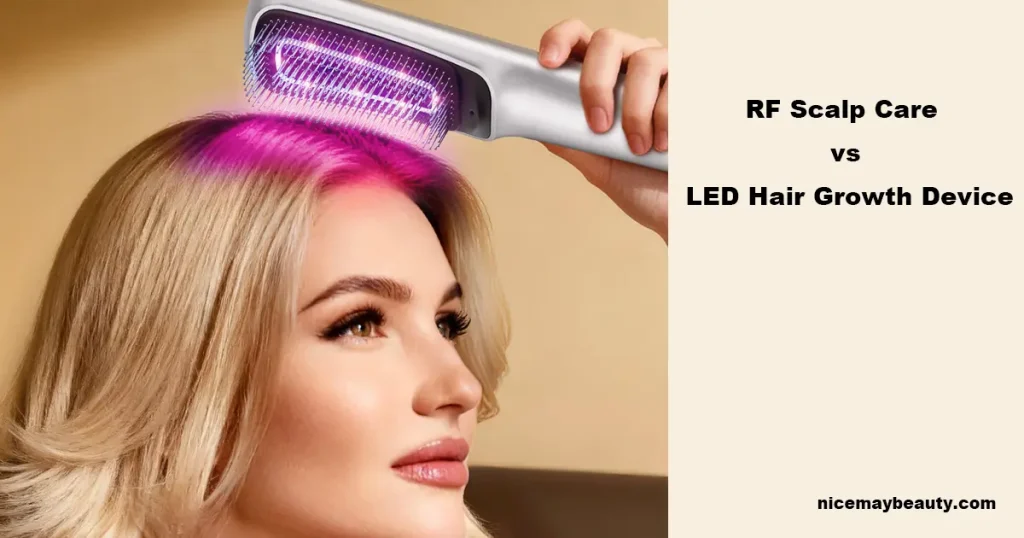
How RF Scalp Care Devices Work for Hair Loss Prevention?
The Science Behind RF Thermal Energy and Follicle Stimulation
Radiofrequency scalp care devices deliver low-level, high-frequency alternating electrical currents—typically ranging from 0.5 MHz to 3 MHz—into the dermal layers of the scalp. Unlike surface-level treatments, RF energy penetrates to the depth where hair follicles actually reside, between 3 and 5 millimeters below the skin surface.
The primary mechanism is controlled thermotherapy: RF energy gently elevates tissue temperature by 2–5°C without causing surface burns. This thermal response triggers a cascade of physiological effects directly relevant to hair loss prevention:
- Vasodilation and increased microcirculation: Elevated tissue temperature causes blood vessels to dilate, improving oxygen and nutrient delivery to hair follicles—particularly important in cases where follicle miniaturization is linked to poor scalp circulation.
- Sebaceous gland regulation: RF energy has demonstrated a measurable effect on sebum production. Overactive sebaceous glands contribute to follicular inflammation and clogged pores, two known accelerants of androgenetic alopecia. Thermal stimulation helps normalize sebum output, reducing the inflammatory environment around the follicle.
- Collagen remodeling in the dermis: Heat-induced collagen synthesis improves the structural integrity of the dermal papilla—the connective tissue cluster that anchors each follicle and governs its growth cycle behavior.
What RF Scalp Devices Actually Do to Hair Follicles
Published research in the Journal of Dermatological Science and related literature supports the hypothesis that consistent RF thermal stimulation prolongs the anagen (active growth) phase of the hair cycle by improving the microenvironment around the follicle. Follicles in a nutrient-deprived, inflamed, or sebum-congested environment prematurely enter the telogen (resting) phase—one of the primary drivers of diffuse thinning.
RF devices do not directly energize follicle cells. Instead, they create the conditions—improved blood flow, reduced inflammation, regulated sebum, and enhanced dermal support—that allow follicles to function optimally on their own.
RF Scalp Care: Ideal Candidate Profile
RF scalp care devices are most clinically appropriate for individuals who present with:
- Oily scalp and seborrheic conditions: Excess sebum production that contributes to follicular blockage and inflammatory hair loss
- Scalp sensitivity and itchiness: Conditions linked to seborrheic dermatitis or chronic scalp inflammation
- Early-stage androgenetic alopecia: Hair thinning driven by a compromised scalp microenvironment rather than severe follicle miniaturization
- Poor scalp circulation: Individuals with sedentary lifestyles or scalp tightness that restricts blood flow to follicles

How LED Hair Growth Devices Use Light Therapy for Hair Regrowth?
LED hair growth devices operate on an entirely different biological principle: photobiomodulation (PBM), also known as low-level light therapy (LLLT). Rather than using thermal energy, these devices deliver specific wavelengths of red and near-infrared light—typically between 630 nm and 670 nm for red light, and 800–850 nm for near-infrared—directly to scalp tissue.
This light energy is absorbed at the cellular level by cytochrome c oxidase, a photoreceptor enzyme within the mitochondria. The absorption triggers a well-documented chain reaction:
- Increased ATP (adenosine triphosphate) synthesis: Mitochondria produce more cellular energy, directly fueling the metabolic demands of actively growing hair follicles.
- Reduced oxidative stress: PBM decreases reactive oxygen species (ROS) in follicle cells, which is particularly relevant because oxidative stress is a known contributor to premature follicle aging and miniaturization.
- Upregulation of growth factors: Studies published in Lasers in Surgery and Medicine document measurable increases in vascular endothelial growth factor (VEGF) and other angiogenic factors following consistent PBM treatment, supporting new capillary formation around follicles.
- Anagen phase extension: By improving follicle cell metabolism and reducing apoptosis (programmed cell death), PBM has been shown to keep follicles in the active growth phase longer.
Clinical Evidence Supporting LED Hair Growth Devices
LED hair growth technology carries a substantial body of peer-reviewed evidence. A landmark randomized controlled trial published in the American Journal of Clinical Dermatology demonstrated statistically significant increases in hair count and hair shaft diameter among participants using LLLT devices over 26 weeks compared to sham device controls. Multiple systematic reviews have since confirmed these findings across diverse hair loss etiologies, including androgenetic alopecia in both men and women and alopecia areata.
The FDA has cleared several LLLT-based devices for hair loss treatment under the 510(k) pathway, citing sufficient evidence of safety and efficacy—a regulatory distinction that distinguishes them from many wellness devices.
If you’re evaluating how LED compares to other device-based approaches, our detailed breakdown in Hair Growth Comb vs LED Hair Cap: Better Scalp Coverage examines the structural and therapeutic differences between handheld LED tools and full-cap devices—a critical distinction for achieving optimal scalp-wide results.

RF Scalp Care vs LED Hair Growth Device: Direct Comparison
| Factor | RF Scalp Care | LED Hair Growth |
|---|---|---|
| Primary energy type | Radiofrequency electrical current (thermal) | Photonic light energy (non-thermal) |
| Biological target | Sebaceous glands, blood vessels, dermal collagen | Mitochondria in follicle cells |
| Depth of action | 3-5 mm (dermis) | 3-7 mm (dermis to subcutaneous) |
| Primary effect | Improved scalp microenvironment | Direct cellular energization of follicles |
The distinction here is clinically meaningful. RF devices treat the environment around the follicle, while LED devices treat the follicle cell itself. For users with compromised scalp health driving their hair loss, RF addresses the root cause more directly. For users with intrinsically weakened follicles—as seen in pattern baldness—LED acts more precisely on the problem.
Coverage and Ease of Use
RF scalp care devices are predominantly handheld combs or wands that require manual contact and deliberate sectioning of the hair. This targeted delivery is advantageous for treating localized problem areas—the crown, temples, or hairline—but requires consistent technique and session time investment.
LED hair growth devices, particularly in cap or helmet formats, offer hands-free, full-scalp coverage in a single session. Clinical protocols typically require 20–30 minutes every other day, achievable while reading, working, or relaxing. This structural advantage in compliance is significant: hair loss treatments only work when used consistently over months, and LED caps lower the behavioral barrier to maintaining that consistency.
For users specifically comparing handheld device approaches across energy types, the comprehensive guide to Laser EMS Hair Growth Comb vs Minoxidil: More Effective Home Solution 2026 provides rigorous context on how comb-format devices stack up against pharmaceutical treatment—relevant background for anyone deciding between device monotherapy and combination protocols.

MR-2611

MR-2622

MR-2322
Which Hair Loss Prevention Device Is Right for You?
Choose RF Scalp Care If:
- Your hair loss is accompanied by chronic scalp oiliness, dandruff, or seborrheic dermatitis
- You experience persistent scalp itchiness or inflammation
- You prefer targeted, localized treatment over whole-scalp coverage
- You want to address scalp health as a foundation before layering in other hair loss interventions
Choose an LED Hair Growth Device If:
- You have clinically diagnosed androgenetic alopecia (pattern hair loss)
- You want hands-free, full-scalp treatment coverage in a single session
- You are combining device therapy with topical treatments like minoxidil
- You have received post-partum hair shedding or stress-related diffuse thinning
- You want a technology with the strongest independent clinical evidence base
FAQ: RF Scalp Care vs LED Hair Growth Device
Can I use an RF scalp care device and an LED hair growth device on the same day?
Is RF scalp care or LED therapy more effective for women experiencing hormonal hair loss?
How do I know if my hair loss is caused by scalp health issues versus follicle-level problems — and does that affect which device I should choose?
Are there any hair types or scalp conditions where neither RF nor LED devices are recommended?
If I stop using an RF or LED hair device, will my hair loss return to its previous rate?
Please fill in your email in the form and we’ll get back to assist you soon!