


Silicone Brush vs Konjac Sponge – Which Cleanser Is Better for Sensitive Skin?

Sensitive skin does not forgive the wrong cleansing tool. Redness, tightening, stinging mid-rinse — these are signals that your skin barrier is losing more than it gains from your current routine. A konjac sponge and a silicone facial brush both promise gentle, effective cleansing, but their mechanisms, friction profiles, and maintenance requirements differ enough that choosing the wrong one can set your skin back weeks. This comparison breaks down the material science, friction levels, pH compatibility, and practical protocols behind each tool so you can pick the one that matches your skin’s actual tolerance threshold.

How Each Tool Makes Contact With Your Skin?
The first question to ask about any cleansing tool is not how well it cleans, but how much mechanical stress it introduces per pass. Sensitive skin typically has a compromised stratum corneum — the outermost layer sitting at roughly 10–15 µm thick — and excess friction disrupts its tight-junction proteins, accelerating transepidermal water loss (TEWL).
Konjac Sponge: Plant Fiber Turned Hydrogel
A konjac sponge starts as the dried root of Amorphophallus konjac, a plant cultivated across East Asia. Manufacturers grind the corm, mix it with water, and set it into a porous disk. Dry, the sponge feels firm. Soaked for 60 seconds in warm water, it absorbs 150–200 times its weight and transforms into a soft hydrogel with a Shore A hardness near zero. That texture sits in the same tactile range as healthy skin itself, which is why friction during use registers as minimal.
The fiber matrix in a konjac sponge also carries a mild negative ionic charge. Positively charged sebum and dead corneocytes bond to the fibers without pressure, producing what dermatologists classify as passive mechanical exfoliation. Research published in the Journal of Cosmetic Dermatology found that plant-based hydrogel applicators delivered surface debris removal comparable to low-concentration AHA cleansers (2–3% glycolic acid) without altering the skin’s surface pH beyond 0.3 units. For skin already sitting at a compromised pH of 5.5–6.0, that stability matters.
Silicone Brush: Nub Geometry and Vibration Frequency
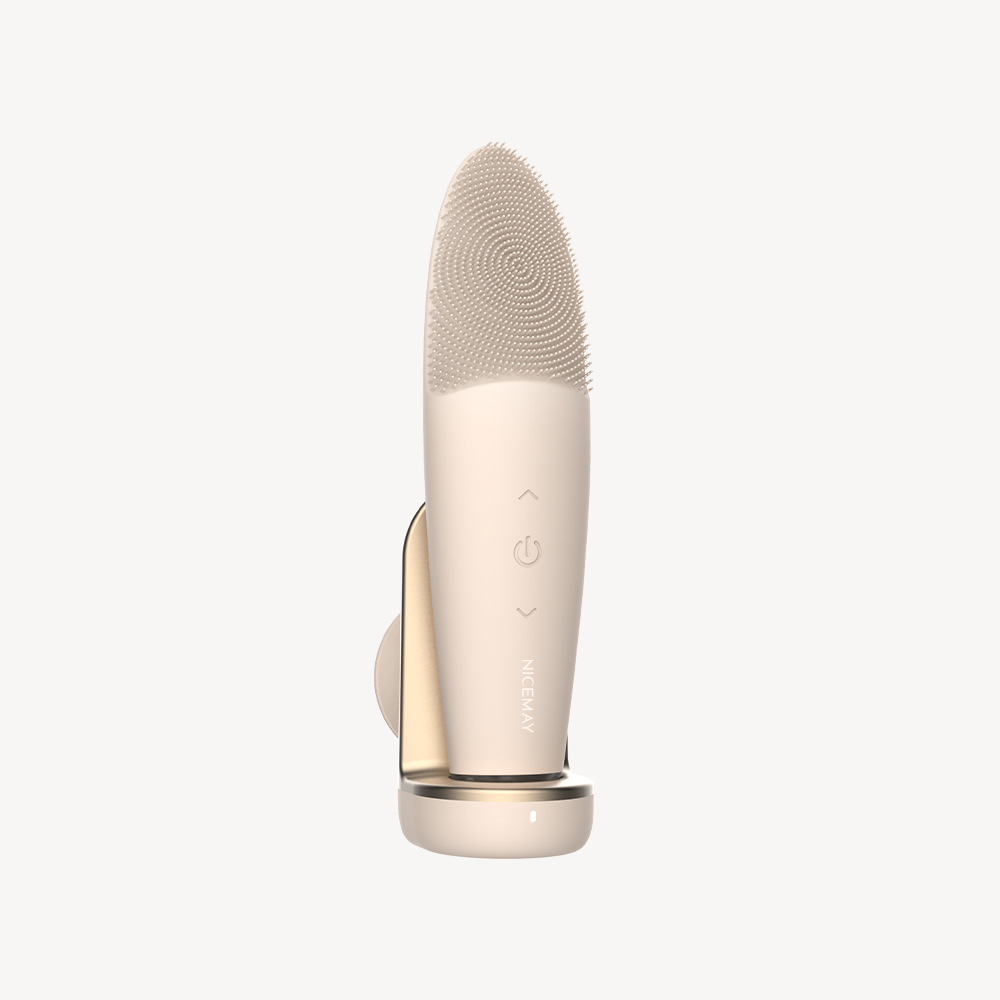
A silicone cleansing brush replaces natural fiber with medical-grade polydimethylsiloxane (PDMS) nubs arranged in concentric or radial patterns. The nubs range from 0.5 mm to 2.5 mm in diameter and from 1 mm to 4 mm in height depending on the device. Shorter, denser nubs produce surface-level massage; taller, sparser nubs dig slightly deeper into follicular openings.
Motorized versions add sonic or mechanical vibration, typically between 6,000 and 12,000 oscillations per minute (OPM). At 6,000 OPM with light pressure (under 150 grams), the vibration loosens sebum plugs and emulsified sunscreen without significantly increasing surface friction. A 2022 study in Skin Research and Technology measured TEWL in 32 subjects using a 8,000 OPM silicone brush at controlled pressure and found no statistically significant barrier disruption compared to manual cleansing — provided subjects used under 100 grams of pressure. Subjects who pressed harder showed a 12% TEWL increase after four weeks of daily use.
The key variable for sensitive skin is not the material. It is the pressure you apply and the nub density you select.
Friction, pH, and Barrier Compatibility
| Factor | Konjac Sponge | Silicone Brush |
|---|---|---|
| Contact texture (wet) | Hydrogel, Shore A ≈ 0 | PDMS nubs, Shore A 20–40 |
| Friction coefficient (wet skin) | 0.05–0.10 | 0.15–0.35 (varies by nub density) |
| Exfoliation mechanism | Passive ionic adhesion | Active mechanical oscillation |
| pH effect on skin surface | +0.2–0.3 unit shift | Neutral (tool only; cleanser drives pH) |
| Suitable minimum skin barrier score | Severely compromised | Mildly compromised |
A friction coefficient below 0.10 falls within the range most dermatologists describe as non-irritating for rosacea-prone or reactive skin. Silicone brushes with fine, dense nubs approach 0.15–0.20 when used without pressure. Add moderate pressure, and the coefficient climbs to 0.30 or above, at which point you are creating micro-tears in already thin skin.
Active Ingredients and Tool Compatibility
Retinol users face a specific conflict. Tretinoin and over-the-counter retinol (0.025%–1%) accelerate cellular turnover and thin the stratum corneum by 15–20% with extended use. Using a silicone brush on retinol-thinned skin at 10,000 OPM mirrors the friction impact of using a medium-grit brush on normal skin — more than most sensitive complexions can absorb without barrier damage.
A konjac sponge remains safe with retinol, niacinamide, and most acid-based routines because its passive mechanism does not add mechanical load. If you use AHAs at concentrations above 5%, skip the konjac sponge on active exfoliation days; you are already achieving chemical exfoliation and adding physical contact, even passive, extends total turnover beyond the skin’s repair capacity.
Hygiene, Maintenance, and Real Failure Modes

Skincare communities underestimate how quickly both tools become contamination vectors. A moist surface at room temperature grows bacteria within 24–48 hours. That timeline applies to both materials, despite the common belief that silicone’s non-porous surface keeps it clean.
Konjac Sponge: Mold Risk Is Real and Rapid
A konjac sponge stays damp for hours post-use. The fiber matrix, while plant-based, provides an organic substrate that Cladosporium and Aspergillus mold species colonize readily when the sponge sits in a humid bathroom. Researchers at the University of Reading cultured 14 personal care sponges and found fungal colonies on 100% of samples stored in shower caddies after 30 days of use, regardless of cleaning protocol.
To extend safe use:
- Squeeze out water completely after each use.
- Hang it in open air, not a sealed caddy.
- Store outside the shower when not in use.
- Replace every 4–6 weeks regardless of appearance.
A sponge that smells faintly sour has already colonized past the point where rinsing helps. Discard it.
Silicone Brush: Biofilm Accumulates in Nub Channels
Silicone is non-porous on a macro level, but the micro-channels between densely packed nubs trap residual cleanser and dead skin cells. A 2021 analysis by dermatologists at the Cleveland Clinic found that silicone brushes stored without weekly deep cleaning harbored Staphylococcus epidermidis at concentrations above 10⁴ CFU/cm², a threshold associated with folliculitis flares in individuals with compromised skin barriers.
Effective silicone brush hygiene:
- Rinse under running water for 20 seconds after each use.
- Deep clean weekly with 70% isopropyl alcohol or a UV sanitizer.
- Replace brush heads every 3 months even with proper cleaning.
- Air-dry face-down on a clean towel, not upright in a holder where water pools at the base.
Skin Type Decision Framework
| Skin Condition | Recommended Tool | Frequency | Avoid |
|---|---|---|---|
| Rosacea (mild, stable) | Konjac sponge | 1x daily, AM or PM | Silicone brush on flare days |
| Rosacea (moderate/severe) | Konjac sponge only | 1x daily, PM | All motorized devices |
| Eczema or psoriasis | Konjac sponge (fragrance-free) | Every other day | Both tools on active lesions |
| Dry + reactive, no diagnosis | Konjac sponge | 1x daily | Silicone brush while barrier rebuilds |
| Oily + sensitive | Silicone brush (fine nubs, under 100g pressure) | 3x per week, PM | Daily silicone brush use |
| Acne-prone (non-cystic) | Silicone brush, 6,000–8,000 OPM setting | 2x per week | Pressing over active lesions |
| Post-procedure (laser, peel) | Neither tool | Resume after 2–3 weeks of healing | — |
How to Use Each Tool for Sensitive Skin Without Causing Irritation?
Konjac Sponge Protocol
- Soak the dry sponge in warm (not hot) water for 60 seconds.
- Apply your cleanser to the sponge or directly to damp skin.
- Use circular motions with zero applied pressure — let the sponge’s weight do the work.
- Spend no more than 60 seconds on the full face.
- Rinse with lukewarm water and follow immediately with a hydrating toner or essence.
Avoid hot water during soaking. Water above 40°C reduces the hydrogel’s viscosity and increases friction against skin. Cold water prevents full hydration and makes the sponge too firm.
Silicone Brush Protocol for Sensitive Skin
For sensitive or oily-sensitive skin, the NICEMAY MR-1931 Silicone Facial Cleansing Brush fits the profile well: its medical-grade silicone nubs sit at 1.2 mm height with a 0.8 mm diameter, and its sonic mode operates at 6,000 OPM, keeping oscillation within the low-friction range validated in the Skin Research and Technology data above. Find it at nicemaybeauty.com/mr-1931.
- Wet your face with lukewarm water.
- Apply cleanser to your face (not the brush head) to reduce concentrated mechanical friction.
- Set the brush to its lowest oscillation mode.
- Rest the brush against your skin — no pressing, no scrubbing.
- Work in 10-second intervals per zone: forehead, left cheek, right cheek, chin.
- Total contact time: 60–90 seconds maximum.
- Rinse with cool water to close pores.
Limit silicone brush use to three sessions per week during the first month. If tightness, redness, or stinging appear within 24 hours of use, drop to once per week and assess your pressure technique before discontinuing.

Konjac vs Silicone Brush: Cost and Long-Term Value
| Factor | Konjac Sponge | Silicone Brush |
|---|---|---|
| Purchase price | $5–$20 | $25–$120 |
| Replacement frequency | Every 4–6 weeks | Heads every 3 months; device 2–3 years |
| Annual cost estimate | $40–$120 | $60–$200 |
| Electricity required | No | Yes (battery or USB charging) |
| Environmental impact | Biodegradable | Non-biodegradable device; recyclable heads vary |
Konjac sponges carry a lower upfront cost but a higher frequency cost. A quality silicone brush with replaceable heads costs more per purchase and less per use over a two-year period, assuming consistent maintenance. Budget both the device and the replacement heads before choosing.
What the Research and Clinical Experience Actually Show?
The Google AI Overview framing positions konjac as the default winner for sensitive skin. The clinical literature offers a more conditional verdict. A 2020 systematic review in the British Journal of Dermatology examined 11 studies on mechanical cleansing devices and concluded that barrier disruption correlated with applied pressure and oscillation frequency, not with the material category of the device. Konjac sponges produced no adverse outcomes across all studies because users naturally apply low pressure. Silicone brushes produced adverse outcomes in the subset of users who applied pressure above 150 grams or used high-frequency settings (above 11,000 OPM) daily.
The American Academy of Dermatology recommends that patients with rosacea use fingertips or the softest available applicator for cleansing. For this group, a fully hydrated konjac sponge matches or exceeds fingertip softness. For oily-sensitive skin types without rosacea or active eczema, a properly used silicone brush on a low setting three times per week falls within safe parameters as supported by the Skin Research and Technology findings above.
For readers who want a broader look at silicone brush options ranked by nub density, motor speed, and sensitive skin compatibility, The Top 10 Silicone Facial Cleansing Brushes for Sensitive Skin of 2026 covers the current field with clinical context for each device.
Conclusion
Your choice comes down to two variables: your skin barrier’s current integrity and how disciplined you are about pressure control. A compromised, inflamed, or rosacea-prone complexion belongs with a konjac sponge used daily at zero applied pressure. Oily-sensitive skin that tolerates its current routine can add a silicone brush three times per week at the lowest OPM setting, staying under 100 grams of contact pressure.
Neither tool works without proper maintenance. A contaminated sponge and an unwashed brush head both introduce bacterial and fungal loads that offset whatever cleansing benefit the tool provides. Set a replacement schedule before you purchase, not after.
For a full grounding in silicone brush mechanics, materials, and how to read device specifications before buying, All You Need to Know About Silicone Facial Cleansing Brushes is worth reading alongside this comparison.
FAQs About Silicone Brush vs Konjac Sponge
Can I use a konjac sponge every day on sensitive skin?
Do silicone brushes cause more breakouts on sensitive, acne-prone skin?
How long before I see a difference switching from fingers to a konjac sponge?
Can I use a silicone brush with acids (AHAs, BHAs) in my routine?
Does the color or charcoal addition in a konjac sponge change how it performs?

Please fill in your email in the form and we’ll get back to assist you soon!