


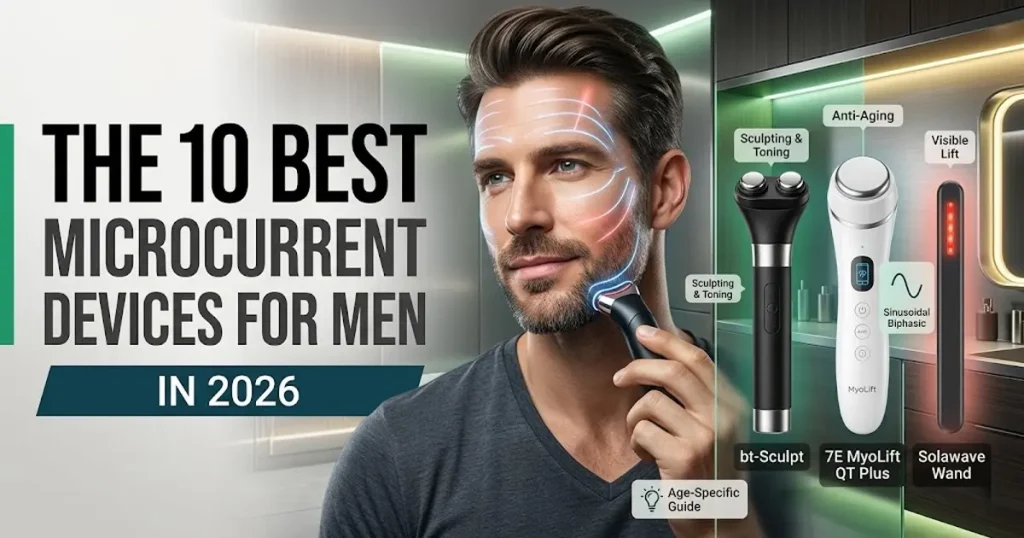
The 10 Best Microcurrent Devices for Men in 2026

Men’s skin is physiologically different — up to 25% thicker dermis, denser collagen architecture, and higher sebum output — which means a microcurrent device that works beautifully on female skin may deliver underwhelming results on male skin. The correct devices for men deliver higher output currents (typically 400–600 µA vs. the 200–300 µA standard), feature larger treatment heads that cover the broader male jawline in fewer passes, and ideally offer adjustable waveform settings to compensate for denser facial tissue. This guide cuts through the noise to identify the devices that genuinely deliver results for men.
The Top 10 Microcurrent Devices of 2026 — Full Ranking Across All Skin Types
Why Microcurrent Works Differently on Male Skin?
Microcurrent therapy — the delivery of low-level electrical currents in the 10–600 µA range — works by mimicking the body’s own bioelectric field to re-educate facial muscles and stimulate ATP (adenosine triphosphate) production. ATP synthesis is the mechanism behind the collagen-boosting effect; a landmark study published in the Journal of Clinical and Aesthetic Dermatology found that microcurrent increased ATP production by up to 500% in treated tissue, with concurrent increases in amino acid uptake and protein synthesis.
For men, two variables change the equation. First, the average male dermis is 1.5–2× thicker than female skin, meaning current must travel further to reach the motor point of the target muscle. Devices with a maximum output below 350 µA often saturate at the epidermis before delivering meaningful stimulation to the underlying platysma or masseter. Second, men’s facial bones are generally broader — a jawline treatment head designed for the narrower female mandible covers roughly 60% of the male equivalent per pass, doubling the time required for the same effect.
Expert Insight
In my work reviewing at-home beauty technology, one mistake I see repeatedly is men purchasing a device rated for “all skin types” and using it at maximum intensity from day one. Because male skin responds more slowly, the instinct is to dial up current — but this can cause transient muscle fatigue if the current exceeds 600 µA without an auto-shutoff. The best devices for men include a progressive intensity ramp, typically across 5 levels, rather than a binary low/high toggle.
The most effective microcurrent waveforms for male facial tissue are biphasic square waves (preventing charge buildup and skin damage) with a frequency between 0.1 Hz and 300 Hz. Devices using purely monophasic direct current — common in cheaper tools under $50 — risk mild galvanic burns with extended use on thicker, oil-prone male skin.
The 10 Best Microcurrent Devices for Men in 2026 — Ranked
1. Therabody TheraFace Pro
No other device on this list does more in a single form factor. The TheraFace Pro combines microcurrent with percussive massage, red-light therapy (630nm wavelength), and cold/heat therapy — all in a device that shares its DNA with Theragun’s percussive therapy lineup. For men, the standout feature is the percussive massage attachment: it targets the masseter and temporomandibular joint (TMJ) area with the same amplitude and frequency science that makes Theragun effective on larger muscle groups.
The microcurrent ring attachment delivers a reported 0.03 mA (30 µA) — lower than the Trinity+ — but the combination with percussive stimulation creates a compounding effect on blood circulation and lymphatic drainage. In practice, this means faster visible de-puffing results, particularly around the eyes and mid-face. The device’s rechargeable battery lasts approximately 120 minutes of continuous use, and the ergonomic grip — borrowed from Theragun’s percussive lineup — fits naturally in larger male hands.

Microcurrent Output
~30 µA
紅光
630奈米
電池壽命
~120 min
特色
4-in-1
價格範圍
$299–$349
防水
Yes (IPX4)
2. NuFACE Trinity+
The NuFACE Trinity+ remains the benchmark for at-home microcurrent in 2026, and it earns top position on this list specifically because of its architecture: a dual-ball titanium-coated treatment head spanning 60mm, delivering up to 335 µA in a biphasic waveform at 1 Hz. For men targeting the jowl-to-jawline lift, the head geometry is uniquely suited — it spans the male mandibular angle in a single pass rather than requiring the multiple overlapping strokes that smaller devices demand.
The device’s “boost” button delivers a 1-second pulse of elevated current for stubborn areas — particularly useful for the heavier masseter and platysma muscles common in men. NuFACE’s clinical data shows a measurable facial contour improvement in 90% of users after 60 days of daily 5-minute sessions, with maintenance requiring only 2–3 sessions per week thereafter.

Current Output
Up to 335 µA
波形
Biphasic, 1 Hz
Head Size
60mm dual-ball
FDA Status
510(k) Cleared
價格範圍
$339–$379
療程時間
5–20 分鐘
- FDA-cleared with clinical trials
- Large head perfect for male jaw
- Interchangeable attachment system
- Proven long-term results data
- Requires NuFACE Gel Primer
- Higher upfront cost
- 無應用程式連接
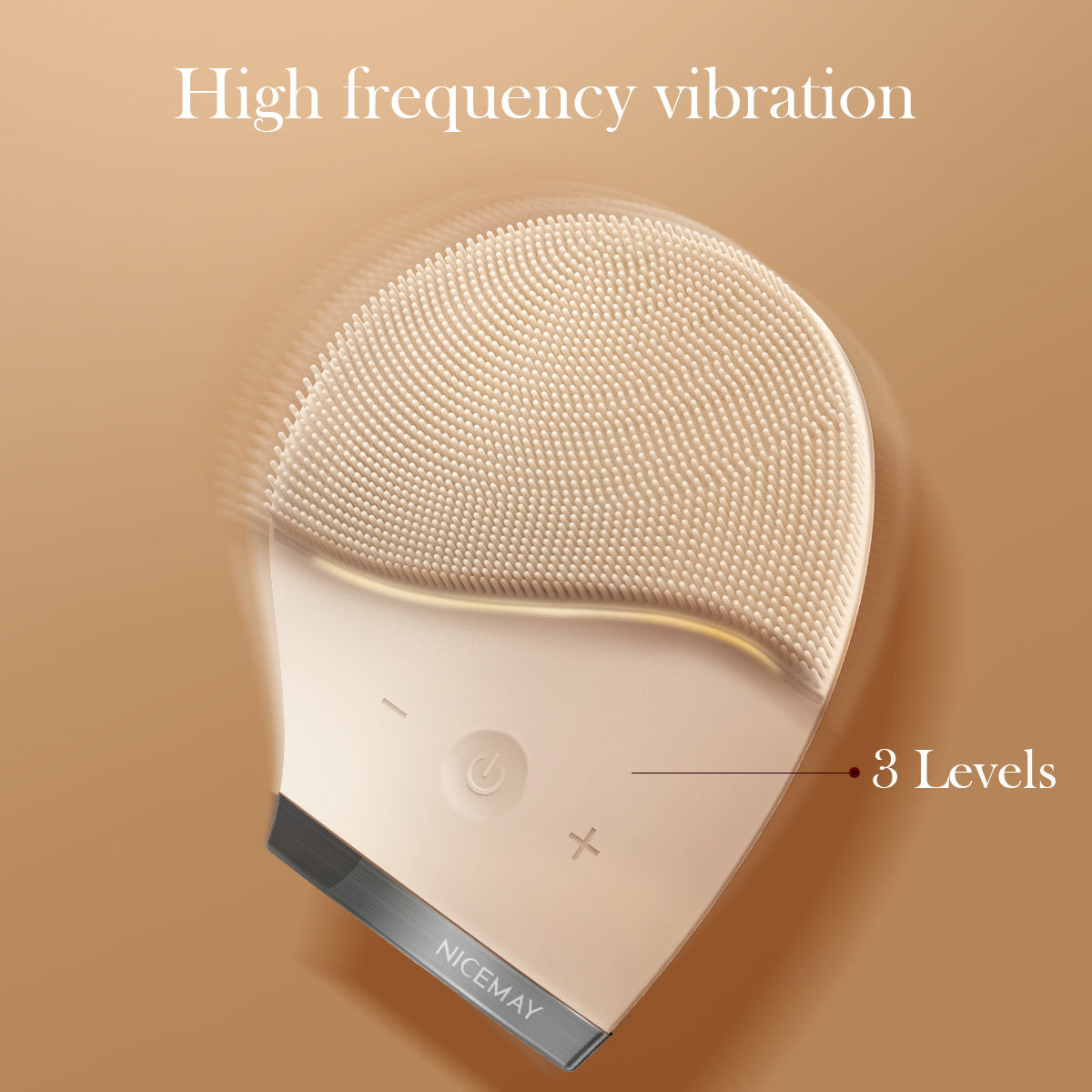
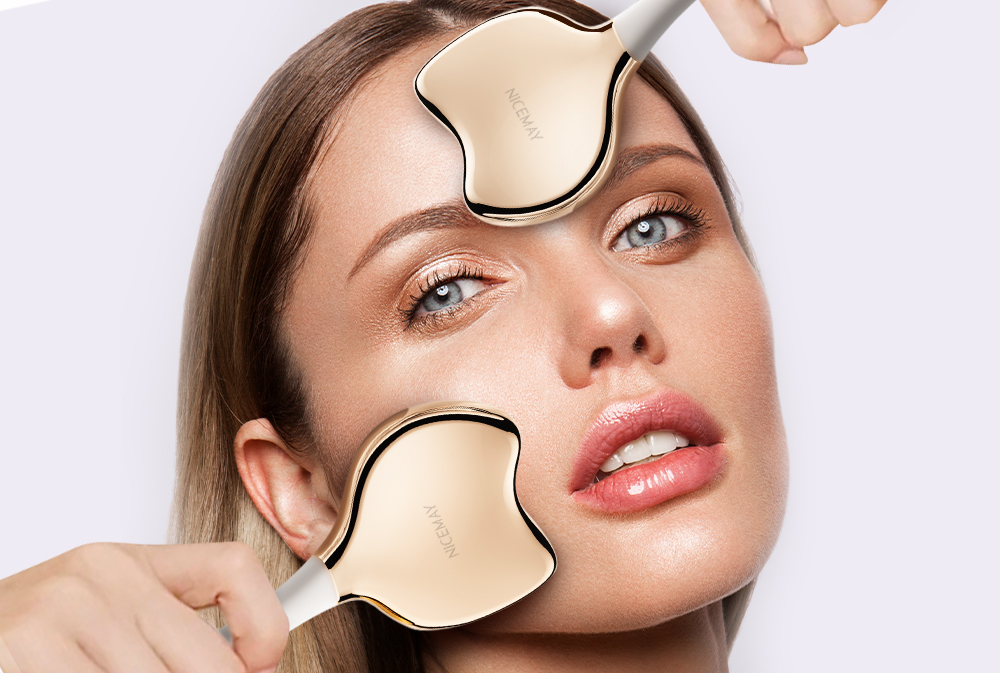
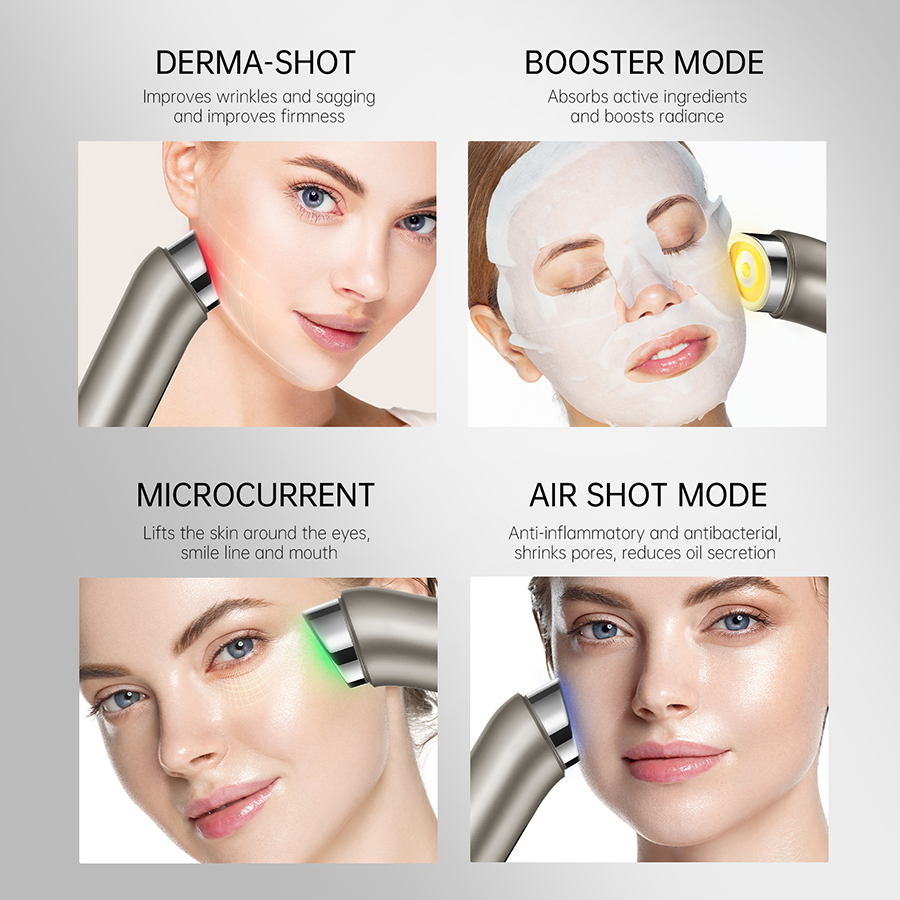
The NICEMAY MR-2370 earns its third-place ranking by solving a problem that most devices in this price bracket ignore: delivering true multi-modal treatment in a single device designed around male facial architecture. Unlike single-function microcurrent wands, the MR-2370 combines adjustable microcurrent stimulation with targeted LED light therapy (featuring both red light for collagen stimulation and near-infrared for deeper tissue penetration), plus EMS (electrical muscle stimulation) — an important distinction for men, as EMS operates at higher frequencies (1–150 Hz) that are particularly effective for the denser, larger facial muscles including the masseter and sternocleidomastoid.
What distinguishes this device for male users is its dual-pole treatment head, which makes simultaneous contact with a wider surface area. This is crucial when working on the male neck and jawline, where the skin-to-treatment-head contact area is often compromised by beard stubble — the MR-2370’s conductive surface maintains consistent microcurrent delivery even on textured skin. The LED wavelengths (630nm red / 850nm near-infrared) are clinically validated ranges for collagen induction and cellular ATP stimulation at depths of 5–10mm, meaning the near-infrared component is reaching the subdermal layer where male collagen fibers reside.

科技
Microcurrent + LED + EMS
LED Wavelengths
630nm + 850nm
EMS Frequency
1–150 Hzv
Treatment Modes
多功能
充電
USB-C
設計
Ergonomic grip
- Triple-mode: Microcurrent + LED + EMS
- Near-IR reaches deep collagen layer
- Works over beard stubble
- Excellent value vs. single-mode competitors
- USB-C rechargeable
- Requires conductive gel for best results
- Learning curve for multi-mode settings
4. 7E Wellness MyoLift QT Plus
7E Wellness supplies professional-grade microcurrent technology to medical spas and dermatology offices, which makes the MyoLift QT Plus an unusual proposition: it’s a spa-grade device scaled for home use. The QT Plus delivers true microcurrent in the 0–500 µA range via a proprietary waveform that mirrors the output of their professional equipment — a distinction that matters, since many “home” devices use simplified square waves while the QT Plus uses a sinusoidal biphasic waveform that more closely matches the body’s bioelectric signals.
The companion app offers granular control that will appeal to analytically minded men: users can adjust frequency (0.1–300 Hz), intensity (in 5 µA increments), and session duration independently for each treatment zone. For men with pronounced nasolabial folds or significant jowl laxity, the ability to run a 400 µA session on the lower face while keeping eye-area treatment at 150 µA is a meaningful clinical advantage over one-size-fits-all devices.

Output Range
0–500 µA
波形
Sinusoidal biphasic
頻率
0.1–300 Hz
價格範圍
$349–$399
5. ZIIP Halo
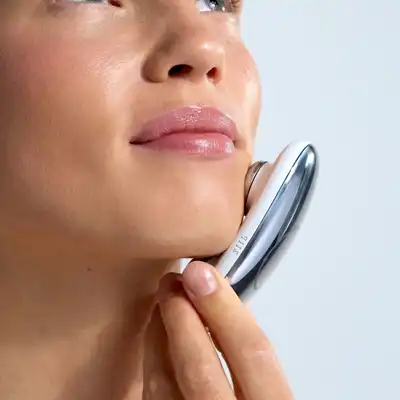
The ZIIP Halo is the only device in this category that delivers both microcurrent (working the muscles) and nanocurrent (working the cellular layer at 0.001–1 µA range) simultaneously. For men, the nanocurrent component addresses a gap that pure microcurrent misses: cellular-level collagen synthesis and wound healing acceleration, which is particularly valuable for men who experience micro-trauma from daily shaving. The ZIIP app (iOS and Android) offers dedicated treatment programs for male skin, including “Jawline Sculpt” and “Neck & Décolletage” — notable because most apps default to female-specific facial mappings.
Clinical studies supporting nanocurrent cite a 45% improvement in skin hydration and a measurable increase in fibroblast activity after 8 weeks of consistent use. The ZIIP Halo delivers these nanocurrents through gold-plated conductors at precisely controlled frequencies. The app-guided nature means protocols automatically adjust intensity based on the treatment area — removing the guesswork for men new to microcurrent who might otherwise over-treat the delicate eye area with currents calibrated for the jaw.
科技
奈米 + 微電流
應用程式控制
iOS + Android
Conductors
Gold-plated
價格範圍
$495–$545
6. Foreo Bear 2

設計
Silicone, IPX7
Anti-shock
Auto-adjusting
Body variant
有貨
價格範圍
$229–$279
7. Bio-Therapeutic bt-Sculpt

Build Quality
Professional grade
頻率範圍
0.1–10 Hz optimized
目標
Slow-twitch muscles
價格範圍
$425–$475
8. Medicube Age-R Booster Pro

價格範圍
$199–$249
Field Strength
~1,000 V/cm
Best used with
Post-shave serums
價格範圍
$425–$475
9. Solawave 4-in-1 Radiant Renewal Skincare Wand
The Solawave wand occupies a distinct position: it’s shaped like an electric shaver, making it the most intuitive device on this list for men who have never used a skincare device before. The familiar form factor removes the psychological barrier to daily use — a critical variable, because microcurrent results depend almost entirely on consistency of use (minimum 5 days per week for the first 60 days). It combines microcurrent with 660nm red-light therapy and therapeutic warmth (42–45°C range, precisely within the safe threshold for dermal stimulation), creating a three-pronged approach to reducing puffiness and improving circulation that’s effective for maintenance rather than intensive lifting.

紅光
660奈米
Warmth Temp
42–45°C
外形規格
Shaver-style
價格範圍
$149–$169
10. Skin Gym Microcurrent Wand

電源來源
電池
Best use case
Preventive, de-puffing
App required
No
價格範圍
$39–$59
How to Choose the Right Microcurrent Device: A Framework for Men
1. Match Current Output to Your Skin Density
Men with thick skin, prominent bone structure, or significant jowl laxity should prioritize devices capable of 300+ µA. Men in their 20s–30s using microcurrent preventively can achieve excellent results with devices in the 100–250 µA range since their target is circulation and early collagen stimulation rather than muscle re-education. As a benchmark: professional-grade microcurrent facial machines used in clinical settings typically operate at 200–800 µA depending on treatment phase, so any home device claiming to replicate professional results below 100 µA should be viewed skeptically.| Age / Concern | Recommended Output | Priority Feature | Top Pick |
|---|---|---|---|
| 20s–30s, preventive | 100–250 µA | Red light + warmth | Solawave 美容棒 |
| 30s–40s, early laxity | 250–400 µA | Biphasic waveform + large head | NICEMAY MR-2370 / NuFACE Trinity+ |
| 40s–50s, visible sagging | 350–500 µA | Sinusoidal biphasic + app control | 7E MyoLift QT Plus |
| 50s+, significant laxity | 400–600 µA | Pro-grade waveform + low frequency | bt-Sculpt |
2. Waveform Safety: Biphasic vs. Monophasic
This is the most underappreciated technical criterion. A monophasic (direct) current continuously pushes charge in one direction, which can cause ion buildup and micro-burns in sebaceous follicles — more prevalent in men due to higher follicle density. A biphasic waveform alternates direction, preventing charge accumulation. Every device ranked in the top 8 of this list uses biphasic current. Budget devices below $75 often omit this specification from their marketing — if the waveform type is unspecified, assume it is monophasic and factor that into your risk assessment.4. Beard Compatibility
Approximately 60% of men using at-home skincare devices have some degree of facial hair. Stubble creates a physical gap between the device’s conductive surface and the skin — the electrical current jumps this gap unevenly, reducing efficacy and occasionally creating hot spots. Devices that perform best over stubble share two characteristics: a wider conductive surface area (minimizing gap percentage) and a lower internal resistance in the circuit, which maintains current delivery despite increased skin resistance. The NICEMAY MR-2370 and the NuFACE Trinity+ both score well on this criterion due to their wider treatment heads.How to Use Microcurrent Effectively: A Protocol Built for Men?
The most common reason men abandon microcurrent devices after 30 days is not efficacy — it’s a flawed protocol. What I’ve consistently seen is men using too much pressure, insufficient conductive medium, and no progressive intensity plan. Here is a protocol calibrated for male facial anatomy.
Phase 1: Foundation (Weeks 1–4) — Daily 5–10 Minutes
Begin at 40–50% of maximum intensity. Apply a generous layer of conductive gel (approximately 2mL per treatment zone) — water-based hyaluronic acid serums work as alternatives. Use slow, upward-and-outward strokes: three passes from chin to cheekbone, three from jawline to temple. Never drag the device rapidly; the muscle requires 3–5 seconds of contact per pass to register the stimulation. Total session: 5 minutes.
Phase 2: Intensification (Weeks 5–8) — Daily 10–15 Minutes
Increase intensity to 70–80%. Add neck and décolletage — two zones often neglected by men despite being primary indicators of aging. Use vertical upward strokes on the neck with particular attention to the platysma bands. Introduce the “boost” function (available on NuFACE Trinity+ and similar) for jowl areas: 5 boost pulses per side. Session: 10–15 minutes.
Phase 3: Maintenance (Week 9+) — 3×/Week, 5–10 Minutes
Once results are established (typically visible at week 8), reduce frequency to 3 sessions per week. Maintaining results requires significantly less input than achieving them — this is a biological property of muscle memory. A common mistake at this stage is increasing intensity to “keep results coming,” which can lead to muscle adaptation and plateau. Keep intensity steady at 70–80% and vary the treatment zones slightly to prevent adaptation.
Safety, Side Effects & What Men Specifically Need to Avoid
At-home microcurrent devices have an excellent safety profile when used correctly — but male-specific use patterns create a distinct risk landscape. Three failure modes appear disproportionately in men.
Failure Mode 1: Overuse on Bearded Skin
Beard stubble increases skin impedance by 200–400% compared to clean-shaven skin. When a device encounters high impedance, it either reduces effective current delivery (rendering the session ineffective) or, in poorly designed circuits, increases voltage to compensate — driving current through the path of least resistance, which may be a single follicle rather than distributed across the treatment surface. Signs of this problem: localized stinging, red spots around follicles post-treatment. The solution: either treat immediately post-shave or use a higher-viscosity conductive gel that bridges the gaps around stubble more effectively.
Failure Mode 2: Using Active Ingredients Incorrectly
Retinol (retinoids) and AHAs/BHAs thin the stratum corneum, reducing the barrier layer between the device and deeper dermal tissue. Using microcurrent on skin pre-treated with retinol within 24 hours can result in increased current penetration beyond the intended depth — causing temporary muscle twitching or micro-inflammation. The protocol: apply microcurrent before any active ingredients (not after), using only a conductive gel or plain hyaluronic acid as the medium. Apply retinol and actives after the device session, once the current has dissipated.
Failure Mode 3: Expecting Botox-Equivalent Results
Microcurrent and Botox address aging through opposite mechanisms. Botox paralyzes muscles (reducing movement = reducing wrinkles); microcurrent re-educates and tones muscles (increasing tone = lifting and contouring). For men with deep dynamic wrinkles from habitual expression, microcurrent will improve skin quality and contour but will not eliminate expression lines the way neuromodulators do. Managing this expectation prevents the frustration-driven abandonment that derails otherwise effective protocols. Microcurrent’s strength is progressive, accumulative improvement in facial structure — not immediate line erasure.
關鍵技術比較一覽
- 微電流 → 最適合:逐步肌肉再教育,隨時間累積的提升。感覺像:無或輕微刺痛。.
- 射頻(RF) → 最適合:真正的皮膚鬆弛、真皮變薄、深層膠原蛋白重建。感覺像:輕柔的溫暖。.
- 肌肉電刺激(EMS) → 最適合:肌肉再調整、更尖銳的角度定義、雙下巴。感覺像:輕柔的敲擊或輕微的收縮。.
FAQs About Best Microcurrent Devices for Men
Do microcurrent devices actually work on men's thicker skin?
Can I use a microcurrent device over a beard?
我多久可以看到效果?
What is the best microcurrent device for men over 50?
Is microcurrent safe to use daily?
Do I need a conductive gel, or can I use my regular moisturizer?
Can microcurrent replace professional treatments?
請在表單中填寫您的電子郵件,我們將儘快回覆您!