


LED Facial Cleanser vs Silicone Cleansing Brushes: Which One Does Your Skin Actually Need?

When it comes to upgrading your skincare routine, LED facial cleansers and silicone cleansing brushes are two of the most talked-about devices on the market—but they serve fundamentally different purposes. LED devices use targeted light wavelengths to treat skin conditions like acne and signs of aging, while silicone cleansing brushes focus on delivering a deeper, more hygienic daily cleanse. Choosing between them isn’t just a matter of preference; it comes down to what your skin actually needs.
Understanding the distinction upfront can save you money, time, and the frustration of using the wrong tool for your skin goals. This comprehensive guide breaks down how each device works, who benefits most from each, and how to decide—or whether you need both.
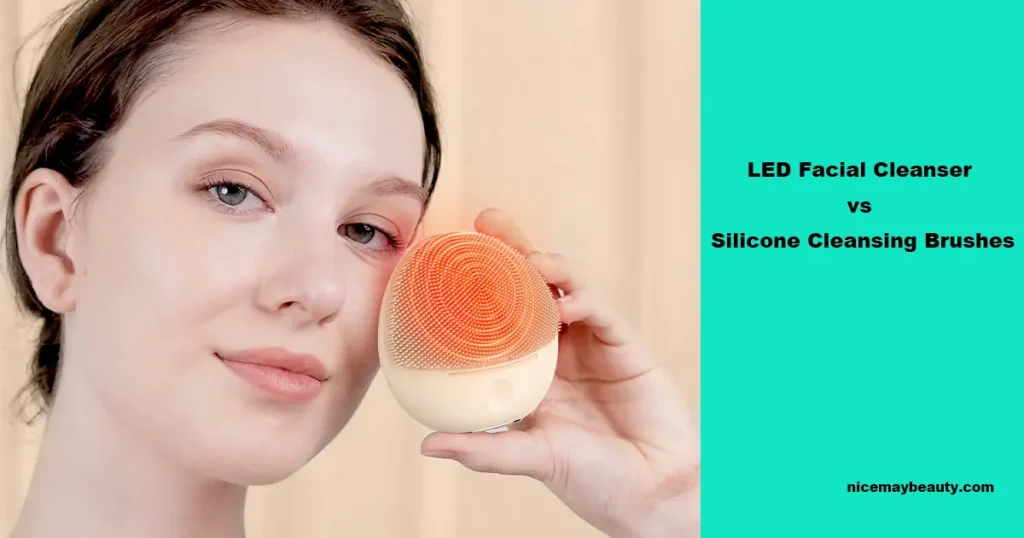
What Is an LED Facial Cleanser and How Does It Work?
The Science Behind LED Light Therapy for Skin
LED (Light Emitting Diode) therapy has roots in clinical dermatology, originally developed by NASA for wound healing research. Today, consumer-grade LED devices leverage the same core principles:
- Red light (630–700 nm): Penetrates deeper into the dermis to stimulate fibroblast activity and boost collagen and elastin production, making it effective for reducing fine lines and improving skin firmness.
- Blue light (415–450 nm): Targets the 痤瘡桿菌 bacteria responsible for inflammatory acne breakouts by generating reactive oxygen species that destroy the bacteria.
- Near-infrared light (800–900 nm): Reaches the deepest skin layers, promoting cellular repair, reducing inflammation, and accelerating healing.
- Yellow/amber light (570–590 nm): Supports lymphatic drainage and helps reduce redness and post-inflammatory hyperpigmentation.
Are LED Facial Devices the Same as LED Cleansers?
Key Benefits of LED Facial Devices
- Non-invasive anti-aging treatment with consistent, cumulative results over 8–12 weeks
- Clinically supported acne reduction with zero UV radiation, making it safe for daily use
- Reduced post-procedure inflammation when used after professional treatments like microneedling or chemical peels
- 無恢復期 and suitable for nearly all skin tones, including deeper Fitzpatrick skin types

What Is a Silicone Cleansing Brush and How Does It Work?
A silicone cleansing brush is a motorized or manual skincare device featuring soft, flexible silicone touchpoints that gently agitate the skin’s surface to break up and remove dirt, oil, makeup, sebum, and dead skin cells. Devices like FOREO LUNA popularized the category, but the market now includes dozens of models across all price points.
Sonic Pulsation Technology in Silicone Cleansing Brushes
Most premium silicone cleansing brushes utilize T-Sonic™ or similar sonic pulsation technology, transmitting rapid micro-vibrations—often 8,000 pulsations per minute or more—through the silicone touchpoints. These vibrations:
- Loosen debris from pores more effectively than manual washing alone
- Stimulate microcirculation in superficial skin layers
- Enhance the lathering and penetration of your facial cleanser
- Provide a gentle physical exfoliation that removes dead skin cell buildup
For a deeper look at how vibration technology compares across different cleansing tool categories, read our article on Microcurrent Cleansing vs Manual Brush: Better Vibration Cleaning, which explores how varying frequencies and delivery methods affect cleansing performance.
Why Silicone Is Superior to Bristle Brushes for Hygiene?
Unlike nylon or synthetic bristle brushes—which harbor bacteria in their fibers and degrade over time—medical-grade silicone is inherently antimicrobial, non-porous, and resistant to bacterial colonization. Clinical studies have demonstrated that silicone cleansing devices remove up to 99.5% of dirt and oil compared to manual cleansing. Equally important, they cause significantly less microabrasion than stiff-bristle alternatives, making them appropriate for sensitive, reactive, or rosacea-prone skin.
How Often Should You Use a Silicone Cleansing Brush?

LED Facial Cleanser vs Silicone Cleansing Brush: A Direct Comparison
| 特徵 | LED Facial Device | Silicone Cleansing Brush |
|---|---|---|
| Primary Function | Skin treatment (anti-aging, acne, repair) | Deep cleansing and gentle exfoliation |
| Skin Layer Targeted | Dermis and deeper epidermis | Stratum corneum (surface) |
| Cleansing Ability | Minimal to none | 優異 |
| Treatment Benefit | High (collagen, acne, pigmentation) | 低 |
| 使用頻率 | 3–5x per week (most protocols) | 1–2x daily |
| 衛生 | Varies by device type | Excellent (non-porous silicone) |
| 肌膚類型適用性 | Most skin types; avoid on active rashes | All skin types, including sensitive |

MR-2369

MR-2275

MR-1931
Which Device Is Better for Acne-Prone Skin?
Both devices address acne, but through entirely different mechanisms. A silicone cleansing brush prevents breakouts by thoroughly removing pore-clogging oil and debris before they can trigger acne formation—essentially attacking the problem at its source. An LED device with blue light, on the other hand, eliminates the acne-causing bacteria already present in the skin, reducing active breakouts and preventing new ones.
For true acne management, the most effective approach is using both: a silicone brush to cleanse the skin thoroughly, followed by a blue-light LED session on clean skin. This two-step method addresses both the external and bacterial causes of acne simultaneously.
Which Device Is Better for Anti-Aging?
For reducing fine lines, improving skin texture, and boosting collagen production, LED red-light therapy is significantly more effective than a silicone cleansing brush. The fibroblast stimulation triggered by red-light wavelengths is a clinically documented mechanism for dermal remodeling—something no surface-level cleansing tool can replicate. That said, cleaner skin enhances the penetration of anti-aging serums and treatments, so silicone brushes indirectly support your anti-aging regimen.
Red Light vs Collagen: What the Research Actually Shows
Multiple peer-reviewed studies, including research published in Photomedicine and Laser Surgery, confirm that repeated red-light exposure increases dermal collagen density and reduces the appearance of periorbital wrinkles. Results typically become visible after 8–10 consistent weeks of use, reinforcing the importance of adherence to a regular LED treatment schedule.
Skin Sensitivity Considerations
Silicone cleansing brushes are generally the safer choice for sensitive skin, particularly when used with gentle, fragrance-free cleansers and set to the lowest vibration intensity. LED devices are also generally well-tolerated, though individuals with photosensitivity conditions, lupus, or those on photosensitizing medications should consult a dermatologist before use.
If skin sensitivity is a primary concern, you may also want to explore our in-depth guide on 超音波 vs 熱震動潔面儀:敏感肌大對決, which examines how different energy-based cleansing technologies perform on reactive and easily irritated skin.
成本、維護與長期價值
Upfront Investment and Replacement Costs
Silicone cleansing brushes range from $30 to $280 (FOREO LUNA 4, for example), with no replacement heads required—the silicone touchpoints are designed to last years with proper care. This gives them a distinct long-term cost advantage over bristle brush systems that require $15–$30 head replacements every 3 months.
LED facial devices have a broader price range: entry-level panel masks start around $40–$80, while clinical-grade options from brands like Omnilux or Celluma run $400–$1,000+. Premium devices with medical-grade certifications and broader wavelength coverage command higher prices but also deliver more clinically validated results.
Ease of Use and Daily Routine Integration
Silicone cleansing brushes integrate seamlessly into any existing skincare routine—simply swap them for your hands during the cleansing step. They require minimal learning curve and deliver immediate, perceptible results (cleaner skin, tighter feeling pores) from the first use.
LED devices require more intentional scheduling. Most protocols call for 10–20 minute sessions several times per week, typically after cleansing and before applying serums. While hands-free LED masks have simplified the process considerably, the time investment is meaningfully higher than a 60-second silicone brush cleanse.
Which Is Easier to Travel With?
Compact silicone cleansing brushes—particularly USB-rechargeable models—are among the most travel-friendly skincare devices available. LED devices, especially full-face masks, tend to be bulkier and more fragile, though handheld LED wands offer a reasonable travel compromise.
Frequently Asked Questions: LED Facial Cleanser vs Silicone Cleansing Brush
Can I use an LED device every day?
Is a silicone cleansing brush suitable for rosacea?
Does LED light therapy work for dark skin tones?
How long does it take to see results from an LED facial device?
Do silicone cleansing brushes actually unclog pores?

請在表單中填寫您的電子郵件,我們將儘快回覆您!