


Avez-vous besoin d'une brosse nettoyante si vous exfoliez déjà ?

Si votre routine d'exfoliation fonctionne déjà, vous n'avez presque certainement pas besoin d'une brosse nettoyante. Les deux ont des fonctions qui se chevauchent, et les combiner sans plan clair est l'une des façons les plus courantes pour les gens de endommager involontairement leur barrière cutanée. Cela dit, il existe des situations spécifiques où une brosse mérite vraiment sa place — même avec des exfoliants.

Brosses Nettoyantes et Exfoliation : Comprendre le Chevauchement
La plupart des gens pensent brosses de nettoyage uniquement comme des outils de nettoyage — quelque chose pour déloger les résidus de fond de teint ou de crème solaire. Mais les poils oscillants ou rotatifs font aussi autre chose : ils créent une friction mécanique douce contre la surface de la peau, en détachant les cellules mortes dans le processus. C’est de l’exfoliation, même si l’emballage ne le dit pas.
C’est là que le chevauchement avec votre routine d’exfoliation existante devient important. Si vous utilisez déjà un exfoliant chimique — un BHA comme l’acide salicylique quelques nuits par semaine, ou un AHA comme l’acide lactique — votre peau subit déjà un renouvellement cellulaire contrôlé. Ajouter une brosse par-dessus ne vous donne pas deux fois plus d’avantages. Plus souvent, cela vous donne deux fois plus d’irritation.
Qu’est-ce qui compte comme exfoliation ?
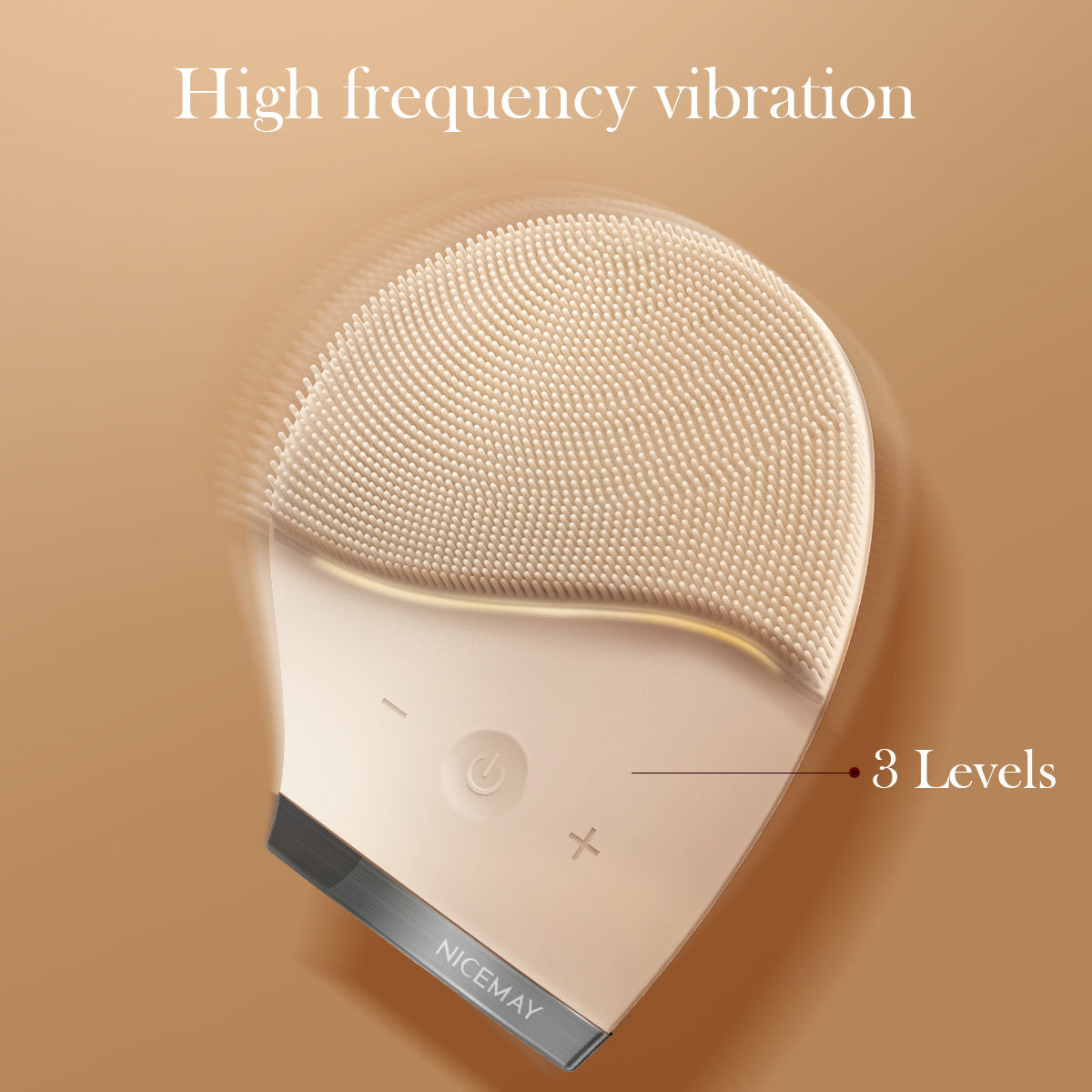
| Facteur | Brosse nettoyante pour le visage | Nettoyeur sonique |
|---|---|---|
| ACTION DE NETTOYAGE | Exfoliation physique via des brosses rotatives | Les vibrations soniques détachent les débris sans friction PLUS DOUX |
| NIVEAU D'EXFOLIATION | Plus profond, plus agressif PLUS INTENSE | Exfoliation douce, quotidienne en surface |
| SÉCURITÉ DE LA PEAU | Risque de sur-exfoliation si utilisé quotidiennement | Généralement sûr pour une utilisation quotidienne PLUS SÛR QUOTIDIEN |
| HYGIÈNE | Les brosses piègent les bactéries ; les têtes nécessitent un remplacement fréquent | Le silicone est non poreux et résistant aux bactéries PLUS HYGIÉNIQUE |
| DÉMAQUILLAGE | Très efficace pour démaquiller lourdement PLUS FORT | Moins efficace sur une couverture épaisse ou lourde |
| PEAU SENSIBLE | Non recommandé | Convient bien avec des réglages à faible intensité PRÉFÉRÉ |
| COÛT À LONG TERME | Les têtes de remplacement entraînent un coût supplémentaire | Moins d'entretien après l'achat initial MEILLEURE VALEUR |
| ABSORPTION DU SÉRUM | Modéré | Les vibrations améliorent l'absorption du produit PLUS EFFICACE |


Quand une brosse nettoyante ajoute réellement de la valeur
Il existe des scénarios réels où une brosse comble une lacune que l'exfoliation seule ne couvre pas. La distinction dépend de ce que vous essayez réellement d'accomplir.
Nettoyage en profondeur, pas seulement exfoliation
Le rôle principal d'une brosse nettoyante – lorsqu'elle est utilisée correctement – est l'élimination complète des débris de surface. Les brosses à poils en silicone en particulier sont efficaces pour déloger les résidus de crème solaire et le maquillage à base d'huile des pores sans avoir recours à un frottement excessif. C'est un avantage de nettoyage, pas un avantage d'exfoliation. Si votre peau a tendance à rester congestionnée même avec une exfoliation régulière, une brosse pourrait répondre à ce qui manque à votre nettoyant seul.
Peau grasse et sujette à l'acné
Pour les personnes ayant une peau constamment grasse, une brosse peut aider à gérer l'accumulation qui conduit à la congestion. La clé est la fréquence : une à deux fois par semaine, les soirs où vous pas appliquez un exfoliant chimique. Traiter cela comme une question de planification plutôt qu'une question de produit tend à prévenir le piège de la surexfoliation.
Les brosses nettoyantes en silicone ont tendance à être plus douces et plus faciles à désinfecter que les modèles traditionnels à poils en nylon – une différence significative si vous utilisez une brosse près des zones sujettes aux imperfections. Les bactéries sur les têtes de brosse sont une préoccupation réelle et sous-estimée.
Quand le démaquillage est le vrai problème
Les formules tenaces et longue tenue – fonds de teint transfer-proof, SPF waterproof, correcteurs couvrance totale – ne se décomposent souvent pas complètement avec un nettoyant seul, même avec un double nettoyage. Dans ces cas, une brosse à poils doux peut aider à l'élimination mécanique sans l'abrasivité d'un gommage. C'est probablement le cas d'utilisation légitime le plus solide pour posséder une brosse parmi les personnes qui s'exfolient déjà.
Le risque que la plupart des routines sous-estiment : la surexfoliation
La surexfoliation ne se manifeste pas toujours de manière spectaculaire. Elle ne s'annonce pas toujours par des rougeurs ou des desquamations. Plus souvent, elle se manifeste par une peau qui semble perpétuellement tendue, qui a des éruptions inattendues, ou qui perd sa capacité à retenir l'hydratation – signes d'une barrière cutanée compromise que les gens lisent souvent à tort comme nécessitant plus de produit, et non moins.
Signes que votre barrière cutanée est déjà sous tension
- Sensibilité accrue aux produits qui étaient auparavant tolérés
- Une apparence brillante mais déshydratée — souvent appelée “ peau de verre ”, mais ce n’est pas le cas
- Éruptions qui semblent tourner plutôt que disparaître
- Picotements causés par des toniques ou des sérums sans actifs
- Peau qui rougit facilement ou qui réagit aux changements de température
Si l’un de ces symptômes vous semble familier, ajouter une brosse nettoyante — peu importe la douceur revendiquée par le marketing — est peu susceptible d’aider. La solution dans ces situations est la simplification, pas l’ajout.
L’utilisation quotidienne de la brosse est l’erreur la plus courante citée par les dermatologues lorsque les patients présentent une sensibilité chronique. Même si une brosse est étiquetée “ utilisation quotidienne ”, cela ne signifie pas que votre peau, combinée à sa routine existante, peut tolérer cette fréquence.

Selon le type de peau : devriez-vous ajouter une brosse ?
Peau grasse
La congestion est un problème réel. Une brosse 1 à 2 fois par semaine, en décalage avec les nuits d’exfoliation, peut aider à gérer l’huile et les débris.
Peau normale
Si votre routine actuelle fonctionne bien, une brosse est optionnelle. Utilisez-la pour un nettoyage en profondeur après une forte protection solaire ou du maquillage, pas comme une étape régulière.
Peau sèche
La peau sèche a tendance à avoir une barrière lipidique plus fine. Une brosse ajoute de la friction dont votre peau pourrait ne pas avoir besoin — privilégiez plutôt l’exfoliation chimique.
Peau sensible ou sujet à la rosacée
Le frottement physique peut aggraver les rougeurs et la réactivité. Une brosse est rarement l'outil adapté ici, même à faible fréquence.
Acné active
Les brosses peuvent propager des bactéries et aggraver l'inflammation. Les exfoliants chimiques aux propriétés antibactériennes—comme l'acide salicylique—sont plus appropriés.
Comment intégrer une brosse nettoyante dans une routine existante sans endommager votre peau
Après avoir pesé le pour et le contre, si vous décidez d'en essayer une, quelques principes structuraux font la différence entre une addition utile et une source d'irritation chronique.
Traitez cela comme un problème de planning
Considérez votre brosse nettoyante comme occupant l’un de vos “ créneaux ” hebdomadaires de soins de la peau—le même créneau qui pourrait autrement être réservé à un tonique exfoliant ou à un gommage physique. Elle ne s’ajoute pas à ces nuits ; elle les remplace. Une structure fonctionnelle pourrait ressembler à : exfoliant chimique lundi, mercredi, vendredi ; brosse nettoyante jeudi ; pas d’actifs les autres jours. Ajustez en fonction de la réponse de votre peau sur deux à quatre semaines.
Fréquence de démarrage
Commencez par une fois par semaine pendant le premier mois, quel que soit votre type de peau. L’objectif est de trouver votre seuil avant de le dépasser, et non de maximiser l’utilisation dès le départ.
Choix des poils
Les poils plus doux sont presque toujours préférables pour la plupart des adultes. Les poils plus fermes ne sont pas plus efficaces—ils sont plus abrasifs. Si vous hésitez entre silicone et nylon, le silicone est plus facile à nettoyer et moins susceptible de provoquer des micro-lésions sur une peau sensibilisée.
Pression et durée
La plupart des brosses sont conçues pour glisser avec une pression minimale—laissez le moteur ou la vibration faire le travail. Trente à soixante secondes sur l’ensemble du visage suffisent généralement. Aller plus longtemps ou appuyer plus fort n’améliore pas les résultats ; cela augmente le risque de dommages à la barrière cutanée.
Si vous hésitez encore à savoir si une brosse nettoyante est adaptée à vos préoccupations spécifiques de peau, Les brosses nettoyantes pour le visage en valent-elles la peine ? Verdict du dermatologue expose comment les dermatologues certifiés évaluent ces outils—y compris les présentations cutanées spécifiques où ils les recommandent ou non. C’est un point de référence utile avant de dépenser de l’argent dans un appareil.
Une préoccupation spécifique : brosses nettoyantes et teint inégal
Une question qui revient fréquemment chez les personnes déjà en train d’exfolier est de savoir si une brosse nettoyante pourrait aider à traiter l’hyperpigmentation ou la texture inégale. Cela mérite d’être abordé directement, car la réponse est plus nuancée que ce que la plupart des descriptions de produits suggèrent.
L'exfoliation mécanique à l'aide d'une brosse élimine effectivement une partie de la peau morte en surface, ce qui peut temporairement améliorer l'éclat et de très superficielles problématiques de texture. Mais l'hyperpigmentation—qu'elle soit post-inflammatoire (suite à l'acné), induite par les UV ou hormonale—se situe à une profondeur que les brosses ne peuvent pas atteindre de manière significative. Les cellules responsables des taches sombres se trouvent dans la couche basale, et non sur le stratum corneum sur lequel agissent les brosses.
Une brossage trop agressif autour des zones hyperpigmentées peut, en réalité, aggraver le problème en déclenchant une inflammation de faible intensité qui stimule la production de mélanine. Si l'hyperpigmentation est une préoccupation principale dans votre routine, Une brosse gommante pour le visage peut-elle aider avec l'hyperpigmentation? couvre les preuves dermatologiques concernant ce cas d'usage spécifique—y compris quels types de pigmentation répondent à l'exfoliation mécanique et lesquels nécessitent des interventions totalement différentes.
La réponse pratique
For most people with an established exfoliation routine, a cleansing brush is not a necessary purchase. Your skin doesn’t require it, and introducing it carelessly is more likely to create problems than solve them.
Where a brush legitimately earns its place: if you wear heavy SPF or full-coverage makeup regularly, have oily/congested skin that chemical exfoliation isn’t fully addressing, or you’re looking to replace a physical scrub with something more controlled and less abrasive. In those cases, a soft-bristle or silicone brush—used no more than twice a week, on non-exfoliant evenings—is a reasonable addition.
The smarter approach in most situations is to audit what your current routine is actually doing before adding another step to it. More often than not, the issue isn’t that you’re missing a tool—it’s that an existing product could be used more strategically.

Veuillez remplir votre adresse e-mail dans le formulaire et nous reviendrons vers vous pour vous aider rapidement !