角質除去をしている場合、クレンジングブラシは必要ですか?
If your exfoliation routine is already working, you almost certainly don’t need a cleansing brush. The two serve overlapping functions, and layering them without a clear plan is one of the more common ways people unknowingly damage their skin barrier. That said, there are specific situations where a brush genuinely earns its place—even alongside exfoliants.
Cleansing Brushes and Exfoliation: Understanding the Overlap
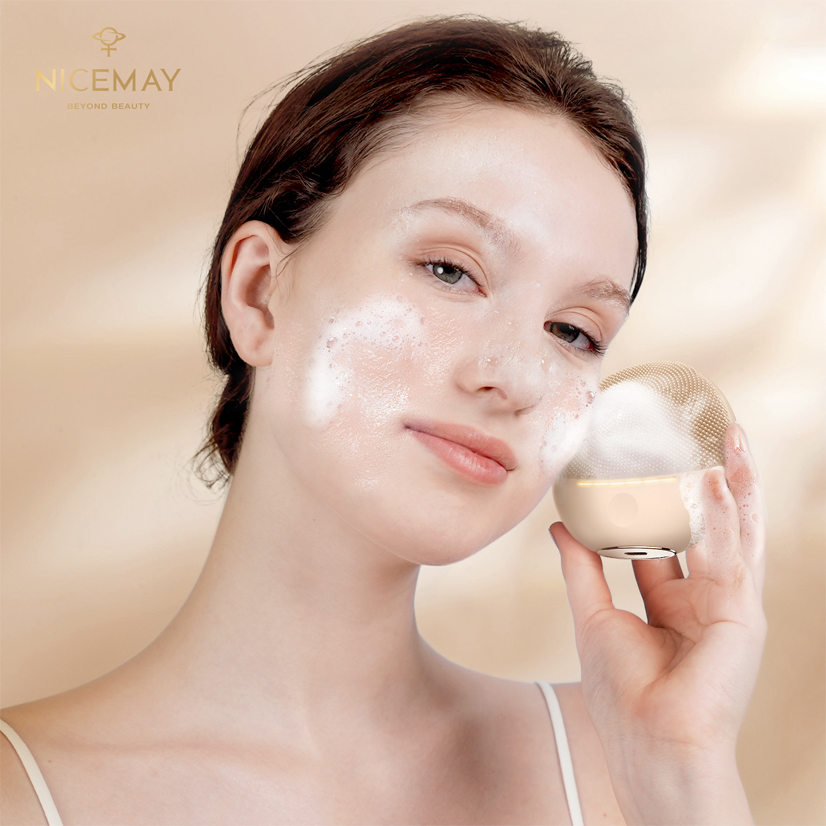
Most people think of クレンジングブラシ purely as cleaning tools—something to dislodge foundation or sunscreen residue. But the oscillating or rotating bristles do something else too: they create gentle mechanical friction against the skin’s surface, loosening dead skin cells in the process. That’s exfoliation, even if the packaging doesn’t say so.
This is where the overlap with your existing exfoliation routine becomes important. If you’re already using a chemical exfoliant—a BHA like salicylic acid a few nights a week, or an AHA like lactic acid—your skin is already undergoing controlled cell turnover. Adding a brush on top of that doesn’t give you twice the benefit. More often, it gives you twice the irritation.
What Counts as Exfoliation?
| 要因 | Face Cleansing Brush | Sonic Cleanser |
|---|---|---|
| CLEANING ACTION | Physical exfoliation via rotating bristles | Sonic vibrations loosen debris without friction GENTLER |
| EXFOLIATION LEVEL | Deeper, more aggressive MORE INTENSE | Mild, surface-level daily exfoliation |
| SKIN SAFETY | Risk of over-exfoliation if used daily | Generally safe for daily use SAFER DAILY |
| HYGIENE | Bristles trap bacteria; heads need frequent replacement | Silicone is non-porous and bacteria-resistant MORE HYGIENIC |
| MAKEUP REMOVAL | Highly effective at breaking down heavy makeup STRONGER | Less effective on thick/heavy coverage |
| SENSITIVE SKIN | 推奨されない | Well-suited with low-intensity settings PREFERRED |
| LONG-TERM COST | Replacement heads add ongoing cost | Lower maintenance after initial purchase BETTER VALUE |
| SERUM ABSORPTION | 中程度 | Vibrations enhance product absorption MORE EFFECTIVE |
When a Cleansing Brush Actually Adds Value
There are real scenarios where a brush fills a gap that exfoliation alone doesn’t cover. The distinction comes down to what you’re actually trying to accomplish.
Deep Cleansing, Not Just Exfoliation
A cleansing brush’s primary job—when used correctly—is thorough removal of surface debris. Silicone-bristle brushes in particular are effective at dislodging sunscreen residue and oil-based makeup from pores without relying on over-scrubbing. This is a cleansing benefit, not an exfoliation benefit. If your skin tends to stay congested even with regular exfoliation, a brush might address what your cleanser alone is missing.
脂性肌・ニキビ肌
For people with persistently oily skin, a brush can help manage the buildup that leads to congestion. The key is frequency: one to two times per week, on evenings when you’re レーザーでは applying a chemical exfoliant. Treating this as a scheduling question rather than a product question tends to prevent the over-exfoliation trap.
Silicone cleansing brushes tend to be gentler and easier to sanitize than traditional nylon-bristle models—a meaningful difference if you’re using a brush near breakout-prone areas. Bacteria on brush heads is a real and underappreciated concern.
When Makeup Removal Is the Real Issue
Stubborn, long-wear formulas—transfer-proof foundations, waterproof SPF, full-coverage concealer—often don’t break down fully with cleanser alone, even with double-cleansing. In these cases, a soft-bristle brush can help with mechanical removal without the abrasiveness of a scrub. This is probably the strongest legitimate use case for brush ownership among people who already exfoliate.
The Risk Most Routines Underestimate: Over-Exfoliation
Over-exfoliation doesn’t always look dramatic. It doesn’t always announce itself as redness or peeling. More often it shows up as skin that feels perpetually tight, breaks out unexpectedly, or loses its ability to retain moisture—signs of a compromised barrier that people frequently misread as needing more product, not less.
Signs Your Skin Barrier Is Already Under Strain
- Increased sensitivity to products that used to be fine
- A shiny but dehydrated appearance—often called “glass skin,” but it’s not
- Breakouts that seem to rotate rather than clear
- Stinging from toners or serums with no actives
- Skin that flushes easily or feels reactive to temperature changes
If any of these sound familiar, adding a cleansing brush—regardless of how gentle the marketing says it is—is unlikely to help. The answer in these situations is simplification, not addition.
Daily brush use is the single most common mistake dermatologists cite when patients present with chronic sensitivity. Even if a brush is labeled “daily use,” that doesn’t mean your skin, combined with its existing routine, can tolerate that frequency.
By Skin Type: Should You Add a Brush?
Oily skin
Congestion is a genuine issue. A brush 1–2x per week, offset from exfoliant nights, can help manage oil and debris.
Normal skin
If your current routine is working well, a brush is optional. Use it for deep cleansing after heavy SPF or makeup, not as a regular step.
Dry skin
Dry skin tends to have a thinner lipid barrier. A brush adds friction your skin may not need—stick to chemical exfoliation instead.
Sensitive or rosacea-prone
Physical friction can worsen redness and reactivity. A brush is rarely the right tool here, even at low frequency.
Active acne
Brushes can spread bacteria and worsen inflammation. Chemical exfoliants with antibacterial properties—like salicylic acid—are more appropriate.
How to Layer a Cleansing Brush Into an Existing Routine Without Damaging Your Skin
If after weighing everything you decide to try one, a few structural principles make the difference between a useful addition and a source of chronic irritation.
Treat It as a Schedule Problem
Think of your cleansing brush as occupying one of your weekly skincare “slots”—the same slot that might otherwise go to an exfoliating toner or a physical scrub. It doesn’t stack on top of those nights; it replaces them. A functional structure might look like: chemical exfoliant Monday, Wednesday, Friday; cleansing brush Thursday; no actives on remaining days. Adjust based on how your skin responds over two to four weeks.
Starting frequency
Begin with once per week for the first month, regardless of your skin type. The goal is to find your threshold before exceeding it, not to maximize usage out of the gate.
Bristle selection
Softer is nearly always better for most adults. Firmer bristles aren’t more effective—they’re more abrasive. If you’re choosing between silicone and nylon, silicone is easier to keep clean and less likely to cause micro-tears on sensitized skin.
Pressure and duration
Most brushes are designed to glide with minimal pressure—let the motor or vibration do the work. Thirty to sixty seconds across the full face is typically sufficient. Going longer or pressing harder doesn’t improve results; it increases the likelihood of barrier damage.
If you’re still weighing whether a cleansing brush makes sense for your particular skin concerns, Are Facial Cleansing Brushes Worth It? Dermatologist Verdict lays out how board-certified dermatologists evaluate these tools—including the specific skin presentations where they do and don’t recommend them. It’s a useful data point before spending money on a device.
A Specific Concern: Cleansing Brushes and Uneven Skin Tone
One question that comes up frequently among people already exfoliating is whether a cleansing brush might help address hyperpigmentation or uneven texture. This is worth addressing directly, because the answer is more nuanced than most product descriptions suggest.
Mechanical exfoliation from a brush does remove some surface dead skin, which can temporarily improve radiance and very superficial texture issues. But hyperpigmentation—whether post-inflammatory (from acne), UV-induced, or hormonal—lives at a depth that brushes don’t meaningfully reach. The cells that cause dark spots are in the basal layer, not on the stratum corneum that brushes operate on.
Over-aggressive brushing around hyperpigmented areas can, in fact, worsen the problem by triggering low-grade inflammation that stimulates more melanin production. If hyperpigmentation is a primary concern in your routine, フェイススクラバーブラシは色素沈着に効果があるのか? covers the dermatological evidence on this specific use case—including what types of pigmentation respond to mechanical exfoliation and which require different interventions entirely.
The Practical Answer
ほとんどの人は、定期的な角質除去ルーチンにおいてクレンジングブラシは必要ありません。肌には必要なく、不用意に導入すると問題を引き起こす可能性が高くなります。.
ブラシが本当に役立つ場面:重度のSPFやフルカバレッジのメイクを定期的に使用している場合、油性または詰まりやすい肌で化学的角質除去だけでは不十分な場合、または物理的なスクラブの代わりによりコントロールされた、刺激の少ない方法を求めている場合です。その場合、柔らかい毛のブラシやシリコンブラシを週に2回以内、非角質除去の日に使用するのが適切です。.
ほとんどの状況でより賢いアプローチは、新しいステップを追加する前に、現在のルーチンが実際に何をしているのかを監査することです。多くの場合、問題はツールが不足していることではなく、既存の製品をより戦略的に活用できることにあります。.

フォームにメールアドレスを入力してください。すぐにお手伝いします!