


臉部毛髮刮鬍刀與鼻毛修剪器:精密美容工具比較

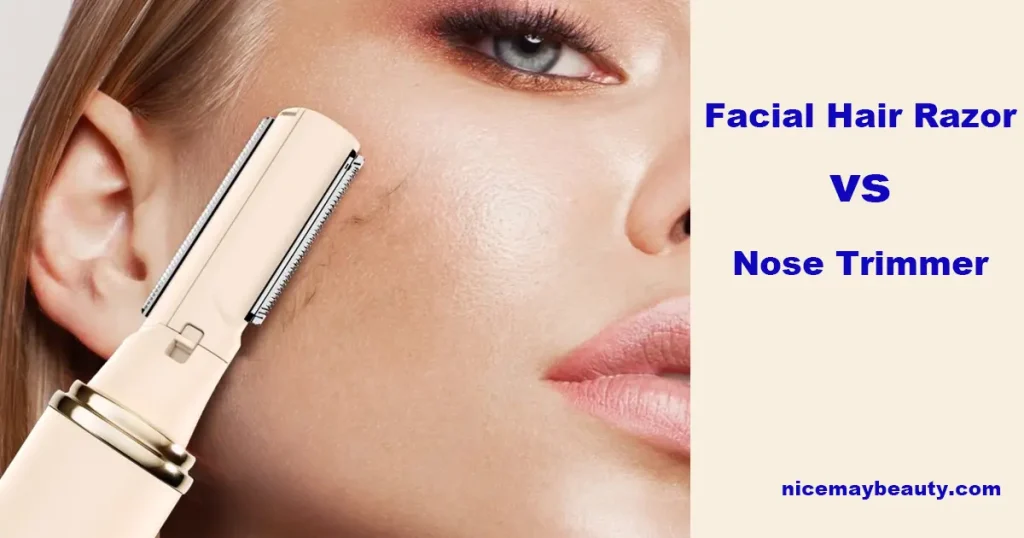
When it comes to managing facial hair, the choice between a facial hair razor and a nose trimmer is more consequential than it first appears. Both tools serve legitimate grooming purposes, but they are engineered with entirely different goals in mind: one prioritizes blade-close contact with skin for a clean-shaven finish, while the other is designed to trim hair precisely without the blade ever touching the surface of your skin.
The short answer is this: a facial hair razor delivers the closest possible shave, while a nose trimmer (or dedicated electric trimmer) offers a faster, safer trim with virtually zero risk of irritation or cuts. Which one belongs in your daily routine depends entirely on your skin type, the look you want, and how much time you have. This guide breaks down every meaningful difference so you can make the right call.
What Is a Facial Hair Razor? How It Works and What It Does
A facial hair razor — whether a multi-blade cartridge razor, a safety razor, or a straight razor — removes hair by slicing it at or fractionally below the skin line. The result is a baby-smooth finish that electric and trimmer-based tools cannot replicate. The mechanism is straightforward: a sharp metal blade is drawn across skin stretched taut, severing each hair shaft at its root exit point.
Types of Facial Hair Razors and Their Key Differences
Cartridge Razors (Multi-Blade)
The most common form factor for everyday shaving. Multiple stacked blades — typically three to six — lift and cut hairs in a single pass, reducing the number of strokes required. Cartridges are replaced every one to two weeks depending on use frequency. They are easy to handle and widely available, making them a practical default for most men starting a shaving routine.
Safety Razors (Double-Edge)
A single, exposed double-edge blade sits within a protective head designed to control the angle and depth of the cut. Safety razors require more technique — the optimal angle is typically 30 degrees — but they reward the learning curve with an exceptionally close, irritation-free shave and significantly lower long-term cost, since replacement blades cost a fraction of cartridge refills.
Straight Razors
The oldest shaving technology in this category, and still prized by traditionalists for unparalleled control and precision. A folding steel blade sharpened to a very fine edge is drawn across the skin by the user. The technique demands practice and regular stropping (honing the blade), but the result — and the ritual — is unmatched. Best suited for experienced shavers who value precision over convenience.

Pros and Cons of Facial Hair Razors for Facial Grooming
| 優點 | 缺點 |
|---|---|
| 最接近剃光的剃鬚方式 — 完全光滑的表面 | 容易造成割傷、刮痕和剃鬚燒傷的風險升高 |
| 高邊緣線精確度,打造清晰的鬍鬚邊界 | 對敏感肌膚具有較高的刺激潛力 |
| 大多數換芯式剃鬚刀型號的前期成本較低 | 可能引起倒毛,尤其在粗硬髮上 |
| 使用安全剃鬚刀的長期成本效益 | 需要使用剃鬚膏、凝膠或肥皂作為準備 |
| 適用於所有髮質厚度和密度 | 刀片會變鈍,需定期更換 |
What Is a Nose Trimmer? Understanding the Electric Trimmer Category
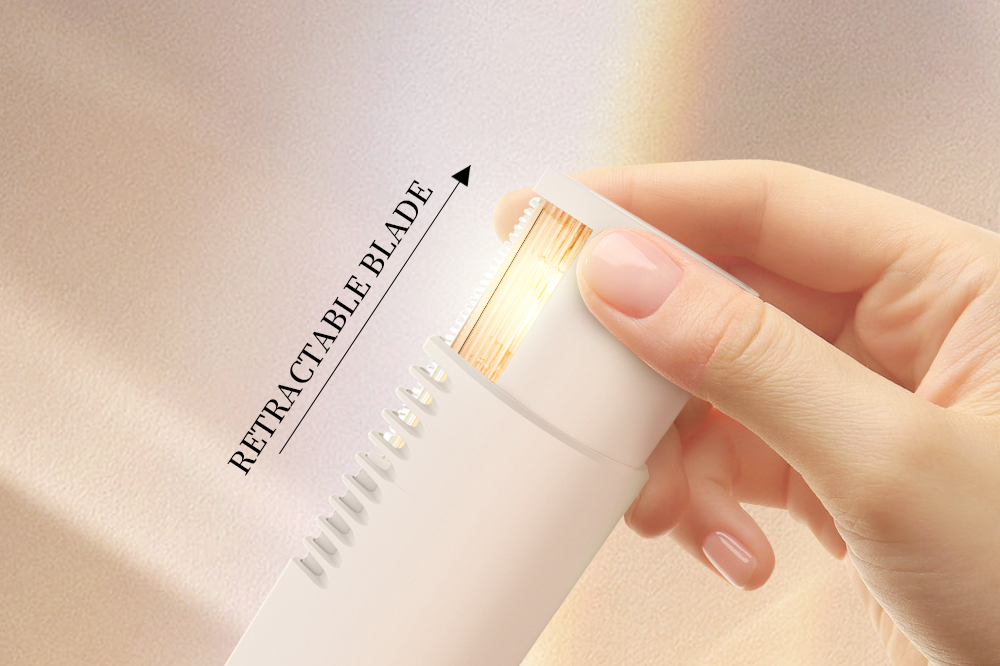
Despite the name, a nose trimmer in the modern grooming context refers broadly to a compact electric trimmer designed for precision facial hair management — around the nose, ears, eyebrows, beard perimeter, and even full facial stubble. The key engineering distinction is that the blade mechanism is rotary or oscillating and fully enclosed within a protective guard or housing, meaning the cutting edge never makes direct skin contact.
This design philosophy has two direct consequences: virtually zero risk of cuts or nicks, and a finished result that leaves hair slightly above the skin surface — not flush with it. That microscopic difference is exactly what distinguishes a “trimmed” look from a “shaved” look.
How Modern Electric Trimmers Handle Facial Hair
Rotary Blade Systems
A spinning internal blade cuts hair that enters through slots in the protective outer guard. This system is especially effective for nose and ear hair, where curved surfaces and tight spaces make a flat razor blade impractical or dangerous. Rotary trimmers tend to be quieter and gentle on delicate nasal membranes.
Foil-Style and Oscillating Trimmer Heads
Some electric trimmers use an oscillating blade beneath a thin metal foil, similar in principle to electric foil shavers. These are common in beard trimmers and stubble trimmers, and they offer a closer trim than standard rotary guards — though still not equivalent to a razor blade in closeness.
Adjustable Guard Systems
Most beard and facial hair trimmers come with comb attachments in graduated lengths — typically 0.5 mm to 10 mm — allowing the user to set a consistent stubble or beard length across the entire face. This feature is entirely absent from razors, making trimmers the only tool for maintaining deliberate stubble lengths.

QM-2228

QM-2315

YM-1913
Pros and Cons of Nose Trimmers and Electric Trimmers for Facial Hair
| 優點 | 缺點 |
|---|---|
| 最接近剃光的剃鬚方式 — 完全光滑的表面 | 容易造成割傷、刮痕和剃鬚燒傷的風險升高 |
| 高邊緣線精確度,打造清晰的鬍鬚邊界 | 對敏感肌膚具有較高的刺激潛力 |
| 大多數換芯式剃鬚刀型號的前期成本較低 | 可能引起倒毛,尤其在粗硬髮上 |
| 使用安全剃鬚刀的長期成本效益 | 需要使用剃鬚膏、凝膠或肥皂作為準備 |
| 適用於所有髮質厚度和密度 | 刀片會變鈍,需定期更換 |
Facial Hair Razor vs Nose Trimmer: Direct Category Comparisons
Closeness of the Shave
This is where the razor wins decisively and unconditionally. A sharp blade severs hair at the skin surface or fractionally below it, which is why a freshly shaved face feels smooth to the touch for hours. An electric trimmer — even at its finest setting — leaves a hair shaft a fraction of a millimeter above the skin. You cannot feel it, but you can see the faint shadow of it in certain lighting. If a completely clean-shaven appearance is your target, only a razor delivers it.
Safety and Skin Irritation Risk
A trimmer is the clear winner here. Because the blades are mechanically shielded from direct skin contact, the probability of cuts, nicks, or abrasions is effectively zero under normal use. Razors introduce inherent risk, particularly on uneven facial contours like the jaw angle, chin cleft, and the area just beneath the nose. Those with naturally sensitive skin, 酒糟性皮膚炎, or active breakouts may find that consistent razor use produces cumulative irritation that compounds over time. The trimmer eliminates this variable entirely.
Skin Sensitivity and Dermatological Considerations
Men with sensitive skin, eczema, folliculitis (inflamed hair follicles), or a history of ingrown hairs should default to a trimmer for daily use. Razors — particularly multi-blade cartridge designs — use a “hysteresis” cutting action that can pull the hair slightly before cutting it, leaving the severed end below the skin surface where it can curl back and grow inward. A trimmer cuts the hair straight across above the surface, which significantly reduces the biological mechanism behind ingrown hair formation. If your concern is managing facial hair without triggering skin inflammation, the trimmer is the dermatologically preferred option.
Grooming Versatility and Range of Use
A facial hair razor is a one-function tool: it removes hair cleanly from the surface. A quality electric trimmer, by contrast, can handle full-face beard shaping, stubble length management, neckline definition, nose hair removal, ear hair trimming, and brow grooming — all with attachment swaps. For men who want a single device that covers the widest range of grooming tasks, the trimmer offers substantially more utility per dollar spent.
Speed and Convenience for Daily Grooming
For a full-face shave, a razor requires pre-shave preparation — wetting the skin, applying cream or gel, and shaving in multiple careful passes. Total time from start to rinse is typically eight to twelve minutes when done properly. An electric trimmer can be used dry, without any products, for a full-face tidy-up in two to four minutes. For daily maintenance routines, the trimmer is considerably faster and more practical.
Maintenance Requirements and Running Costs
Razor blades are single-purpose consumables. Cartridge blades typically cost $3–$6 per replacement and should be changed every one to two weeks, placing annual consumable costs at $80–$150 for regular shavers. Safety razor blades are dramatically cheaper — often $0.15–$0.50 per blade — but you still need ongoing shaving cream purchases. Electric trimmers require periodic blade head replacements (once every twelve to eighteen months), a charging habit, and occasional cleaning oil application. Their total annual cost of maintenance is typically lower, with the trade-off of a higher initial purchase price.
| 特徵 | 臉部毛髮剃刀 | Nose Trimmer / Electric Trimmer |
|---|---|---|
| Shave Closeness | Skin-level or below — maximum closeness | Slightly above skin — groomed, not clean-shaven |
| 安全性 | Moderate risk of cuts and nicks | Virtually zero cut risk |
| 敏感肌膚: | Can cause irritation and ingrown hairs | Gentle — suitable for sensitive and reactive skin |
| 多樣性 | Shaving and edge lining only | Beard, stubble, nose, ears, brows, neckline |
| 速度 | 8–12 minutes with prep | 2–4 minutes, no prep required |
| Ongoing Cost | $80–$150/year (cartridge) or lower (safety razor) | Low — blade heads every 12–18 months |
| Dry Use | Not recommended without prep products | Yes — fully dry-use capable |
| Best Result For | Clean-shaven, formal, smooth-finish looks | Stubble maintenance, beard shaping, daily grooming |
When to Use a Facial Hair Razor vs a Nose Trimmer
Use a Facial Hair Razor When…
You want a completely smooth, clean-shaven face — whether for a job interview, formal event, or because that is your preferred daily look. A razor also becomes the right tool when you need sharp, crisp definition along beard edges (the cheek line, jawline, or the line above the upper lip) where a trimmer guard cannot get close enough to the skin. If your skin is not sensitive and you have developed a proper shaving technique, a well-maintained razor used with quality shaving cream will outperform any electric trimmer in final finish quality.
Use a Nose Trimmer or Electric Trimmer When…
You want to maintain a beard or stubble at a consistent length, tame nose or ear hair safely, or groom multiple facial zones in a single session without product application. A trimmer is also the right choice when you are traveling light, need a quick morning tidy-up, or are managing skin conditions that make direct-blade shaving inadvisable. For men who have experienced chronic razor bumps or ingrown hairs with traditional shaving, transitioning to an electric trimmer as the primary tool — while keeping a razor only for occasional edge lining — is a meaningful quality-of-life improvement.
When Using Both Together Makes Sense
Many experienced groomers use both tools in a complementary system: the trimmer handles bulk beard management and stubble maintenance throughout the week, while the razor is deployed selectively to clean up the neckline, define cheek lines, or achieve a fully smooth shave for specific occasions. This combination approach extracts the best performance from each tool category without forcing one to do a job it was not designed for.

Related Grooming Tool Comparisons Worth Reading
Grooming decisions rarely exist in isolation. If you are evaluating personal care tools more broadly — whether for facial hair, body hair, or specialty tools — the same logic of matching the right technology to your specific skin type and goals applies across categories.
For those exploring precision beauty tools beyond the face, our comparison of the 加熱睫毛夾與傳統:哪一種持久捲翹效果更佳? applies a similar framework: comparing an active-technology tool against its manual equivalent, evaluating which delivers better results for specific users and conditions. The analysis is directly relevant for anyone who uses multiple grooming tools and wants to think systematically about technology trade-offs.
If your interest extends to body hair management alongside facial grooming, 居家除毛與電動刮鬍刀:全身與臉部毛髮管理 offers a comprehensive look at how electric shaving technology and hair removal methods compare across the entire body — including which approach makes the most clinical and practical sense for different skin types, hair densities, and body zones. It is a natural complement to the facial-specific analysis in this article.
Frequently Asked Questions: Facial Hair Razor vs Nose Trimmer
Can a nose trimmer replace a facial hair razor completely?
Is an electric trimmer better for sensitive skin than a razor?
Yes, in most cases. Because a trimmer’s blade mechanism is shielded from direct skin contact, the mechanical sources of razor-related skin irritation — friction, pressure, hysteresis pulling — are eliminated. Dermatologists frequently recommend electric trimming over wet shaving for patients with sensitive skin, rosacea, folliculitis, or a history of ingrown hairs. The trade-off is that the finish will not be as close as a razor provides.
How often should I replace razor blades vs trimmer blade heads?
Cartridge razor blades should be replaced every one to two weeks for optimal performance and hygiene; using a dull blade increases friction and the risk of irritation significantly. Safety razor blades typically last three to seven shaves depending on hair coarseness. Electric trimmer blade heads generally maintain their cutting performance for twelve to eighteen months before requiring replacement, though this varies by brand and frequency of use.
Can I use a facial hair razor to trim nose hair?
Which is more cost-effective long-term: a razor or an electric trimmer?

請在表單中填寫您的電子郵件,我們將儘快回覆您!